Right-side seats capture the more dramatic departure scenery (Monte Pellegrino and Tyrrhenian coastline) and still offer reasonable views during the Rome approach corridor. The northbound flight path from Palermo to Rome generally follows the Tyrrhenian coast, favoring right-side visibility for most of the journey.
Flown PMO to FCO? Did we get it right?
Flight Path
Palermo to Rome is 255 miles (410 km), a flight of about 1 hour 10 minutes.
The flight path follows the Tyrrhenian Sea coastline northward. Notable features visible from cruise altitude include the Aeolian Islands (Lipari and Vulcano) appearing as small dark volcanic peaks roughly 40 minutes into the flight, the Campania coast near Naples with Mount Vesuvius visible as a distinctive cone on clear days, and the Pontine Islands as small rocky outcrops in the sea south of Rome. The Apennine Mountains form a distant spine along the eastern horizon throughout the flight.
Great circle distance and headings ›Phase by phase
Takeoff from PMO
RIGHTPalermo typically departs from runway 07 (northeast heading). Right-side seats face toward the Tyrrhenian Sea and the northern coast of Sicily, offering immediate views of the coastline and offshore waters. Left seats face inland toward the Sicilian interior.
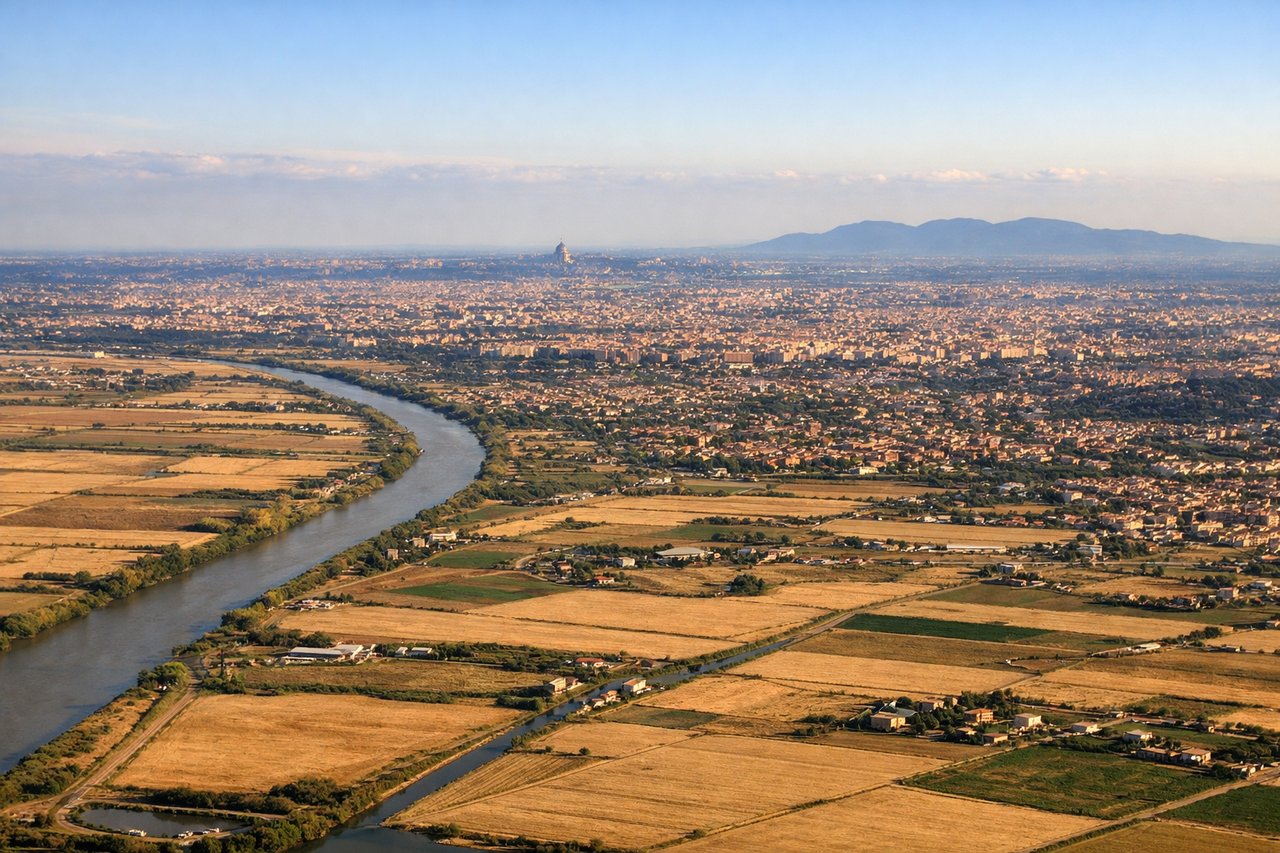
Landing at FCO
LEFTRome Fiumicino typically lands on runway 16L or 16R (southbound approach). Left-side seats during descent face west toward the Tiber River delta and the Tyrrhenian coast. This provides views of the coastal approach and the river's distinctive meanders before touchdown.
Will your flight be in sunlight?
Pick a date and time in the Sun Map to watch the sun move across your whole flight.
About This Route
Which side of the plane should I sit on flying from Falcone–Borsellino Airport (PMO) to Fiumicino (FCO)?
Sit on the Right side of the plane for the best views on flights from Palermo to Rome. Right-side seats capture the more dramatic departure scenery (Monte Pellegrino and Tyrrhenian coastline) and still offer reasonable views during the Rome approach corridor. The northbound flight path from Palermo to Rome generally follows the Tyrrhenian coast, favoring right-side visibility for most of the journey.
What can I see during takeoff from Falcone–Borsellino Airport in Palermo?
During takeoff from Falcone–Borsellino Airport (PMO), sit on the Right side for the best views. Palermo typically departs from runway 07 (northeast heading). Right-side seats face toward the Tyrrhenian Sea and the northern coast of Sicily, offering immediate views of the coastline and offshore waters. Left seats face inland toward the Sicilian interior. Notable sights include: Mondello Beach (northern suburb), Tyrrhenian Sea coastline, Monte Pellegrino (limestone mountain immediately north of the city), Conca d'Oro valley.
What can I see when landing at Fiumicino in Rome?
When landing at Fiumicino (FCO), sit on the Left side for the best views. Rome Fiumicino typically lands on runway 16L or 16R (southbound approach). Left-side seats during descent face west toward the Tiber River delta and the Tyrrhenian coast. This provides views of the coastal approach and the river's distinctive meanders before touchdown. Notable sights include: Tiber River delta and meanders, Tyrrhenian Sea coastline, Pontine Marshes (reclaimed wetlands south of Rome), Castelli Romani hills (distant, southeast).
How long is the flight from Palermo to Rome?
The flight from Falcone–Borsellino Airport (PMO) to Fiumicino (FCO) takes about 1 hour 10 minutes. The shortest flight path between them is 255 miles (410 km); winds and air traffic control usually add a few percent.
What does the Palermo to Rome flight path pass over?
The flight path follows the Tyrrhenian Sea coastline northward. Notable features visible from cruise altitude include the Aeolian Islands (Lipari and Vulcano) appearing as small dark volcanic peaks roughly 40 minutes into the flight, the Campania coast near Naples with Mount Vesuvius visible as a distinctive cone on clear days, and the Pontine Islands as small rocky outcrops in the sea south of Rome. The Apennine Mountains form a distant spine along the eastern horizon throughout the flight.