While takeoff offers coastal scenery, the landing approach into Seattle provides more dramatic and varied views: the Cascade Range, multiple water bodies, and the Seattle metropolitan area. Right seats capture these features better during descent.
Flown PWM to BFI? Did we get it right?
Flight Path
Portland to Seattle is 2,481 miles (3,993 km), a flight of about 5 hours 20 minutes.
New Hampshire and Vermont terrain, White Mountains, Connecticut River valley, Hudson River valley in New York, Adirondack Mountains, Lake Champlain, and the transition into the Appalachian foothills before reaching the Pacific Northwest. The flight path generally follows a northwest trajectory across New England and the northern United States, crossing multiple river valleys and mountain ranges.
Great circle distance and headings ›


Phase by phase
Takeoff from PWM
LEFTLeft seats offer immediate views of Casco Bay and the Atlantic coastline as you climb out northwestward. You'll see the rocky Maine coast and islands clearly during the initial climb.
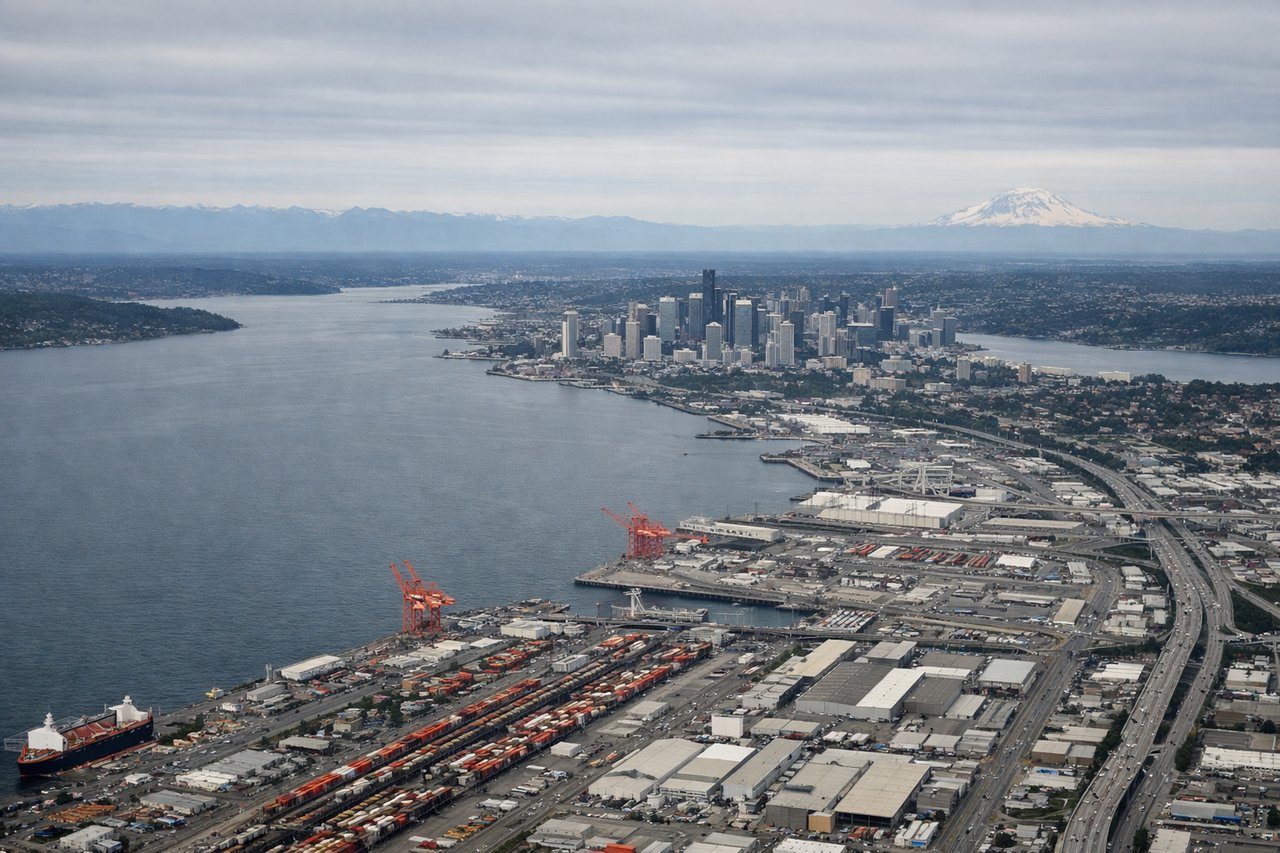
Landing at BFI
RIGHTRight seats provide excellent views during approach into Seattle. You'll see the Cascade Range to the east, Lake Washington, and the Puget Sound waterways as you descend toward Boeing Field.
Will your flight be in sunlight?
Pick a date and time in the Sun Map to watch the sun move across your whole flight.
About This Route
Which side of the plane should I sit on flying from Portland International Jetport (PWM) to Boeing Fld King Co International (BFI)?
Sit on the Right side of the plane for the best views on flights from Portland to Seattle. While takeoff offers coastal scenery, the landing approach into Seattle provides more dramatic and varied views: the Cascade Range, multiple water bodies, and the Seattle metropolitan area. Right seats capture these features better during descent.
What can I see during takeoff from Portland International Jetport in Portland?
During takeoff from Portland International Jetport (PWM), sit on the Left side for the best views. Left seats offer immediate views of Casco Bay and the Atlantic coastline as you climb out northwestward. You'll see the rocky Maine coast and islands clearly during the initial climb. Notable sights include: Casco Bay with its islands, Atlantic Ocean coastline, Portland Harbor, Fore River estuary.
What can I see when landing at Boeing Fld King Co International in Seattle?
When landing at Boeing Fld King Co International (BFI), sit on the Right side for the best views. Right seats provide excellent views during approach into Seattle. You'll see the Cascade Range to the east, Lake Washington, and the Puget Sound waterways as you descend toward Boeing Field. Notable sights include: Cascade Range peaks, Lake Washington, Puget Sound, Seattle skyline and urban areas.
How long is the flight from Portland to Seattle?
The flight from Portland International Jetport (PWM) to Boeing Fld King Co International (BFI) takes about 5 hours 20 minutes. The shortest flight path between them is 2,481 miles (3,993 km); winds and air traffic control usually add a few percent.
What does the Portland to Seattle flight path pass over?
New Hampshire and Vermont terrain, White Mountains, Connecticut River valley, Hudson River valley in New York, Adirondack Mountains, Lake Champlain, and the transition into the Appalachian foothills before reaching the Pacific Northwest. The flight path generally follows a northwest trajectory across New England and the northern United States, crossing multiple river valleys and mountain ranges.