Portland to Detroit is 667 miles (1,073 km), a flight of about 1 hour 50 minutes.
The right side delivers a more varied and dramatic experience overall, with the White Mountains, Green Mountains, and Adirondacks visible during cruise, compared to the flatter, less distinctive scenery on the left side for most of the route.
Flight Path
White Mountains (NH), Green Mountains (VT), Adirondack Mountains (NY), and the eastern end of Lake Ontario are within view along the westbound cruise path before descending into the Michigan lowlands.
Great circle distance and headings ›.jpeg?width=600)

Phase by phase
Takeoff from PWM
RIGHTDeparting PWM on runway 29, the climb-out banks the aircraft over Casco Bay's islands before turning west, and the right side then picks up the White Mountains of New Hampshire rising on the horizon as the plane climbs inland.
Landing at DTW
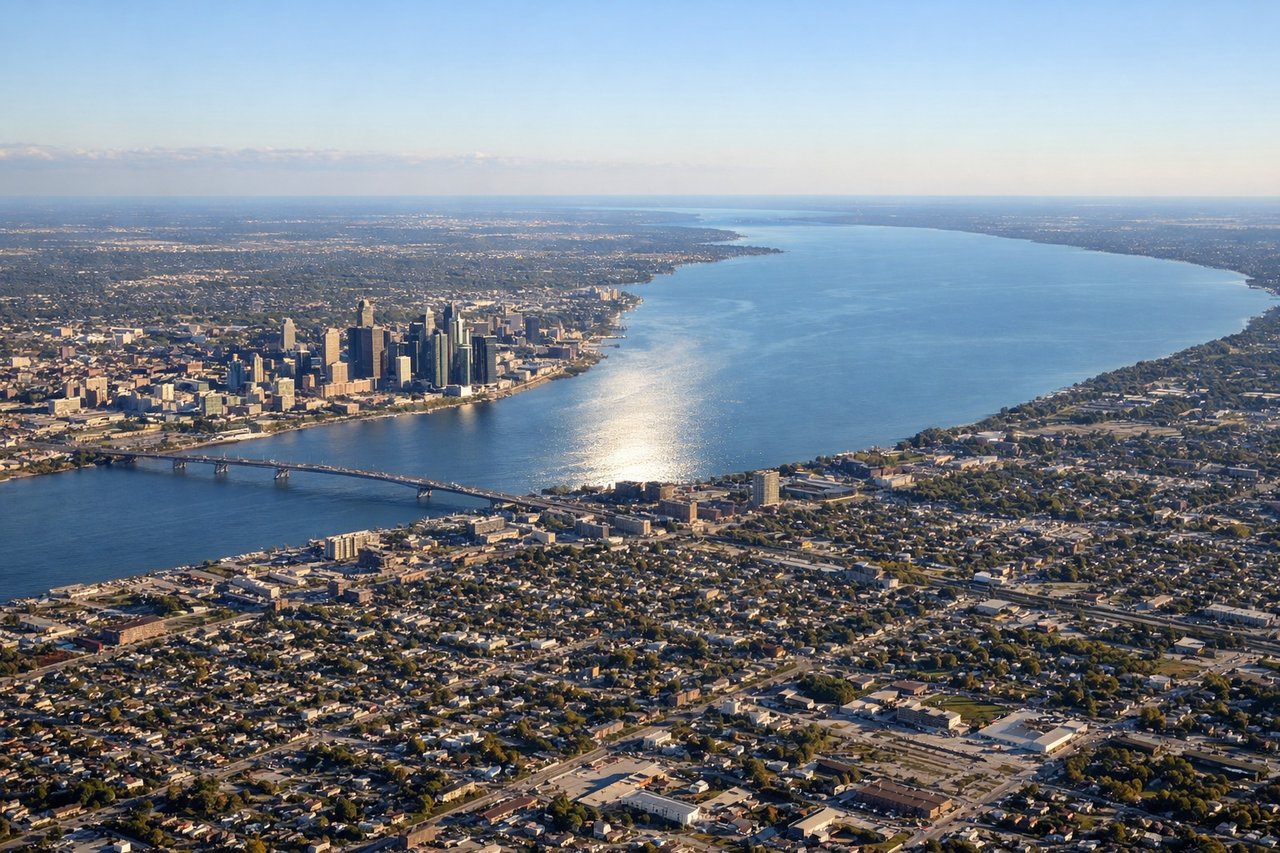
LEFTOn approach into DTW via the 22L/22R runway complex from the northeast, the final turn puts the Detroit River, downtown Detroit's skyline, and the Windsor, Ontario shoreline on the left side of the aircraft.
Landmarks on this routeAll landmarks →
Will your flight be in sunlight?
Pick a date and time in the Sun Map to watch the sun move across your whole flight.
About This Route
Which side of the plane should I sit on flying from Portland International Jetport (PWM) to Detroit Metro Wayne Co (DTW)?
Sit on the Right side of the plane for the best views on flights from Portland to Detroit. The right side delivers a more varied and dramatic experience overall, with the White Mountains, Green Mountains, and Adirondacks visible during cruise, compared to the flatter, less distinctive scenery on the left side for most of the route.
What can I see during takeoff from Portland International Jetport in Portland?
During takeoff from Portland International Jetport (PWM), sit on the Right side for the best views. Departing PWM on runway 29, the climb-out banks the aircraft over Casco Bay's islands before turning west, and the right side then picks up the White Mountains of New Hampshire rising on the horizon as the plane climbs inland. Notable sights include: Casco Bay islands, Portland Harbor, White Mountains (Presidential Range), Sebago Lake.
What can I see when landing at Detroit Metro Wayne Co in Detroit?
When landing at Detroit Metro Wayne Co (DTW), sit on the Left side for the best views. On approach into DTW via the 22L/22R runway complex from the northeast, the final turn puts the Detroit River, downtown Detroit's skyline, and the Windsor, Ontario shoreline on the left side of the aircraft. Notable sights include: Detroit skyline, Detroit River, Windsor Ontario waterfront, Lake St. Clair.
How long is the flight from Portland to Detroit?
The flight from Portland International Jetport (PWM) to Detroit Metro Wayne Co (DTW) takes about 1 hour 50 minutes. The shortest flight path between them is 667 miles (1,073 km); winds and air traffic control usually add a few percent.
What does the Portland to Detroit flight path pass over?
White Mountains (NH), Green Mountains (VT), Adirondack Mountains (NY), and the eastern end of Lake Ontario are within view along the westbound cruise path before descending into the Michigan lowlands.