Left side scores higher due to superior takeoff scenery (Riyadh urban departure with clear city-to-desert transition) and competitive landing views. While right side offers the Aegean Sea and islands during approach, left side's full-flight experience—combining meaningful urban departure, varied desert and mountain terrain during cruise, and reasonable landing context—provides more consistent visual interest across the entire 4h 50m journey.
Flown RUH to ATH? Did we get it right?
Flight Path
Riyadh to Athens is 1,606 miles (2,585 km), a flight of about 3 hours 45 minutes.
The flight path crosses the Arabian Peninsula's interior plateau, then transitions over the Levant region. Notable features include the Syrian Desert (flat, featureless), the Anti-Lebanon Mountains (visible as a distant ridge on the left/north side during cruise), the Dead Sea region, and the Jordan Valley. As the aircraft approaches the Mediterranean, the Taurus Mountains of southern Turkey appear on the left horizon. The final cruise segment crosses the eastern Mediterranean with Cyprus visible as a large island on the left side approximately 90 minutes before Athens. The Peloponnese peninsula becomes visible 30-40 minutes before landing, with the Corinth Canal and Gulf of Corinth marking the approach to Attica.
Great circle distance and headings ›Phase by phase
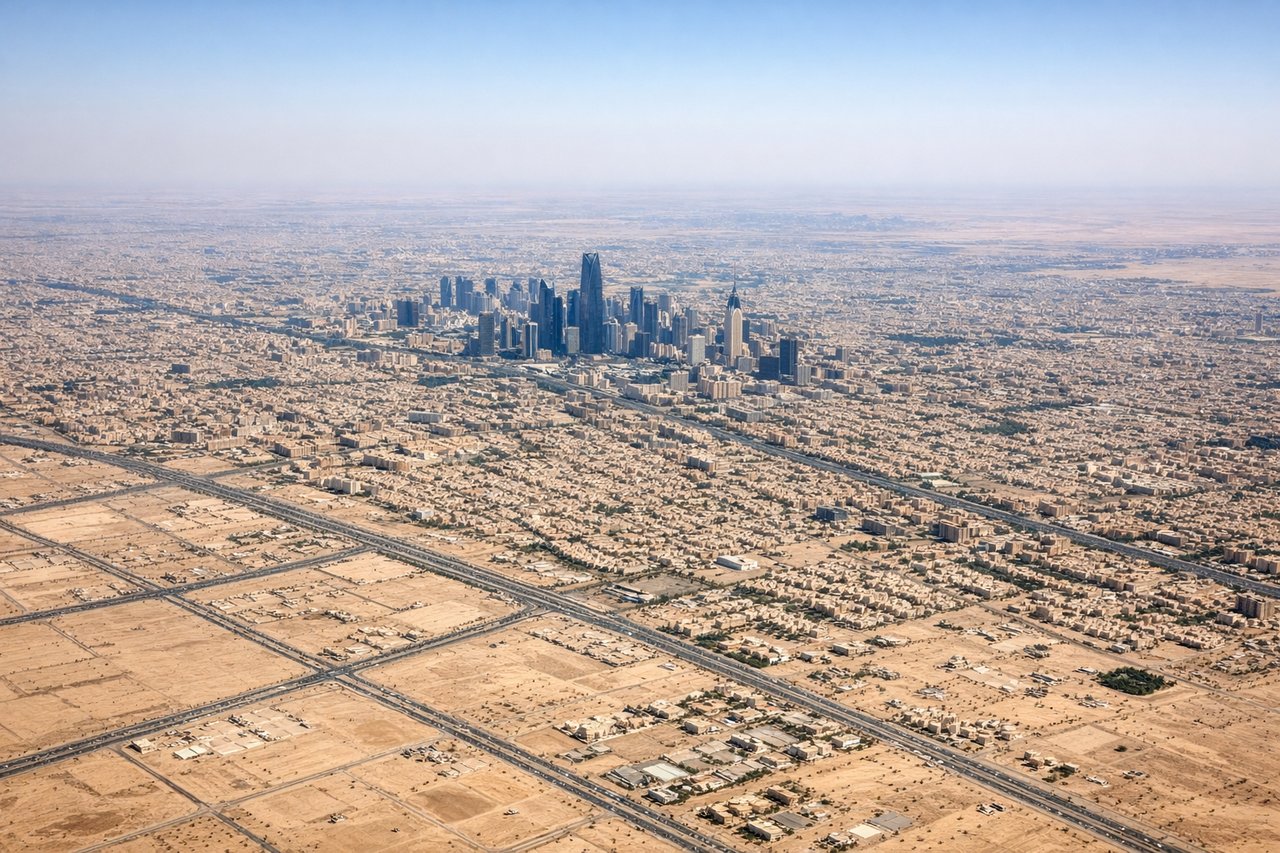
Takeoff from RUH
LEFTLeft side captures Riyadh's urban sprawl and the transition from city to open desert during the initial climb-out. Right side faces open desert immediately with minimal urban context.
Landing at ATH
RIGHTRight side (northeast approach) provides views of the Aegean Sea, Greek islands, and the dramatic approach into Athens over water and coastal terrain. Left side faces inland mountains and less distinctive scenery during descent.
Will your flight be in sunlight?
Pick a date and time in the Sun Map to watch the sun move across your whole flight.
About This Route
Which side of the plane should I sit on flying from King Khaled International (RUH) to Athens International Eleftherios Venizelos (ATH)?
Sit on the Left side of the plane for the best views on flights from Riyadh to Athens. Left side scores higher due to superior takeoff scenery (Riyadh urban departure with clear city-to-desert transition) and competitive landing views. While right side offers the Aegean Sea and islands during approach, left side's full-flight experience—combining meaningful urban departure, varied desert and mountain terrain during cruise, and reasonable landing context—provides more consistent visual interest across the entire 4h 50m journey.
What can I see during takeoff from King Khaled International in Riyadh?
During takeoff from King Khaled International (RUH), sit on the Left side for the best views. Left side captures Riyadh's urban sprawl and the transition from city to open desert during the initial climb-out. Right side faces open desert immediately with minimal urban context. Notable sights include: Riyadh city center and suburbs, King Khaled International Airport complex, desert plains extending south and east.
What can I see when landing at Athens International Eleftherios Venizelos in Athens?
When landing at Athens International Eleftherios Venizelos (ATH), sit on the Right side for the best views. Right side (northeast approach) provides views of the Aegean Sea, Greek islands, and the dramatic approach into Athens over water and coastal terrain. Left side faces inland mountains and less distinctive scenery during descent. Notable sights include: Aegean Sea with scattered Greek islands, Attica Peninsula coastline, Mount Hymettus and Penteli mountain range, Athens metropolitan area sprawl.
How long is the flight from Riyadh to Athens?
The flight from King Khaled International (RUH) to Athens International Eleftherios Venizelos (ATH) takes about 3 hours 45 minutes. The shortest flight path between them is 1,606 miles (2,585 km); winds and air traffic control usually add a few percent.
What does the Riyadh to Athens flight path pass over?
The flight path crosses the Arabian Peninsula's interior plateau, then transitions over the Levant region. Notable features include the Syrian Desert (flat, featureless), the Anti-Lebanon Mountains (visible as a distant ridge on the left/north side during cruise), the Dead Sea region, and the Jordan Valley. As the aircraft approaches the Mediterranean, the Taurus Mountains of southern Turkey appear on the left horizon. The final cruise segment crosses the eastern Mediterranean with Cyprus visible as a large island on the left side approximately 90 minutes before Athens. The Peloponnese peninsula becomes visible 30-40 minutes before landing, with the Corinth Canal and Gulf of Corinth marking the approach to Attica.