The takeoff view of the Andes is more dramatic and visually distinctive than the landing approach. While Perth's coastal arrival is pleasant, the mountain scenery departing Santiago is more spectacular and memorable.
Flight Path
The flight crosses the southern Pacific Ocean with no significant landmarks visible for approximately 8 hours. The route passes over open ocean southeast of Easter Island (not visible at typical cruise altitude and distance). Approaching Perth, the Indian Ocean remains featureless until the final 90 minutes when the Australian coastline becomes visible.
Great circle distance and headings ›


Phase by phase

Takeoff from SCL
LEFTLeft side offers immediate views of the Andes cordillera rising dramatically east of Santiago. The western side faces the Pacific coastal plain with less visual interest during climb-out.
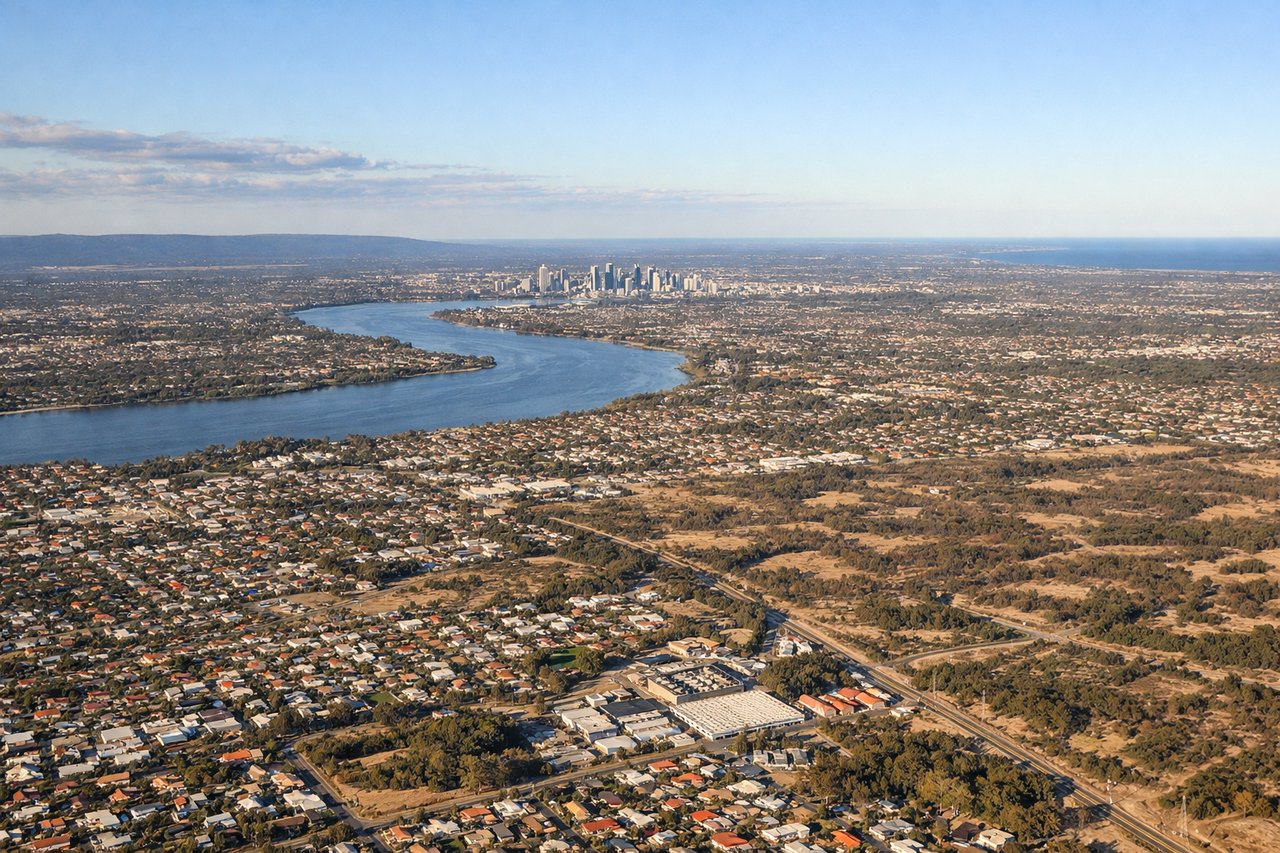
Landing at PER
RIGHTRight side provides views of the Indian Ocean approach and Perth's coastal geography. The descent path typically brings aircraft over the ocean from the west, making the right side optimal for seeing the coastline, Swan River estuary, and city landmarks.
Landmarks on this routeAll landmarks →
Will your flight be in sunlight?
See exactly which side of the plane gets sun and shade at your departure time.
About This Route
Which side of the plane should I sit on flying from Arturo Merino Benitez International (SCL) to Perth International (PER)?
Sit on the Left side of the plane for the best views on flights from Santiago to Perth. The takeoff view of the Andes is more dramatic and visually distinctive than the landing approach. While Perth's coastal arrival is pleasant, the mountain scenery departing Santiago is more spectacular and memorable.
What can I see during takeoff from Arturo Merino Benitez International in Santiago?
During takeoff from Arturo Merino Benitez International (SCL), sit on the Left side for the best views. Left side offers immediate views of the Andes cordillera rising dramatically east of Santiago. The western side faces the Pacific coastal plain with less visual interest during climb-out. Notable sights include: Andes Mountains (main ridge), Maipo River valley, Santiago urban sprawl, Pacific Ocean coastline to the west.
What can I see when landing at Perth International in Perth?
When landing at Perth International (PER), sit on the Right side for the best views. Right side provides views of the Indian Ocean approach and Perth's coastal geography. The descent path typically brings aircraft over the ocean from the west, making the right side optimal for seeing the coastline, Swan River estuary, and city landmarks. Notable sights include: Indian Ocean, Swan River estuary, Perth city skyline, Darling Range escarpment inland.
How long is the flight from Santiago to Perth?
The flight from Arturo Merino Benitez International (SCL) to Perth International (PER) takes 10h 45m.
What does the Santiago to Perth flight path pass over?
The flight crosses the southern Pacific Ocean with no significant landmarks visible for approximately 8 hours. The route passes over open ocean southeast of Easter Island (not visible at typical cruise altitude and distance). Approaching Perth, the Indian Ocean remains featureless until the final 90 minutes when the Australian coastline becomes visible.