The left side captures both scenic bookends of this transoceanic flight: the dramatic Andes wall on departure from Santiago and the Sydney Harbour skyline on arrival. The right side, by contrast, only offers a fading view of the city and coastal range on takeoff and open coastline on landing, with over 11 hours of featureless Pacific Ocean in between for both sides.
Flight Path
Santiago to Sydney is 7,047 miles (11,340 km), a flight of about 12 hours 30 minutes.
The flight path curves well south of the direct latitude line due to great-circle geometry, crossing thousands of miles of open Southern Pacific Ocean, likely passing south of New Zealand's South Island with no land visible for the majority of the cruise phase.
Great circle distance and headings ›

Phase by phase
Takeoff from SCL
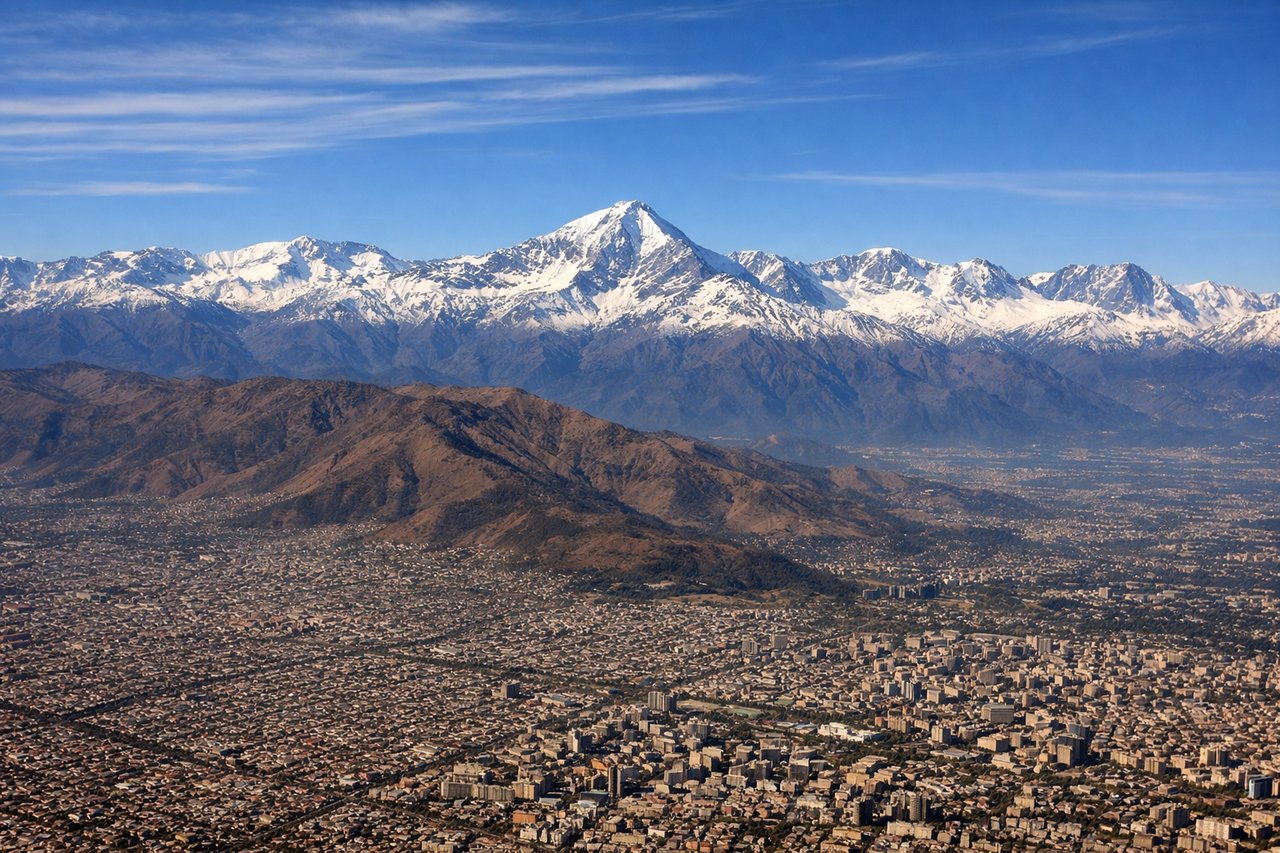
LEFTDeparting SCL on runway 17, the climb-out heads south with the Andes rising immediately to the east, putting the mountains right outside the left-side windows. As the aircraft banks west toward the Pacific for the Sydney routing, the snow-capped peaks stay in view a few extra minutes before the plane turns away from land entirely.
Landing at SYD
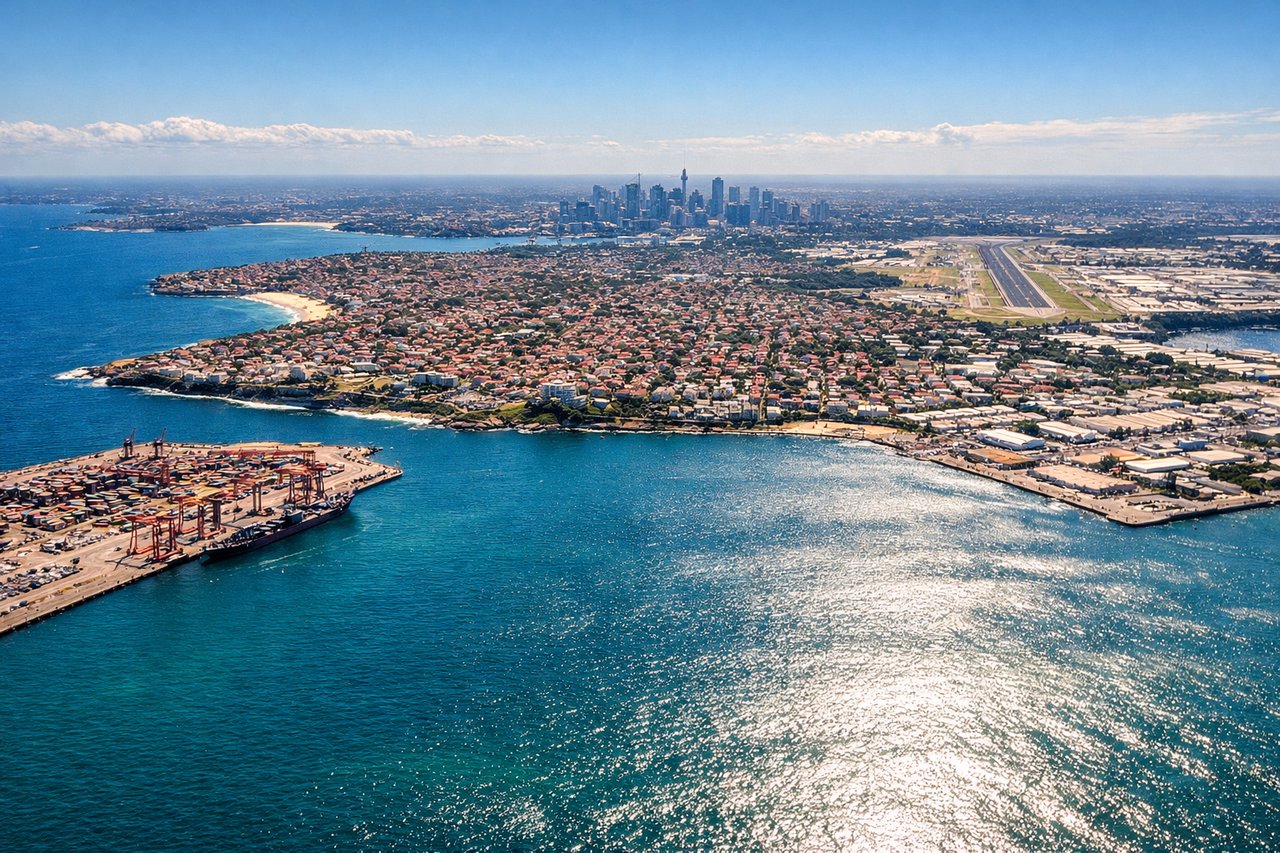
LEFTArriving from the south after the long Pacific crossing, the aircraft typically lines up on Sydney's northbound runway, flying over Botany Bay before touchdown. This puts the Sydney CBD skyline, Harbour Bridge, and the harbour opening visible off the left side in the middle distance as the plane descends.
Landmarks on this routeAll landmarks →
Will your flight be in sunlight?
Pick a date and time in the Sun Map to watch the sun move across your whole flight.
About This Route
Which side of the plane should I sit on flying from Arturo Merino Benitez International (SCL) to Kingsford Smith International Airport (SYD)?
Sit on the Left side of the plane for the best views on flights from Santiago to Sydney. The left side captures both scenic bookends of this transoceanic flight: the dramatic Andes wall on departure from Santiago and the Sydney Harbour skyline on arrival. The right side, by contrast, only offers a fading view of the city and coastal range on takeoff and open coastline on landing, with over 11 hours of featureless Pacific Ocean in between for both sides.
What can I see during takeoff from Arturo Merino Benitez International in Santiago?
During takeoff from Arturo Merino Benitez International (SCL), sit on the Left side for the best views. Departing SCL on runway 17, the climb-out heads south with the Andes rising immediately to the east, putting the mountains right outside the left-side windows. As the aircraft banks west toward the Pacific for the Sydney routing, the snow-capped peaks stay in view a few extra minutes before the plane turns away from land entirely. Notable sights include: Andes Cordillera peaks (Cerro El Plomo area), Maipo Valley foothills, eastern Santiago suburbs, Pacific coastal range in the distance.
What can I see when landing at Kingsford Smith International Airport in Sydney?
When landing at Kingsford Smith International Airport (SYD), sit on the Left side for the best views. Arriving from the south after the long Pacific crossing, the aircraft typically lines up on Sydney's northbound runway, flying over Botany Bay before touchdown. This puts the Sydney CBD skyline, Harbour Bridge, and the harbour opening visible off the left side in the middle distance as the plane descends. Notable sights include: Sydney Harbour Bridge, Opera House silhouette, Botany Bay, CBD skyline.
How long is the flight from Santiago to Sydney?
The flight from Arturo Merino Benitez International (SCL) to Kingsford Smith International Airport (SYD) takes about 12 hours 30 minutes. The shortest flight path between them is 7,047 miles (11,340 km); winds and air traffic control usually add a few percent.
What does the Santiago to Sydney flight path pass over?
The flight path curves well south of the direct latitude line due to great-circle geometry, crossing thousands of miles of open Southern Pacific Ocean, likely passing south of New Zealand's South Island with no land visible for the majority of the cruise phase.