San Francisco to Las Vegas is 416 miles (670 km), a flight of about 1 hour 20 minutes.
While takeoff favors the left with San Francisco Bay views, the cruise phase over the southern Sierra Nevada, Mono Lake basin, and Death Valley's stark ridgelines gives the right side more sustained dramatic terrain, tipping the overall balance in its favor.
Flight Path
Southern Sierra Nevada crest near Mammoth Lakes, Mono Lake basin, and the Death Valley / Amargosa Range desert corridor before descending into the Las Vegas valley
Great circle distance and headings ›


Phase by phase
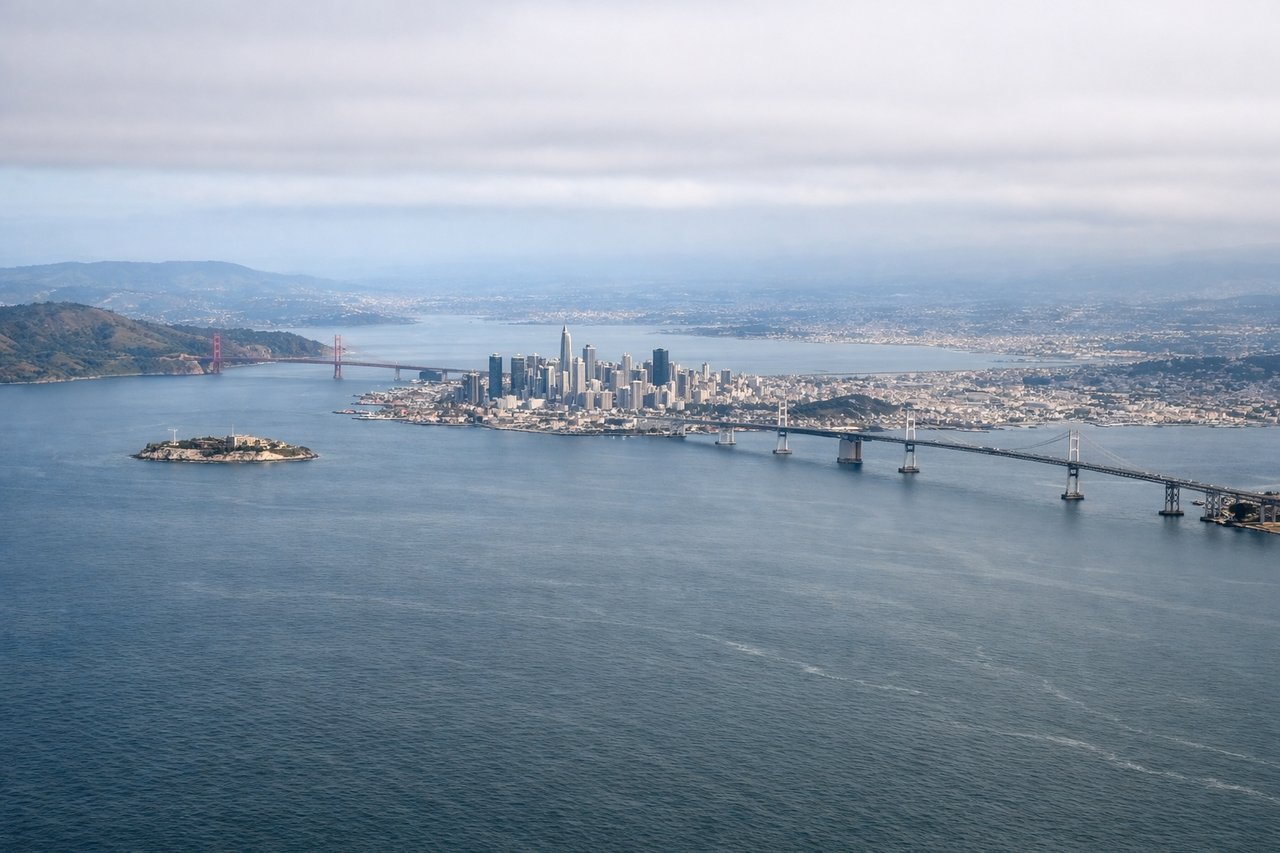
Takeoff from SFO
LEFTDeparting SFO on the eastbound runways, the initial climb curves over the South Bay with San Francisco's skyline, the Bay Bridge, and the Golden Gate visible off the left side before the aircraft turns southeast toward the Central Valley.
Landing at LSV
RIGHTOn approach into the Las Vegas valley from the northwest, the right side offers views of the rugged Spring Mountains and the descent path that skirts north of the Strip, giving a clear look at the desert basin and distant Red Rock escarpment.
Landmarks on this routeAll landmarks →
Will your flight be in sunlight?
Pick a date and time in the Sun Map to watch the sun move across your whole flight.
About This Route
Which side of the plane should I sit on flying from San Francisco International (SFO) to Nellis Afb (LSV)?
Sit on the Right side of the plane for the best views on flights from San Francisco to Las Vegas. While takeoff favors the left with San Francisco Bay views, the cruise phase over the southern Sierra Nevada, Mono Lake basin, and Death Valley's stark ridgelines gives the right side more sustained dramatic terrain, tipping the overall balance in its favor.
What can I see during takeoff from San Francisco International in San Francisco?
During takeoff from San Francisco International (SFO), sit on the Left side for the best views. Departing SFO on the eastbound runways, the initial climb curves over the South Bay with San Francisco's skyline, the Bay Bridge, and the Golden Gate visible off the left side before the aircraft turns southeast toward the Central Valley. Notable sights include: San Francisco skyline, Bay Bridge, Golden Gate Bridge (distant), San Francisco Bay.
What can I see when landing at Nellis Afb in Las Vegas?
When landing at Nellis Afb (LSV), sit on the Right side for the best views. On approach into the Las Vegas valley from the northwest, the right side offers views of the rugged Spring Mountains and the descent path that skirts north of the Strip, giving a clear look at the desert basin and distant Red Rock escarpment. Notable sights include: Spring Mountains, Red Rock Canyon escarpment, Las Vegas valley floor, distant Las Vegas Strip.
How long is the flight from San Francisco to Las Vegas?
The flight from San Francisco International (SFO) to Nellis Afb (LSV) takes about 1 hour 20 minutes. The shortest flight path between them is 416 miles (670 km); winds and air traffic control usually add a few percent.
What does the San Francisco to Las Vegas flight path pass over?
Southern Sierra Nevada crest near Mammoth Lakes, Mono Lake basin, and the Death Valley / Amargosa Range desert corridor before descending into the Las Vegas valley