The left side wins overall for the dramatic San Francisco departure views. The transoceanic cruise offers little to see on either side, and the Fiji arrival views on the right are beautiful but brief. The SFO departure on the left is the most visually memorable portion of the journey.
Flight Path
The flight tracks southwest across the open North and South Pacific Ocean, crossing the equator roughly 3 to 4 hours after departure. The route passes over the Line Islands, with Kiribati's Jarvis Island and Palmyra Atoll potentially visible as tiny specks far below in clear conditions. The International Date Line is crossed approximately 2 hours before arrival. The final descent brings views of the Fijian archipelago, with Viti Levu's mountainous interior and surrounding reef systems becoming visible. There are no significant landmasses between California and Fiji along this routing.
Great circle distance and headings ›

Phase by phase
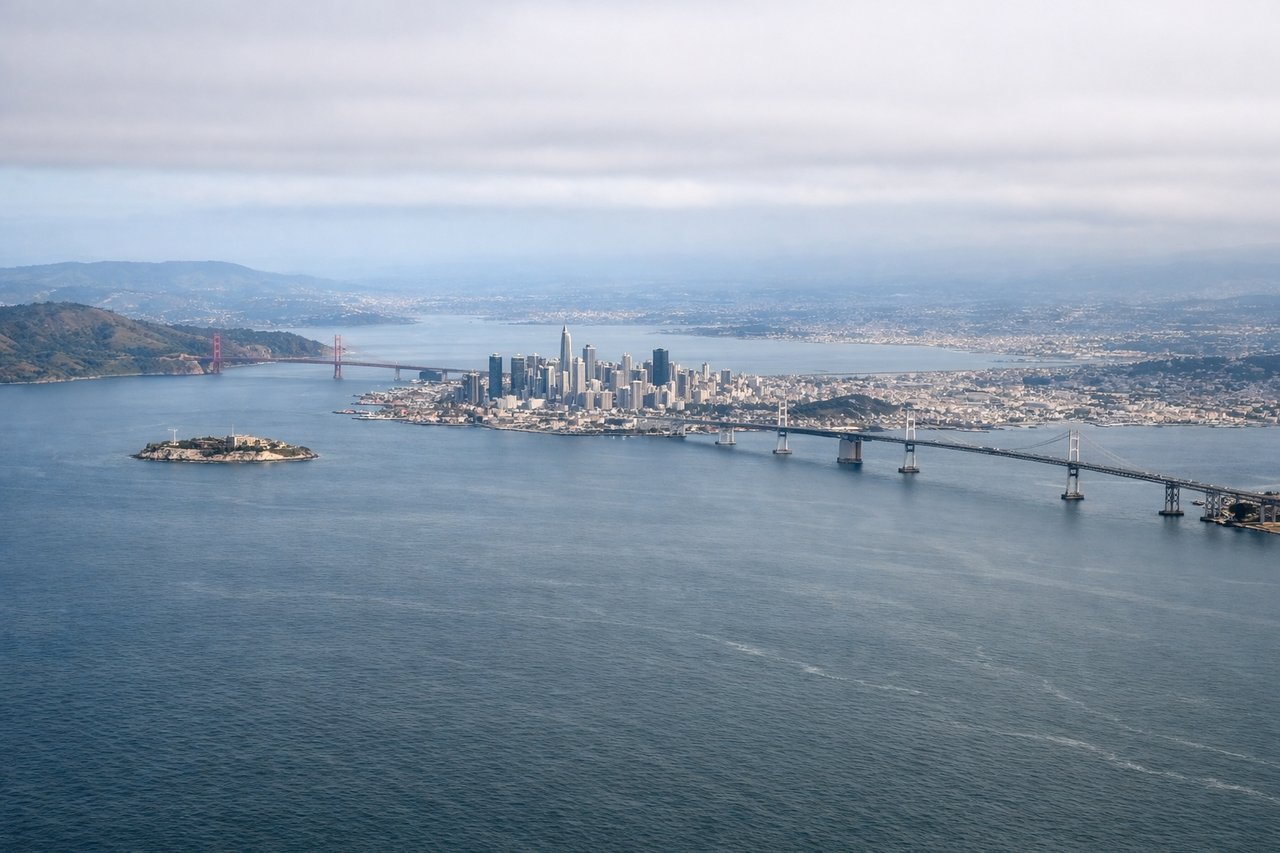
Takeoff from SFO
LEFTSFO typically departs southward on runways 28L/28R or northward on 01L/01R. On the dominant westward departures over the bay, the left side gives you San Francisco Bay, the city skyline, and the Bay Bridge. Climbing out over the Pacific, the left side tracks the San Francisco Peninsula coastline.
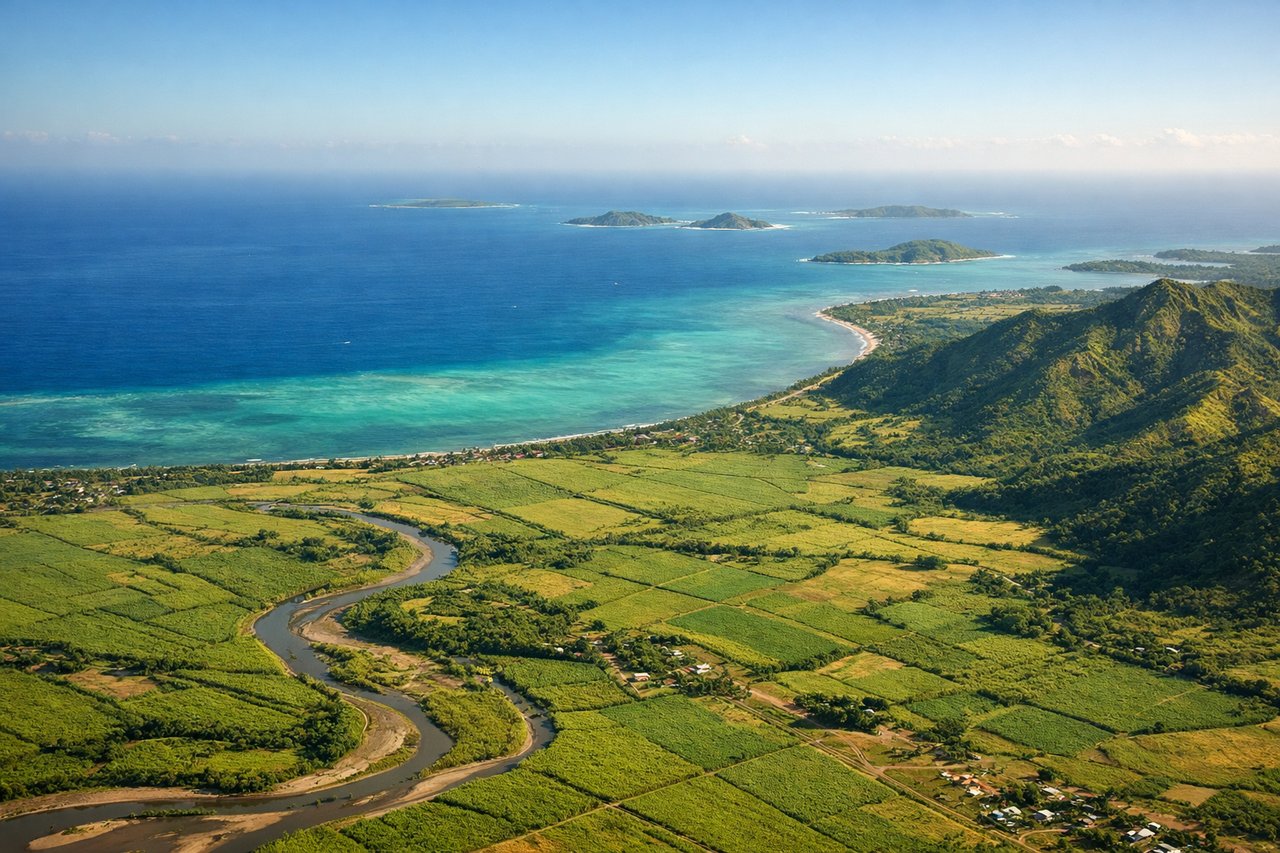
Landing at NAN
RIGHTNadi International typically lands on runway 02 from the south or runway 20 from the north. On the common runway 02 approach from the south, the right side faces west toward the Nadi Bay coastline and the Mamanuca Islands scattered offshore. The right side also gives views of the Sabeto mountain range inland.
Landmarks on this routeAll landmarks →
Will your flight be in sunlight?
See exactly which side of the plane gets sun and shade at your departure time.
About This Route
Which side of the plane should I sit on flying from San Francisco International (SFO) to Nadi International (NAN)?
Sit on the Left side of the plane for the best views on flights from San Francisco to Nandi. The left side wins overall for the dramatic San Francisco departure views. The transoceanic cruise offers little to see on either side, and the Fiji arrival views on the right are beautiful but brief. The SFO departure on the left is the most visually memorable portion of the journey.
What can I see during takeoff from San Francisco International in San Francisco?
During takeoff from San Francisco International (SFO), sit on the Left side for the best views. SFO typically departs southward on runways 28L/28R or northward on 01L/01R. On the dominant westward departures over the bay, the left side gives you San Francisco Bay, the city skyline, and the Bay Bridge. Climbing out over the Pacific, the left side tracks the San Francisco Peninsula coastline. Notable sights include: San Francisco Bay, Bay Bridge, San Francisco city skyline, San Mateo Peninsula coastline.
What can I see when landing at Nadi International in Nandi?
When landing at Nadi International (NAN), sit on the Right side for the best views. Nadi International typically lands on runway 02 from the south or runway 20 from the north. On the common runway 02 approach from the south, the right side faces west toward the Nadi Bay coastline and the Mamanuca Islands scattered offshore. The right side also gives views of the Sabeto mountain range inland. Notable sights include: Nadi Bay, Mamanuca Islands, Sabeto mountain range, Viti Levu coastal lowlands.
How long is the flight from San Francisco to Nandi?
The flight from San Francisco International (SFO) to Nadi International (NAN) takes Approximately 10 to 10.5 hours.
What does the San Francisco to Nandi flight path pass over?
The flight tracks southwest across the open North and South Pacific Ocean, crossing the equator roughly 3 to 4 hours after departure. The route passes over the Line Islands, with Kiribati's Jarvis Island and Palmyra Atoll potentially visible as tiny specks far below in clear conditions. The International Date Line is crossed approximately 2 hours before arrival. The final descent brings views of the Fijian archipelago, with Viti Levu's mountainous interior and surrounding reef systems becoming visible. There are no significant landmasses between California and Fiji along this routing.