While takeoff favors the right for delta views, the landing approach into Bankstown offers superior geography: Sydney Harbour, Blue Mountains, and the Parramatta River system provide more dramatic and recognizable landmarks than the Mekong Delta's flat terrain.
Flight Path
The flight path crosses the Coral Sea and passes east of the Great Barrier Reef (not directly visible but relevant to routing). Over Queensland, the coastal ranges and inland plains are visible. The flight then crosses inland toward New South Wales, passing over the Great Dividing Range's northern sections before descending toward Sydney. Key midpoint landmarks include the Queensland coast near Cairns/Townsville region, the Coral Sea (open water for several hours), and the transition from tropical to temperate landscape as the aircraft moves south.
Great circle distance and headings ›

.jpg?width=600)
Phase by phase
Takeoff from SGN
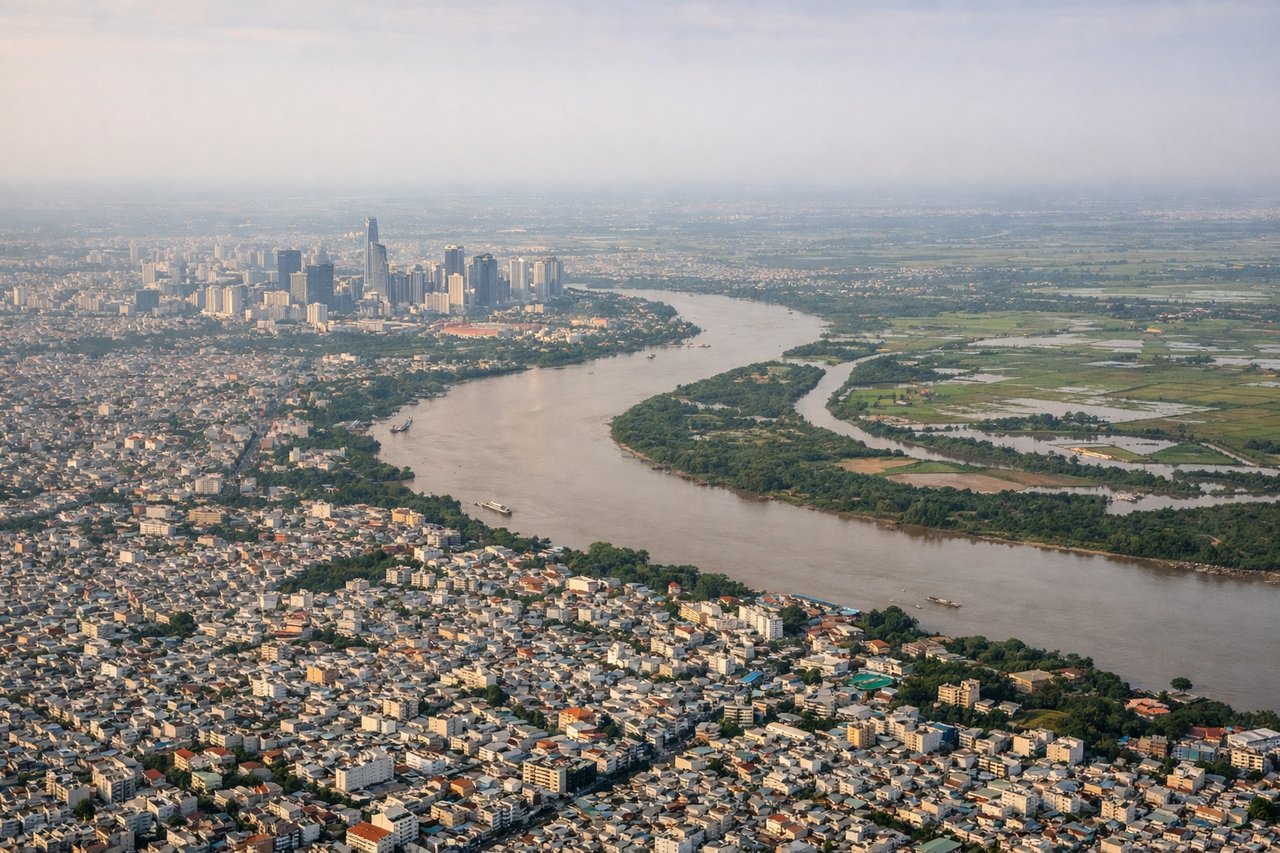
RIGHTTan Son Nhat typically departs eastbound (Runway 25L/R). Right-side seats offer views of the Saigon River delta and Mekong estuary as the aircraft climbs over the Mekong Delta region, with the river's distinctive braided channels visible below.
Landing at BWU
LEFTBankstown Airport (Sydney) typically uses Runway 11 for landings (southwest approach). Left-side seats provide views of Sydney Harbour, the Blue Mountains to the west, and the Cumberland Plain as the aircraft descends on final approach from the northwest.
Landmarks on this routeAll landmarks →
Will your flight be in sunlight?
See exactly which side of the plane gets sun and shade at your departure time.
About This Route
Which side of the plane should I sit on flying from Tansonnhat International (SGN) to Sydney Bankstown (BWU)?
Sit on the Left side of the plane for the best views on flights from Ho Chi Minh City to Sydney. While takeoff favors the right for delta views, the landing approach into Bankstown offers superior geography: Sydney Harbour, Blue Mountains, and the Parramatta River system provide more dramatic and recognizable landmarks than the Mekong Delta's flat terrain.
What can I see during takeoff from Tansonnhat International in Ho Chi Minh City?
During takeoff from Tansonnhat International (SGN), sit on the Right side for the best views. Tan Son Nhat typically departs eastbound (Runway 25L/R). Right-side seats offer views of the Saigon River delta and Mekong estuary as the aircraft climbs over the Mekong Delta region, with the river's distinctive braided channels visible below. Notable sights include: Saigon River (winding through Ho Chi Minh City), Mekong Delta (flat agricultural grid), Can Tho city (distant), Phu Quoc Island (far right on horizon during climb).
What can I see when landing at Sydney Bankstown in Sydney?
When landing at Sydney Bankstown (BWU), sit on the Left side for the best views. Bankstown Airport (Sydney) typically uses Runway 11 for landings (southwest approach). Left-side seats provide views of Sydney Harbour, the Blue Mountains to the west, and the Cumberland Plain as the aircraft descends on final approach from the northwest. Notable sights include: Sydney Harbour (distinctive shape with multiple inlets), Blue Mountains (escarpment on western horizon), Parramatta River (tributary visible in approach corridor), Penrith Lakes (if visible on clearer days to the west).
How long is the flight from Ho Chi Minh City to Sydney?
The flight from Tansonnhat International (SGN) to Sydney Bankstown (BWU) takes Approximately 7.5 to 8.5 hours.
What does the Ho Chi Minh City to Sydney flight path pass over?
The flight path crosses the Coral Sea and passes east of the Great Barrier Reef (not directly visible but relevant to routing). Over Queensland, the coastal ranges and inland plains are visible. The flight then crosses inland toward New South Wales, passing over the Great Dividing Range's northern sections before descending toward Sydney. Key midpoint landmarks include the Queensland coast near Cairns/Townsville region, the Coral Sea (open water for several hours), and the transition from tropical to temperate landscape as the aircraft moves south.