Right-side seats deliver superior scenery for both departure and arrival. The takeoff view captures Singapore's maritime geography and the Malaysian coast, while the landing approach showcases the dramatic contrast between Texas's industrial Gulf Coast and natural bayou systems.
Flight Path
Over the Indian Ocean, the flight passes south of India and Sri Lanka, crossing open water with no significant visible landmarks. The route then crosses the Arabian Sea toward the Middle East, passing south of the Arabian Peninsula. Continuing westward, the flight crosses the Persian Gulf region and eventually the Arabian Desert before reaching the African continent. The final leg crosses the Atlantic Ocean toward North America, with no major landmarks visible until approaching the North American continent and the Texas coast.
Great circle distance and headings ›


.jpg?width=600)
.jpg?width=600)
Phase by phase
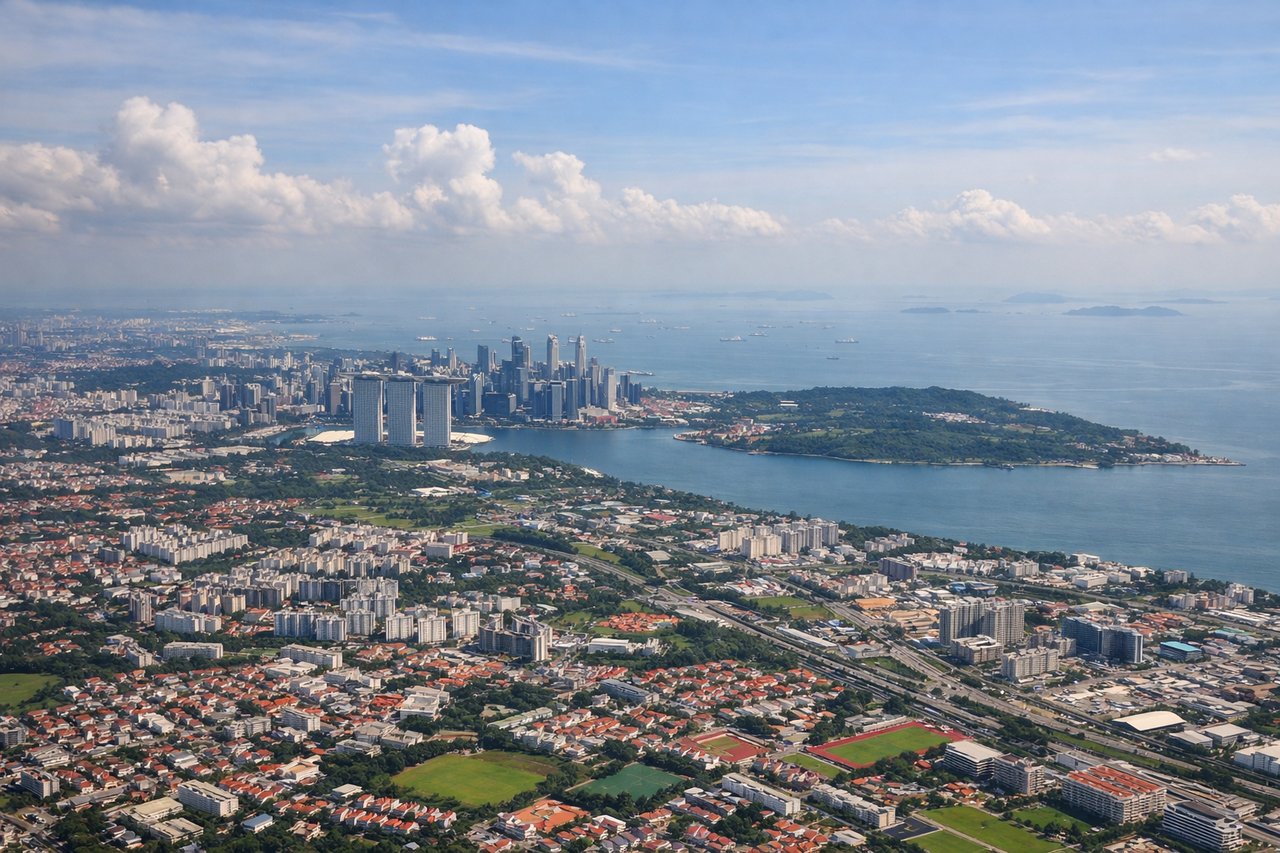
Takeoff from SIN
RIGHTRight-side seats offer views of Singapore Strait and the Malaysian peninsula as the aircraft climbs northwestward. You'll see the busy shipping lanes and coastal geography that define Singapore's strategic location.

Landing at IAH
RIGHTRight-side seats provide excellent views during descent into Houston. You'll see the Gulf Coast, Galveston Bay, and the Texas coastal plains with their distinctive bayou systems and industrial infrastructure.
Landmarks on this routeAll landmarks →
Will your flight be in sunlight?
See exactly which side of the plane gets sun and shade at your departure time.
About This Route
Which side of the plane should I sit on flying from Singapore Changi (SIN) to George Bush Intcntl Houston (IAH)?
Sit on the Right side of the plane for the best views on flights from Singapore to Houston. Right-side seats deliver superior scenery for both departure and arrival. The takeoff view captures Singapore's maritime geography and the Malaysian coast, while the landing approach showcases the dramatic contrast between Texas's industrial Gulf Coast and natural bayou systems.
What can I see during takeoff from Singapore Changi in Singapore?
During takeoff from Singapore Changi (SIN), sit on the Right side for the best views. Right-side seats offer views of Singapore Strait and the Malaysian peninsula as the aircraft climbs northwestward. You'll see the busy shipping lanes and coastal geography that define Singapore's strategic location. Notable sights include: Singapore Strait, Johor Strait, Malaysian Peninsula coastline, Batam Island (Indonesia).
What can I see when landing at George Bush Intcntl Houston in Houston?
When landing at George Bush Intcntl Houston (IAH), sit on the Right side for the best views. Right-side seats provide excellent views during descent into Houston. You'll see the Gulf Coast, Galveston Bay, and the Texas coastal plains with their distinctive bayou systems and industrial infrastructure. Notable sights include: Galveston Bay, Trinity River delta, Houston Ship Channel, Texas coastal prairie and refineries.
How long is the flight from Singapore to Houston?
The flight from Singapore Changi (SIN) to George Bush Intcntl Houston (IAH) takes 15h 30m.
What does the Singapore to Houston flight path pass over?
Over the Indian Ocean, the flight passes south of India and Sri Lanka, crossing open water with no significant visible landmarks. The route then crosses the Arabian Sea toward the Middle East, passing south of the Arabian Peninsula. Continuing westward, the flight crosses the Persian Gulf region and eventually the Arabian Desert before reaching the African continent. The final leg crosses the Atlantic Ocean toward North America, with no major landmarks visible until approaching the North American continent and the Texas coast.