The left side wins overall because it captures Singapore's skyline at departure and stays aligned with the Vietnamese and southern Chinese coastline for much of the cruise, giving repeated glimpses of land and coast. The right side is dominated by open South China Sea and Philippine Sea water for most of the flight, only briefly redeemed by the Incheon Bridge view on landing.
Flight Path
South China Sea, Vietnam's central coastline near Da Nang, Taiwan Strait, East China Sea approaching Jeju Island
Great circle distance and headings ›

.jpg?width=600)
Phase by phase
Takeoff from SIN
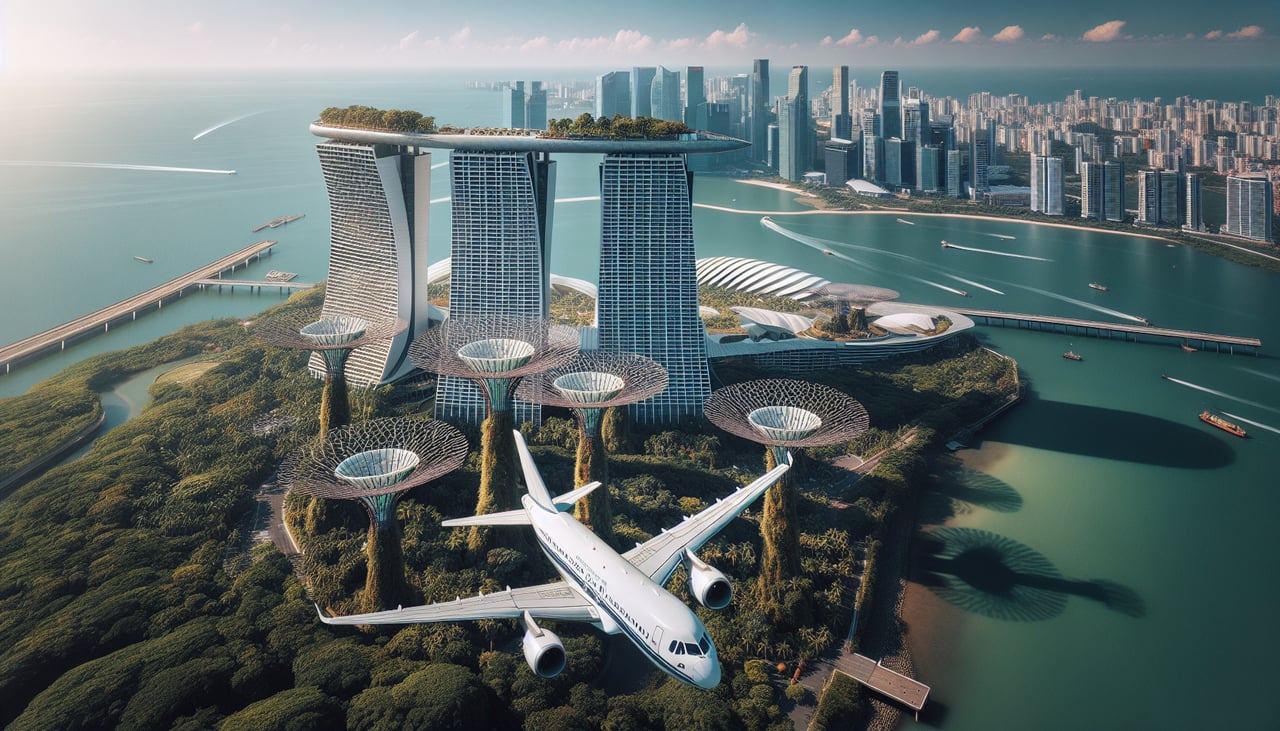
LEFTDeparting Changi on runway 02 climbs north over the Strait of Johor before the aircraft banks east toward Vietnam, and in that window the left side looks straight across Singapore's downtown skyline, Marina Bay, and Sentosa Island. The right side only shows Johor's flat, undeveloped east coast.
Landing at ICN
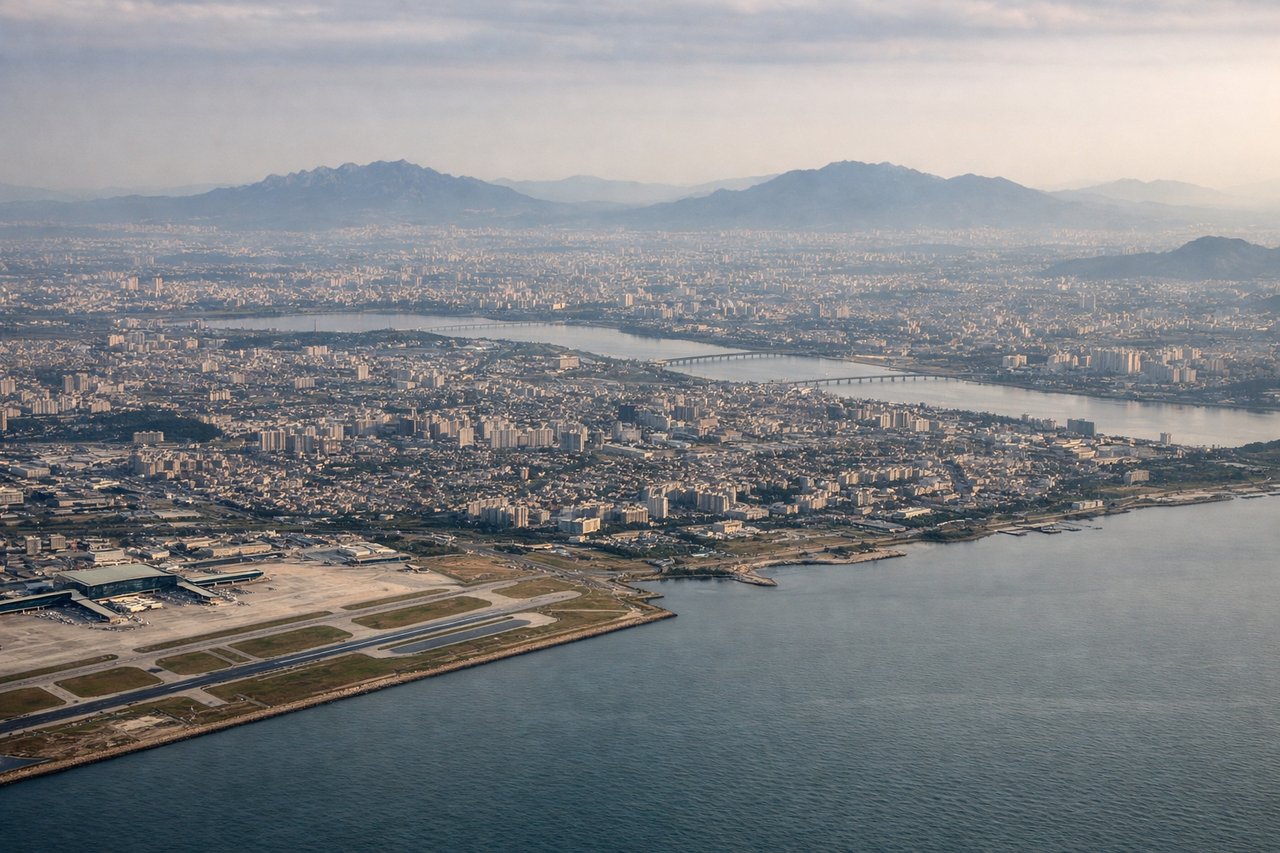
RIGHTOn approach to Incheon from the south, the final turn onto the northwest-facing runways puts Incheon Bridge and the Songdo skyline on the right side of the cabin, rising out of the Yellow Sea tidal flats. The left side mostly faces open water with little to see.
Landmarks on this routeAll landmarks →
Will your flight be in sunlight?
See exactly which side of the plane gets sun and shade at your departure time.
About This Route
Which side of the plane should I sit on flying from Singapore Changi (SIN) to Incheon International (ICN)?
Sit on the Left side of the plane for the best views on flights from Singapore to Seoul. The left side wins overall because it captures Singapore's skyline at departure and stays aligned with the Vietnamese and southern Chinese coastline for much of the cruise, giving repeated glimpses of land and coast. The right side is dominated by open South China Sea and Philippine Sea water for most of the flight, only briefly redeemed by the Incheon Bridge view on landing.
What can I see during takeoff from Singapore Changi in Singapore?
During takeoff from Singapore Changi (SIN), sit on the Left side for the best views. Departing Changi on runway 02 climbs north over the Strait of Johor before the aircraft banks east toward Vietnam, and in that window the left side looks straight across Singapore's downtown skyline, Marina Bay, and Sentosa Island. The right side only shows Johor's flat, undeveloped east coast. Notable sights include: Marina Bay Sands and CBD skyline, Sentosa Island, Strait of Singapore shipping lanes, Johor Bahru coastline.
What can I see when landing at Incheon International in Seoul?
When landing at Incheon International (ICN), sit on the Right side for the best views. On approach to Incheon from the south, the final turn onto the northwest-facing runways puts Incheon Bridge and the Songdo skyline on the right side of the cabin, rising out of the Yellow Sea tidal flats. The left side mostly faces open water with little to see. Notable sights include: Incheon Bridge, Songdo International Business District skyline, Yellow Sea tidal mudflats, Yeongjong Island coastline.
How long is the flight from Singapore to Seoul?
The flight from Singapore Changi (SIN) to Incheon International (ICN) takes 6h 40m.
What does the Singapore to Seoul flight path pass over?
South China Sea, Vietnam's central coastline near Da Nang, Taiwan Strait, East China Sea approaching Jeju Island