The left side wins on the strength of the San Francisco Bay departure and the cruise-phase views north toward Lake Tahoe, the Sierra Nevada crest, and the Great Salt Lake and Wasatch Range in Utah, which are more dramatic and varied than the drier, flatter terrain visible to the south along most of the route.
Flown SJC to BNA? Did we get it right?
Flight Path
San Jose to Nashville is 1,942 miles (3,126 km), a flight of about 4 hours 10 minutes.
Great Salt Lake and the Wasatch Range in Utah, the high desert basins of Nevada and western Wyoming, and the Front Range of the Rockies near the Colorado-Wyoming border before the route flattens out over the Great Plains of Nebraska and Kansas
Great circle distance and headings ›


Phase by phase
Takeoff from SJC
LEFTDeparting SJC on runway 30 to the northwest, the initial climb and right turn toward the east puts the South San Francisco Bay, San Jose's shoreline marshes, and the San Francisco/Oakland skyline on the left side before the aircraft rolls out eastbound. This is a far more recognizable urban-bay view than the Diablo Range foothills seen briefly on the right.
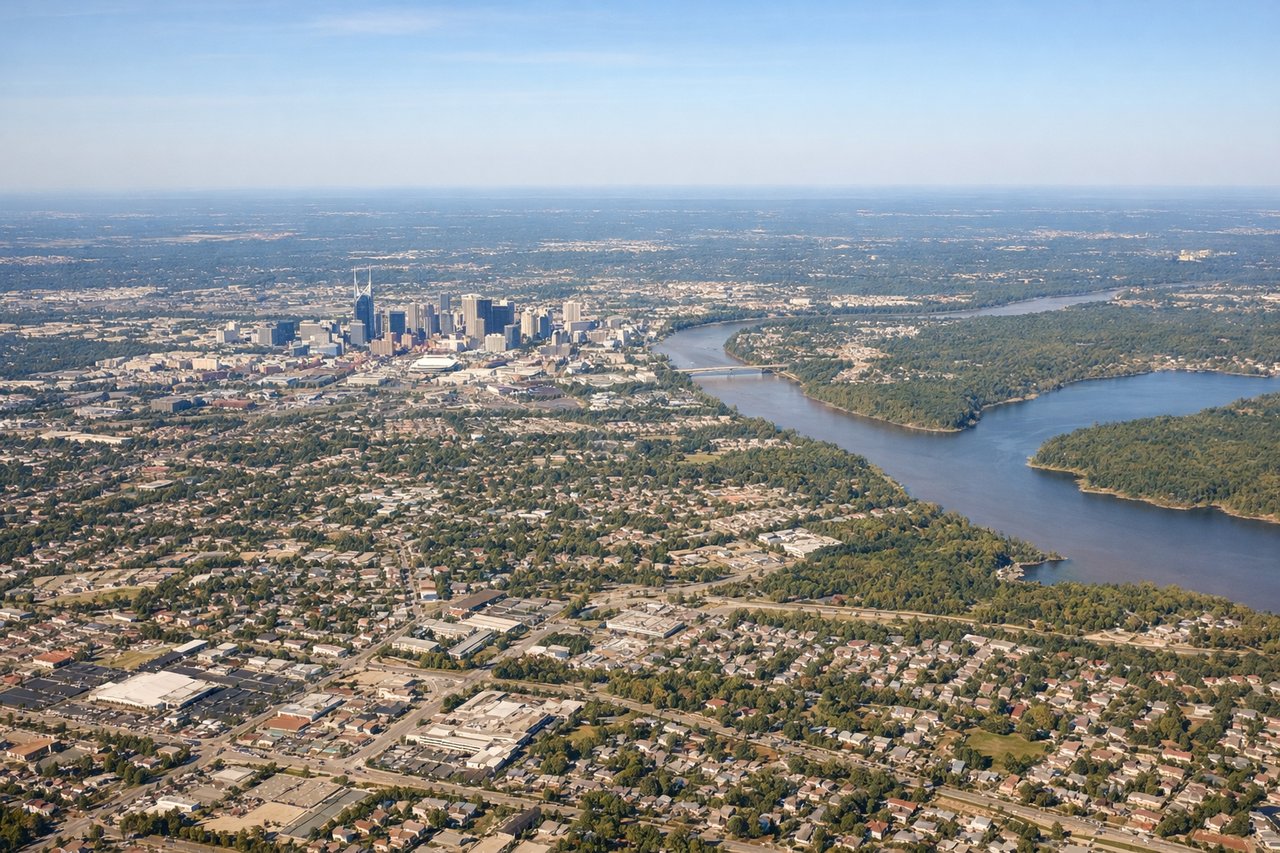
Landing at BNA
RIGHTOn approach into BNA from the west, the aircraft passes just north or south of downtown Nashville before lining up on the north-south runways, putting the city's skyline, the Cumberland River bends, and Nissan Stadium on the right side during the base-to-final turn. This beats the more suburban, tree-covered terrain on the left near Percy Priest Lake.
Will your flight be in sunlight?
Pick a date and time in the Sun Map to watch the sun move across your whole flight.
About This Route
Which side of the plane should I sit on flying from Norman Y Mineta San Jose International (SJC) to Nashville International (BNA)?
Sit on the Left side of the plane for the best views on flights from San Jose to Nashville. The left side wins on the strength of the San Francisco Bay departure and the cruise-phase views north toward Lake Tahoe, the Sierra Nevada crest, and the Great Salt Lake and Wasatch Range in Utah, which are more dramatic and varied than the drier, flatter terrain visible to the south along most of the route.
What can I see during takeoff from Norman Y Mineta San Jose International in San Jose?
During takeoff from Norman Y Mineta San Jose International (SJC), sit on the Left side for the best views. Departing SJC on runway 30 to the northwest, the initial climb and right turn toward the east puts the South San Francisco Bay, San Jose's shoreline marshes, and the San Francisco/Oakland skyline on the left side before the aircraft rolls out eastbound. This is a far more recognizable urban-bay view than the Diablo Range foothills seen briefly on the right. Notable sights include: South San Francisco Bay and salt ponds, San Francisco skyline in the distance, Oakland/East Bay hills, Mount Diablo.
What can I see when landing at Nashville International in Nashville?
When landing at Nashville International (BNA), sit on the Right side for the best views. On approach into BNA from the west, the aircraft passes just north or south of downtown Nashville before lining up on the north-south runways, putting the city's skyline, the Cumberland River bends, and Nissan Stadium on the right side during the base-to-final turn. This beats the more suburban, tree-covered terrain on the left near Percy Priest Lake. Notable sights include: Downtown Nashville skyline (AT&T 'Batman' Building), Cumberland River, Nissan Stadium, rolling Tennessee countryside.
How long is the flight from San Jose to Nashville?
The flight from Norman Y Mineta San Jose International (SJC) to Nashville International (BNA) takes about 4 hours 10 minutes. The shortest flight path between them is 1,942 miles (3,126 km); winds and air traffic control usually add a few percent.
What does the San Jose to Nashville flight path pass over?
Great Salt Lake and the Wasatch Range in Utah, the high desert basins of Nevada and western Wyoming, and the Front Range of the Rockies near the Colorado-Wyoming border before the route flattens out over the Great Plains of Nebraska and Kansas