San Jose Del Cabo to Dallas-Fort Worth is 1,024 miles (1,648 km), a flight of about 2 hours 55 minutes.
The left side captures the dramatic Baja mountains at takeoff and the Sierra Madre Occidental foothills and Sea of Cortez during the early cruise phase over mainland Mexico, giving it more varied and dramatic terrain than the right side's mostly flat desert and plains views.
Flight Path
Gulf of California crossing near Sinaloa/Sonora coast, western foothills of the Sierra Madre Occidental, Chihuahuan desert basins before descending into the Texas plains
Great circle distance and headings ›Phase by phase
Takeoff from SJD
LEFTDeparting SJD on runway 34, the climb out heads north with the Sierra de la Laguna massif and rugged desert foothills of southern Baja visible on the left, while the right side only shows the flat waters of the Sea of Cortez.
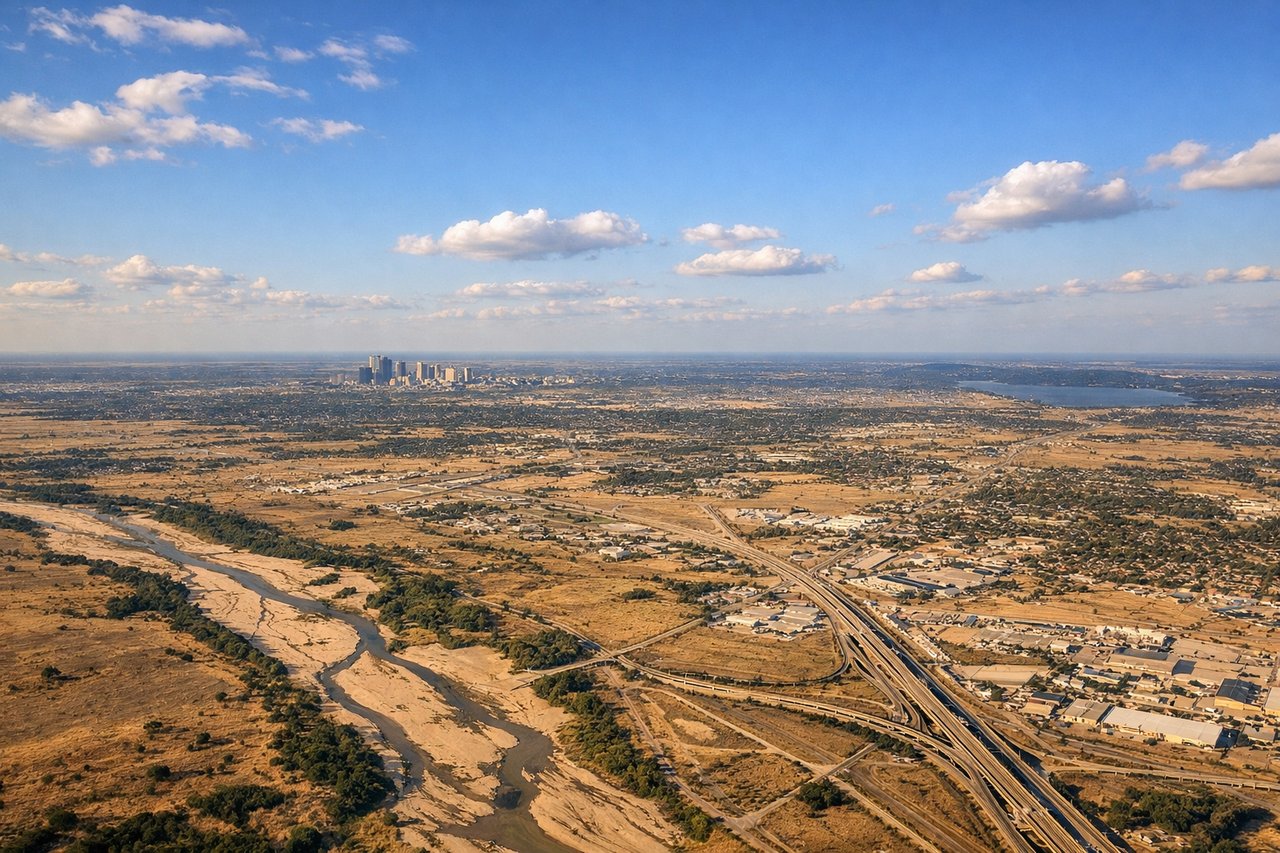
Landing at DFW
RIGHTOn final approach into DFW from the south using the north-facing 35-series runways, the right side offers a distant view of the Dallas skyline and eastern suburbs, while the left side shows only the flatter, less distinct Fort Worth side of the metro sprawl.
Landmarks on this routeAll landmarks →
Will your flight be in sunlight?
Pick a date and time in the Sun Map to watch the sun move across your whole flight.
About This Route
Which side of the plane should I sit on flying from Los Cabos International (SJD) to Dallas Fort Worth International (DFW)?
Sit on the Left side of the plane for the best views on flights from San Jose Del Cabo to Dallas-Fort Worth. The left side captures the dramatic Baja mountains at takeoff and the Sierra Madre Occidental foothills and Sea of Cortez during the early cruise phase over mainland Mexico, giving it more varied and dramatic terrain than the right side's mostly flat desert and plains views.
What can I see during takeoff from Los Cabos International in San Jose Del Cabo?
During takeoff from Los Cabos International (SJD), sit on the Left side for the best views. Departing SJD on runway 34, the climb out heads north with the Sierra de la Laguna massif and rugged desert foothills of southern Baja visible on the left, while the right side only shows the flat waters of the Sea of Cortez. Notable sights include: Sierra de la Laguna range, Baja California Sur desert hills, San Jose del Cabo estuary, Sea of Cortez coastline.
What can I see when landing at Dallas Fort Worth International in Dallas-Fort Worth?
When landing at Dallas Fort Worth International (DFW), sit on the Right side for the best views. On final approach into DFW from the south using the north-facing 35-series runways, the right side offers a distant view of the Dallas skyline and eastern suburbs, while the left side shows only the flatter, less distinct Fort Worth side of the metro sprawl. Notable sights include: Downtown Dallas skyline, Trinity River corridor, Dallas-Fort Worth suburban grid, DFW terminal complex.
How long is the flight from San Jose Del Cabo to Dallas-Fort Worth?
The flight from Los Cabos International (SJD) to Dallas Fort Worth International (DFW) takes about 2 hours 55 minutes. The shortest flight path between them is 1,024 miles (1,648 km); winds and air traffic control usually add a few percent.
What does the San Jose Del Cabo to Dallas-Fort Worth flight path pass over?
Gulf of California crossing near Sinaloa/Sonora coast, western foothills of the Sierra Madre Occidental, Chihuahuan desert basins before descending into the Texas plains