The left side wins at takeoff for the volcanic highlands, but the right side delivers more consistently throughout: Nicaragua's Pacific lowlands, the Gulf of Honduras coastline, Cuba's western tip in the distance, and then the spectacular Miami approach over Biscayne Bay. Right side wins the full flight.
Flown SJO to MIA? Did we get it right?
Flight Path
San Jose to Miami is 1,122 miles (1,805 km), a flight of about 3 hours 15 minutes.
The route tracks north over Nicaragua's Pacific lowlands and Lago de Nicaragua, crosses the Gulf of Honduras near the Yucatán Channel, passes over or near western Cuba, then crosses the Florida Straits before landfall near the Florida Keys and up the southeast Florida coast to Miami.
Great circle distance and headings ›

Phase by phase
Takeoff from SJO
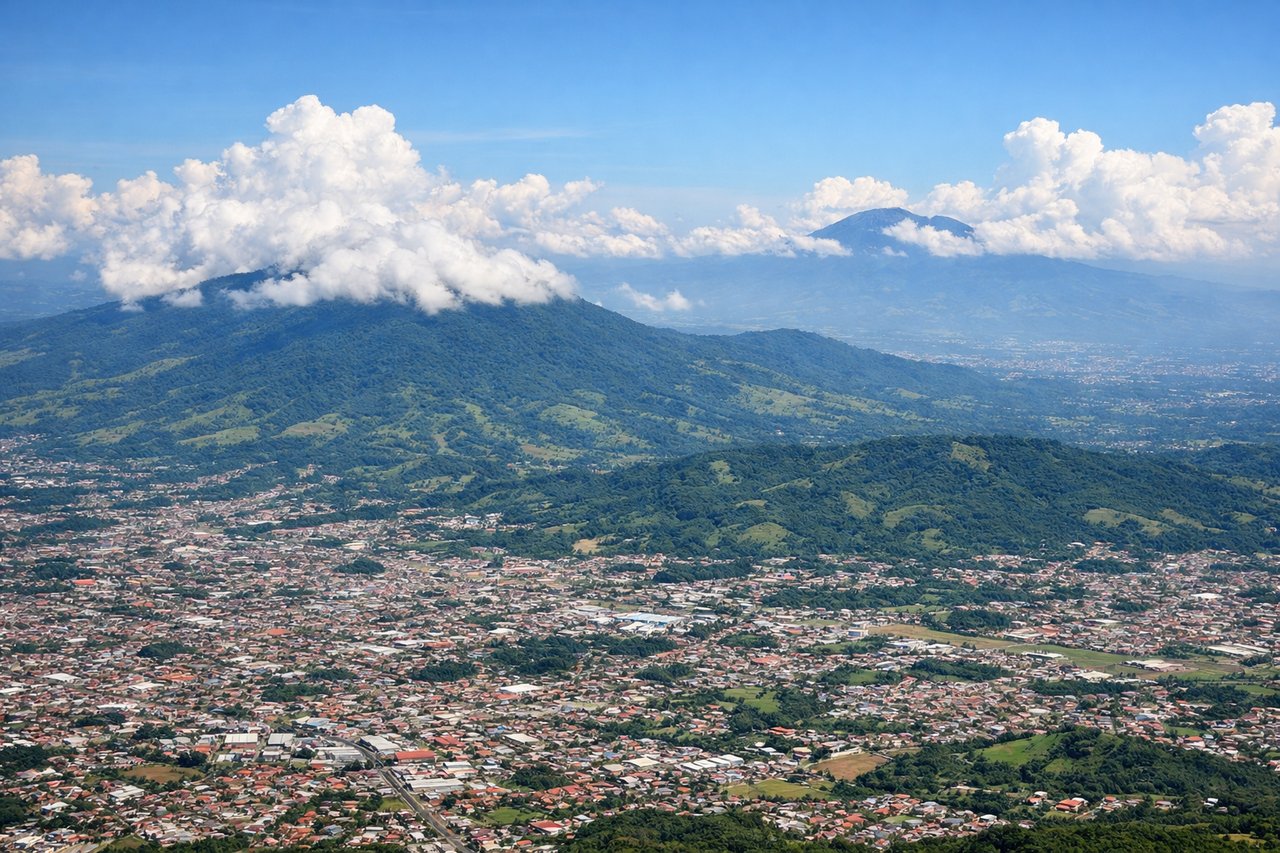
LEFTJuan Santamaría's primary departure runway 07 sends the aircraft northeast, putting the left (north) side facing the Cordillera Central including Poás and Barva volcanoes. You get a direct look at the volcanic highlands that define the Central Valley before the aircraft turns north toward Nicaragua.
Landing at MIA
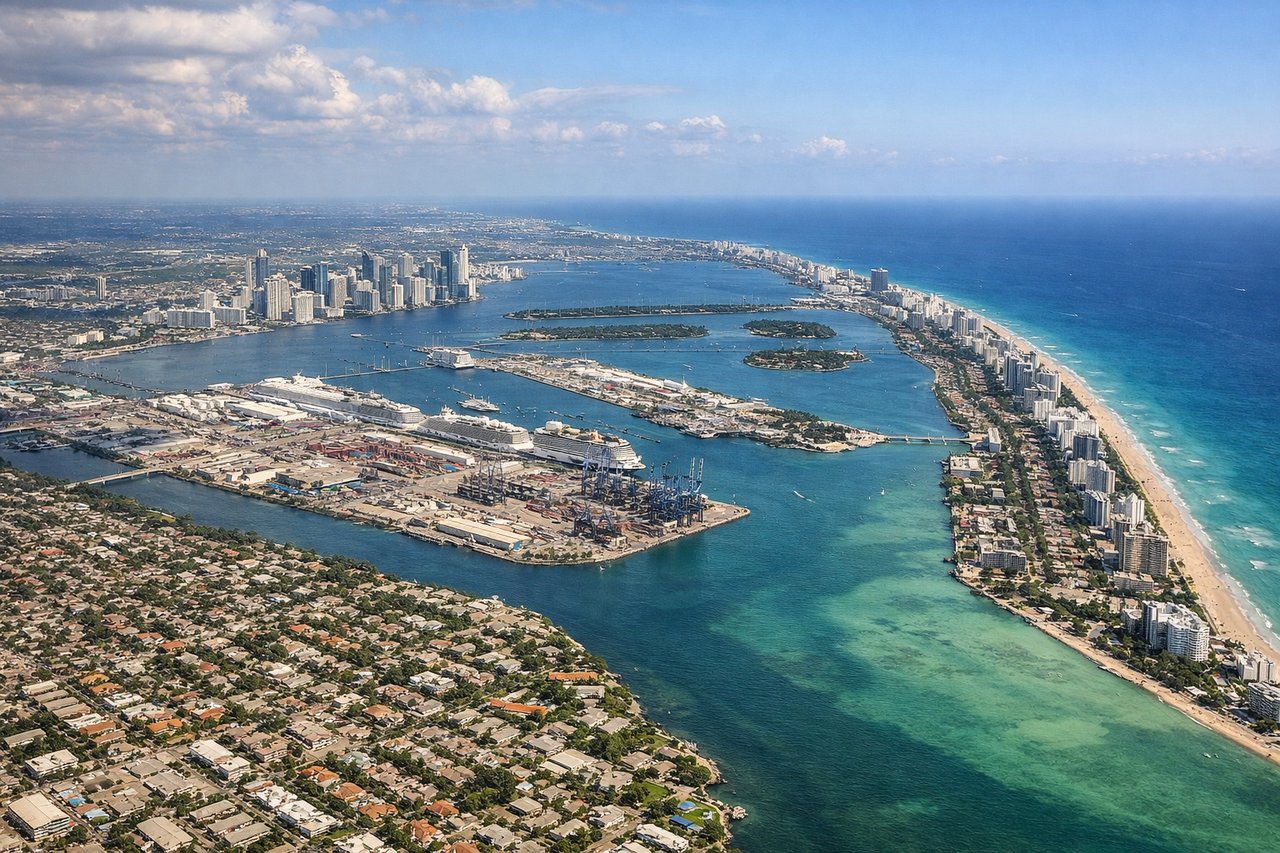
RIGHTMiami International's dominant arrival from the south on runway 08R/09 or from the southwest puts the right (south) side facing Biscayne Bay, the Miami Beach barrier island, and the Atlantic. You get the full Miami skyline, the causeway grid, and the turquoise shallow water of Biscayne Bay on approach.
Will your flight be in sunlight?
Pick a date and time in the Sun Map to watch the sun move across your whole flight.
About This Route
Which side of the plane should I sit on flying from Juan Santamaria International (SJO) to Miami International (MIA)?
Sit on the Right side of the plane for the best views on flights from San Jose to Miami. The left side wins at takeoff for the volcanic highlands, but the right side delivers more consistently throughout: Nicaragua's Pacific lowlands, the Gulf of Honduras coastline, Cuba's western tip in the distance, and then the spectacular Miami approach over Biscayne Bay. Right side wins the full flight.
What can I see during takeoff from Juan Santamaria International in San Jose?
During takeoff from Juan Santamaria International (SJO), sit on the Left side for the best views. Juan Santamaría's primary departure runway 07 sends the aircraft northeast, putting the left (north) side facing the Cordillera Central including Poás and Barva volcanoes. You get a direct look at the volcanic highlands that define the Central Valley before the aircraft turns north toward Nicaragua. Notable sights include: Volcán Poás (2,708m), Volcán Barva, the Central Valley urban sprawl of San José, Lago de Nicaragua visible later in climb.
What can I see when landing at Miami International in Miami?
When landing at Miami International (MIA), sit on the Right side for the best views. Miami International's dominant arrival from the south on runway 08R/09 or from the southwest puts the right (south) side facing Biscayne Bay, the Miami Beach barrier island, and the Atlantic. You get the full Miami skyline, the causeway grid, and the turquoise shallow water of Biscayne Bay on approach. Notable sights include: Biscayne Bay, Miami Beach barrier island, downtown Miami skyline, the MacArthur and Julia Tuttle causeways.
How long is the flight from San Jose to Miami?
The flight from Juan Santamaria International (SJO) to Miami International (MIA) takes about 3 hours 15 minutes. The shortest flight path between them is 1,122 miles (1,805 km); winds and air traffic control usually add a few percent.
What does the San Jose to Miami flight path pass over?
The route tracks north over Nicaragua's Pacific lowlands and Lago de Nicaragua, crosses the Gulf of Honduras near the Yucatán Channel, passes over or near western Cuba, then crosses the Florida Straits before landfall near the Florida Keys and up the southeast Florida coast to Miami.