The takeoff from Split offers more visually distinctive and dramatic scenery—the Adriatic coastline and island archipelago are striking and unique. While the Prague landing provides interesting urban and river views, the Split departure edges ahead for overall scenic impact on this route.
Flown SPU to PRG? Did we get it right?
Flight Path
Split to Prague is 463 miles (746 km), a flight of about 2 hours 15 minutes.
The flight path crosses the Dinaric Alps and Pannonian Plain. Notable features include the limestone karst terrain of Bosnia and Herzegovina, the Sava River valley, and the transition from Mediterranean to Central European geography. The Pannonian Plain dominates the midpoint with agricultural fields and scattered lakes. As the aircraft approaches Prague, the Bohemian Plateau becomes visible with its characteristic forested rolling terrain.
Great circle distance and headings ›


Phase by phase
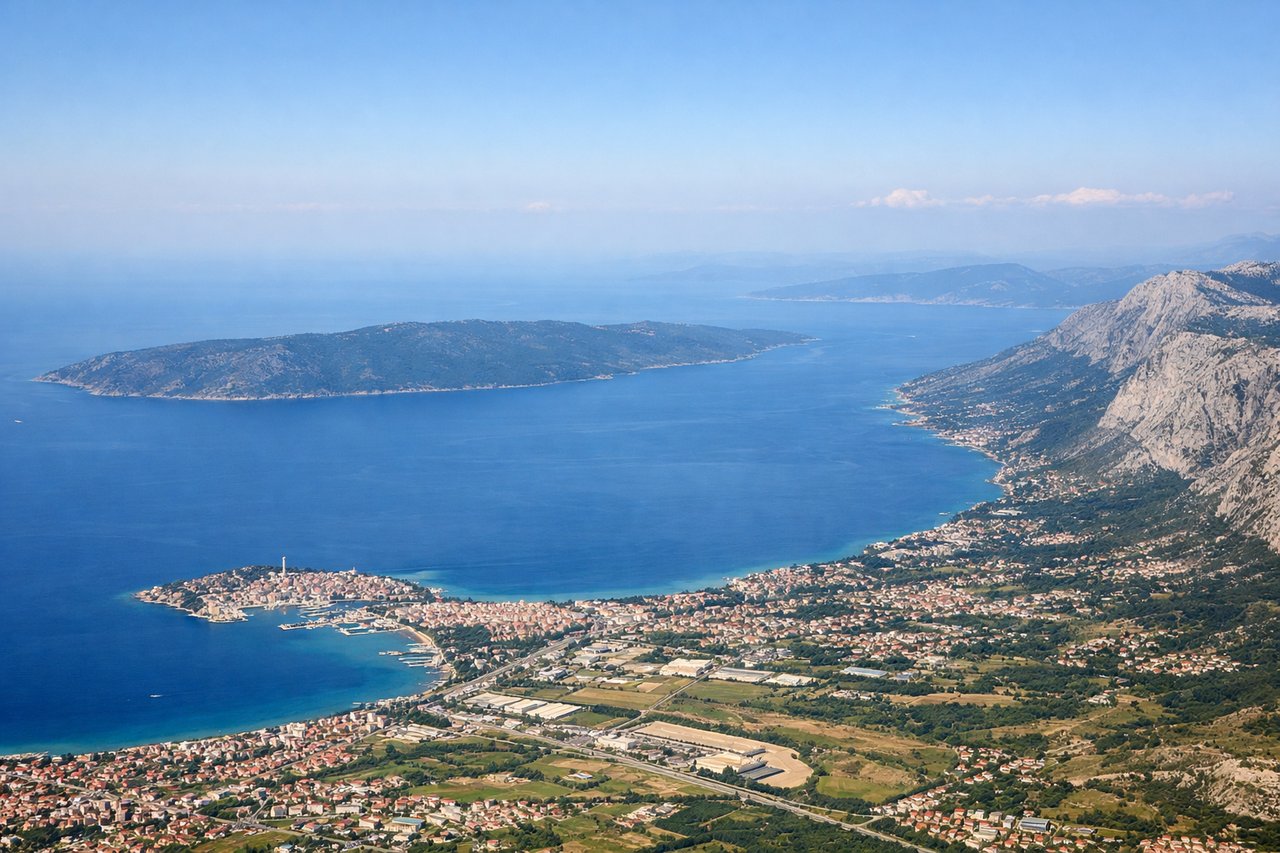
Takeoff from SPU
LEFTLeft seats offer immediate views of the Adriatic coastline and the Dalmatian islands as the aircraft climbs northwestward. The dramatic limestone cliffs and island archipelago are most visible on the left side during the initial climb-out from Split.
Landing at PRG
RIGHTRight seats provide the best views during descent into Prague. The Vltava River meanders prominently through the city, and the right side captures the approach over the Bohemian Plateau with views of Prague's historic districts and the surrounding forested terrain.
Will your flight be in sunlight?
Pick a date and time in the Sun Map to watch the sun move across your whole flight.
About This Route
Which side of the plane should I sit on flying from Split (SPU) to Ruzyne (PRG)?
Sit on the Left side of the plane for the best views on flights from Split to Prague. The takeoff from Split offers more visually distinctive and dramatic scenery—the Adriatic coastline and island archipelago are striking and unique. While the Prague landing provides interesting urban and river views, the Split departure edges ahead for overall scenic impact on this route.
What can I see during takeoff from Split in Split?
During takeoff from Split (SPU), sit on the Left side for the best views. Left seats offer immediate views of the Adriatic coastline and the Dalmatian islands as the aircraft climbs northwestward. The dramatic limestone cliffs and island archipelago are most visible on the left side during the initial climb-out from Split. Notable sights include: Adriatic Sea, Dalmatian Islands (Brač, Hvar, Vis), Dinaric Alps foothills.
What can I see when landing at Ruzyne in Prague?
When landing at Ruzyne (PRG), sit on the Right side for the best views. Right seats provide the best views during descent into Prague. The Vltava River meanders prominently through the city, and the right side captures the approach over the Bohemian Plateau with views of Prague's historic districts and the surrounding forested terrain. Notable sights include: Vltava River, Prague city center, Bohemian Plateau, Šumava Mountains (distant).
How long is the flight from Split to Prague?
The flight from Split (SPU) to Ruzyne (PRG) takes about 2 hours 15 minutes. The shortest flight path between them is 463 miles (746 km); winds and air traffic control usually add a few percent.
What does the Split to Prague flight path pass over?
The flight path crosses the Dinaric Alps and Pannonian Plain. Notable features include the limestone karst terrain of Bosnia and Herzegovina, the Sava River valley, and the transition from Mediterranean to Central European geography. The Pannonian Plain dominates the midpoint with agricultural fields and scattered lakes. As the aircraft approaches Prague, the Bohemian Plateau becomes visible with its characteristic forested rolling terrain.