The left seat wins overall because the STT departure delivers the most spectacular scenery of the flight — the entire Virgin Islands chain spread out below in vivid Caribbean color. The MIA arrival right-side advantage is real but the urban approach view is less dramatic than the island departure. Left side also tracks the Cuban coastline and Florida Keys on the horizon during cruise.
Flight Path
The flight tracks northwest over the open Caribbean, passing north of Puerto Rico and Hispaniola visible as large landmasses to the south. The Turks and Caicos islands may be visible below depending on routing. The Bahamas chain appears as a long scatter of low sandy islands and shallow turquoise banks as the flight approaches Florida. The Florida Straits and the northern tip of Cuba can appear on the left horizon before landfall over the Florida Keys.
Great circle distance and headings ›Phase by phase
Takeoff from STT
LEFTSTT's runway 10/28 means westbound departures climb out over the south side of St. Thomas. The left side gives you the full sweep of Charlotte Amalie harbor, the St. Thomas hillsides, and a clear look back at St. John and the British Virgin Islands as the aircraft banks northwest. Right side gets open Atlantic.
Landing at MIA
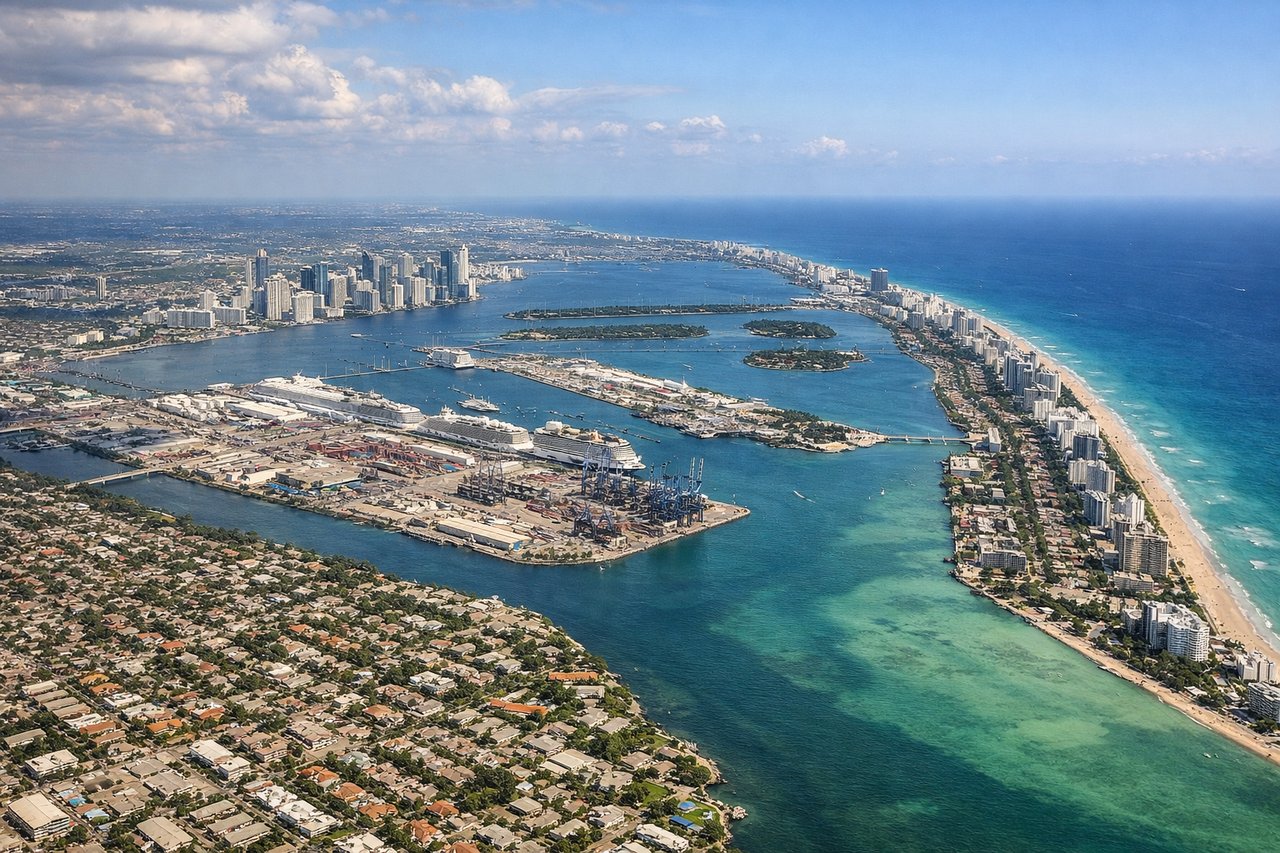
RIGHTMIA's primary arrival from the east typically uses runway 08L/08R or 09, meaning the aircraft approaches from the west over the Everglades and turns final heading east. The right side gives you Biscayne Bay, Miami Beach, and the downtown skyline. Left side faces the Everglades sawgrass.
Landmarks on this routeAll landmarks →
Will your flight be in sunlight?
See exactly which side of the plane gets sun and shade at your departure time.
About This Route
Which side of the plane should I sit on flying from Cyril E King (STT) to Miami International (MIA)?
Sit on the Left side of the plane for the best views on flights from St. Thomas to Miami. The left seat wins overall because the STT departure delivers the most spectacular scenery of the flight — the entire Virgin Islands chain spread out below in vivid Caribbean color. The MIA arrival right-side advantage is real but the urban approach view is less dramatic than the island departure. Left side also tracks the Cuban coastline and Florida Keys on the horizon during cruise.
What can I see during takeoff from Cyril E King in St. Thomas?
During takeoff from Cyril E King (STT), sit on the Left side for the best views. STT's runway 10/28 means westbound departures climb out over the south side of St. Thomas. The left side gives you the full sweep of Charlotte Amalie harbor, the St. Thomas hillsides, and a clear look back at St. John and the British Virgin Islands as the aircraft banks northwest. Right side gets open Atlantic. Notable sights include: Charlotte Amalie harbor and cruise ship docks, St. John island to the east, Tortola and the BVI chain on the horizon, the green ridgeline of St. Thomas itself.
What can I see when landing at Miami International in Miami?
When landing at Miami International (MIA), sit on the Right side for the best views. MIA's primary arrival from the east typically uses runway 08L/08R or 09, meaning the aircraft approaches from the west over the Everglades and turns final heading east. The right side gives you Biscayne Bay, Miami Beach, and the downtown skyline. Left side faces the Everglades sawgrass. Notable sights include: Biscayne Bay and its barrier islands, Miami Beach and South Beach peninsula, downtown Miami skyline, Port of Miami with cruise ships.
How long is the flight from St. Thomas to Miami?
The flight from Cyril E King (STT) to Miami International (MIA) takes Approximately 3 hours 15 minutes.
What does the St. Thomas to Miami flight path pass over?
The flight tracks northwest over the open Caribbean, passing north of Puerto Rico and Hispaniola visible as large landmasses to the south. The Turks and Caicos islands may be visible below depending on routing. The Bahamas chain appears as a long scatter of low sandy islands and shallow turquoise banks as the flight approaches Florida. The Florida Straits and the northern tip of Cuba can appear on the left horizon before landfall over the Florida Keys.