Shenzhen to Tokyo is 1,833 miles (2,950 km), a flight of about 3 hours 45 minutes.
The right seat wins at takeoff for Shenzhen Bay and Hong Kong views, but the left seat delivers the more dramatic and sustained experience: as the flight tracks northeast over the East China Sea, the left side catches the Chinese coastline during climb, and then delivers the Tokyo Bay and potential Mount Fuji views on approach into Narita. The left seat scenery on arrival is the highlight of the entire route.
Flight Path
The flight tracks northeast over the East China Sea, passing east of the Ryukyu Islands chain (Okinawa visible to the left on clear days at cruising altitude as a faint landmass), then crossing the open Pacific before making landfall over the Kii Peninsula or Tokai coast of Honshu. The East China Sea below is largely featureless open water at cruise altitude. The Japanese coastline of Honshu appears on the left side roughly 45-60 minutes before landing.
Great circle distance and headings ›


Phase by phase
Takeoff from SZX
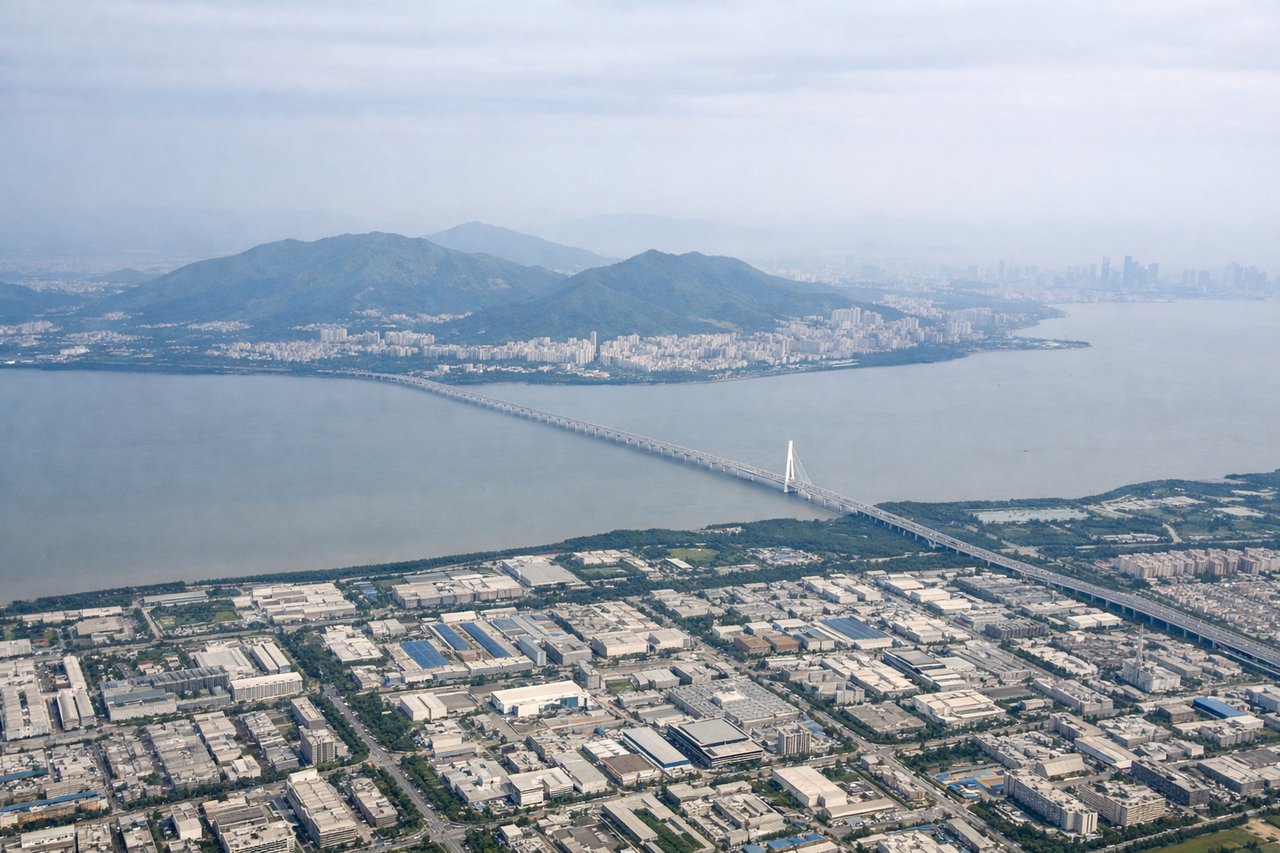
RIGHTShenzhen Bao'an typically departs northeast on runway 15/33 or 07/25. A northeast departure on runway 33 puts the right side facing east over Shenzhen Bay and the dense urban core of Shenzhen, with Hong Kong's New Territories and Kowloon visible across the bay. The left side faces inland toward relatively featureless Pearl River Delta flatlands.
Landing at NRT
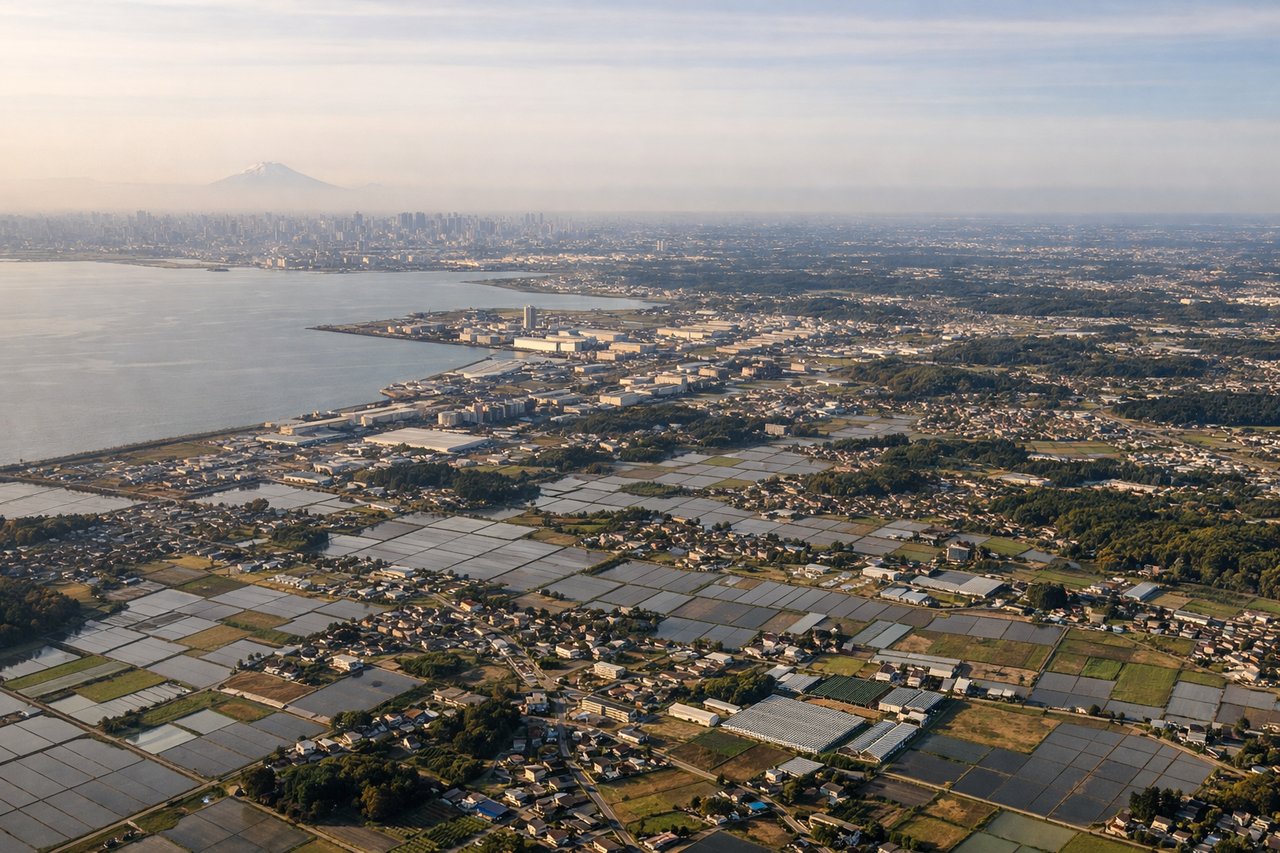
LEFTNarita typically lands on runway 34L/34R from the south, meaning the aircraft approaches from the south-southwest over the Boso Peninsula and Tokyo Bay. The left side faces west toward Tokyo Bay, the Tokyo metropolitan area, and on clear days Mount Fuji on the far horizon. The right side faces east over the flat agricultural Chiba plain with little of interest.
Landmarks on this routeAll landmarks →
Will your flight be in sunlight?
Pick a date and time in the Sun Map to watch the sun move across your whole flight.
About This Route
Which side of the plane should I sit on flying from Baoan (SZX) to New Tokyo International (NRT)?
Sit on the Left side of the plane for the best views on flights from Shenzhen to Tokyo. The right seat wins at takeoff for Shenzhen Bay and Hong Kong views, but the left seat delivers the more dramatic and sustained experience: as the flight tracks northeast over the East China Sea, the left side catches the Chinese coastline during climb, and then delivers the Tokyo Bay and potential Mount Fuji views on approach into Narita. The left seat scenery on arrival is the highlight of the entire route.
What can I see during takeoff from Baoan in Shenzhen?
During takeoff from Baoan (SZX), sit on the Right side for the best views. Shenzhen Bao'an typically departs northeast on runway 15/33 or 07/25. A northeast departure on runway 33 puts the right side facing east over Shenzhen Bay and the dense urban core of Shenzhen, with Hong Kong's New Territories and Kowloon visible across the bay. The left side faces inland toward relatively featureless Pearl River Delta flatlands. Notable sights include: Shenzhen Bay and its bridge causeway, Hong Kong's New Territories hills, the dense Shenzhen CBD skyline to the east, Pearl River estuary to the west.
What can I see when landing at New Tokyo International in Tokyo?
When landing at New Tokyo International (NRT), sit on the Left side for the best views. Narita typically lands on runway 34L/34R from the south, meaning the aircraft approaches from the south-southwest over the Boso Peninsula and Tokyo Bay. The left side faces west toward Tokyo Bay, the Tokyo metropolitan area, and on clear days Mount Fuji on the far horizon. The right side faces east over the flat agricultural Chiba plain with little of interest. Notable sights include: Tokyo Bay, the Tokyo metropolitan skyline, Mount Fuji on the distant horizon (clear days only), the Boso Peninsula coastline.
How long is the flight from Shenzhen to Tokyo?
The flight from Baoan (SZX) to New Tokyo International (NRT) takes about 3 hours 45 minutes. The shortest flight path between them is 1,833 miles (2,950 km); winds and air traffic control usually add a few percent.
What does the Shenzhen to Tokyo flight path pass over?
The flight tracks northeast over the East China Sea, passing east of the Ryukyu Islands chain (Okinawa visible to the left on clear days at cruising altitude as a faint landmass), then crossing the open Pacific before making landfall over the Kii Peninsula or Tokai coast of Honshu. The East China Sea below is largely featureless open water at cruise altitude. The Japanese coastline of Honshu appears on the left side roughly 45-60 minutes before landing.