Tokyo to Shenzhen is 1,833 miles (2,950 km), a flight of about 3 hours 15 minutes.
While takeoff from Tokyo offers good views of Tokyo Bay, the landing approach into Shenzhen provides more dramatic and varied scenery—the Pearl River Delta's intricate waterways, Hong Kong's geography, and the striking urban landscape make the left side the better choice for the overall flight.
Flight Path
The flight path crosses the East China Sea heading southwest. Notable features include the Izu Islands (small volcanic islands southeast of Tokyo during early climb), the Nansei Islands chain (Okinawa Prefecture) visible far to the south on clear days, and the Taiwan Strait region. The aircraft typically cruises at 33,000-35,000 feet over open ocean with limited ground features visible. Approaching the Chinese coast, the Fujian Province coastline becomes visible with its rocky, indented shoreline and scattered islands before the flight descends toward the Pearl River Delta.
Great circle distance and headings ›


Phase by phase
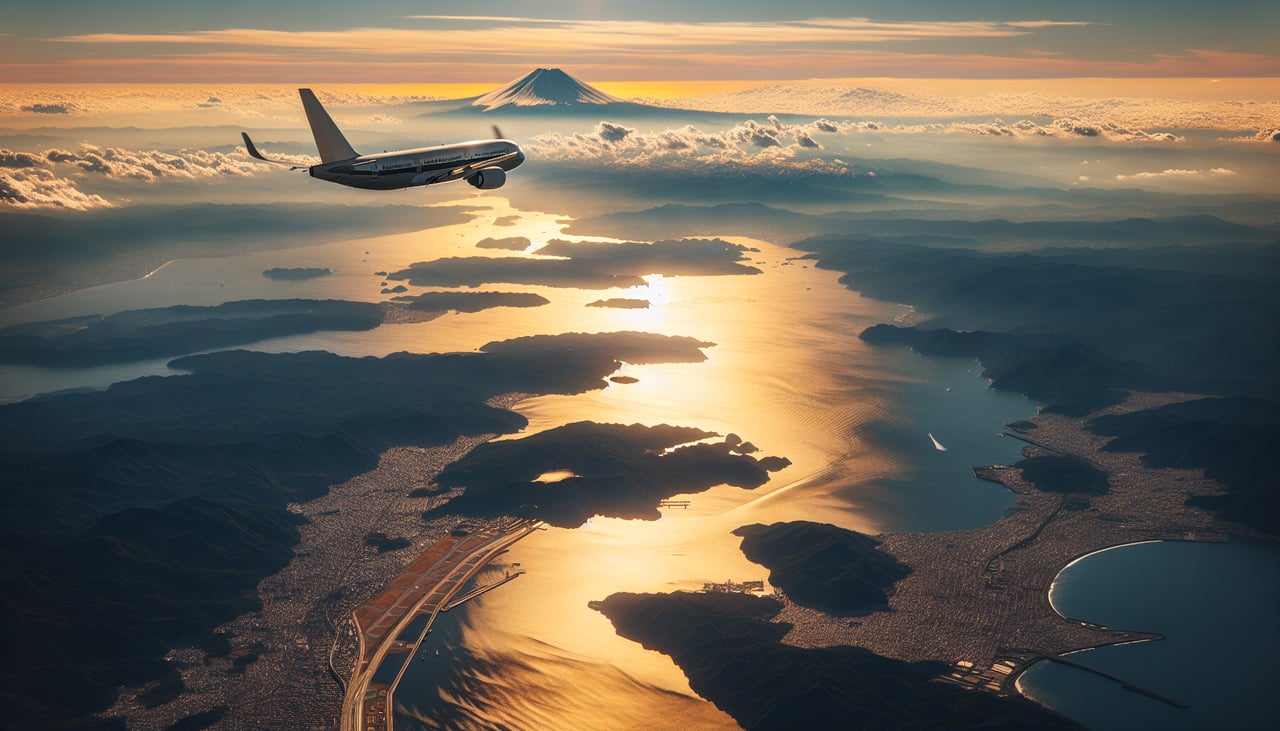
Takeoff from NRT
RIGHTRight-side seats offer views of Tokyo Bay and the Kanto Plain as the aircraft climbs southwestward. You'll see the sprawling urban grid of greater Tokyo, then the bay's distinctive shape with its industrial waterfront and islands.
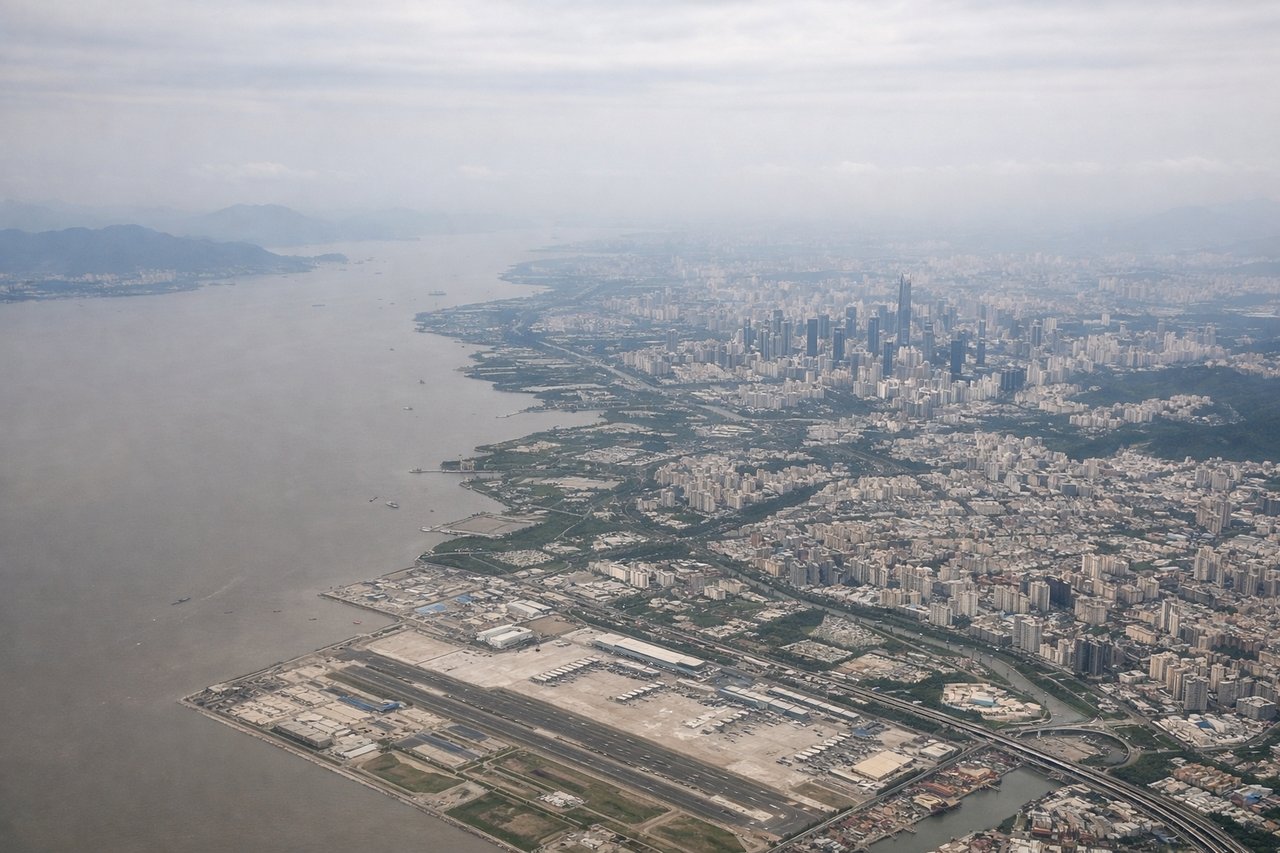
Landing at SZX
LEFTLeft-side seats provide excellent views during descent into Shenzhen. You'll see the Pearl River Delta's intricate waterways, Victoria Harbour (Hong Kong), and the dramatic transition from water to the dense urban core of Shenzhen and surrounding industrial zones.
Landmarks on this routeAll landmarks →
Will your flight be in sunlight?
Pick a date and time in the Sun Map to watch the sun move across your whole flight.
About This Route
Which side of the plane should I sit on flying from New Tokyo International (NRT) to Baoan (SZX)?
Sit on the Left side of the plane for the best views on flights from Tokyo to Shenzhen. While takeoff from Tokyo offers good views of Tokyo Bay, the landing approach into Shenzhen provides more dramatic and varied scenery—the Pearl River Delta's intricate waterways, Hong Kong's geography, and the striking urban landscape make the left side the better choice for the overall flight.
What can I see during takeoff from New Tokyo International in Tokyo?
During takeoff from New Tokyo International (NRT), sit on the Right side for the best views. Right-side seats offer views of Tokyo Bay and the Kanto Plain as the aircraft climbs southwestward. You'll see the sprawling urban grid of greater Tokyo, then the bay's distinctive shape with its industrial waterfront and islands. Notable sights include: Tokyo Bay, Kanto Plain urban sprawl, Mount Fuji (distant, southwest on clear days), Boso Peninsula (southeast across the bay).
What can I see when landing at Baoan in Shenzhen?
When landing at Baoan (SZX), sit on the Left side for the best views. Left-side seats provide excellent views during descent into Shenzhen. You'll see the Pearl River Delta's intricate waterways, Victoria Harbour (Hong Kong), and the dramatic transition from water to the dense urban core of Shenzhen and surrounding industrial zones. Notable sights include: Pearl River Delta (multiple channels and islands), Victoria Harbour and Hong Kong Island (southwest), Shenzhen urban core and Luohu district, Kowloon Peninsula.
How long is the flight from Tokyo to Shenzhen?
The flight from New Tokyo International (NRT) to Baoan (SZX) takes about 3 hours 15 minutes. The shortest flight path between them is 1,833 miles (2,950 km); winds and air traffic control usually add a few percent.
What does the Tokyo to Shenzhen flight path pass over?
The flight path crosses the East China Sea heading southwest. Notable features include the Izu Islands (small volcanic islands southeast of Tokyo during early climb), the Nansei Islands chain (Okinawa Prefecture) visible far to the south on clear days, and the Taiwan Strait region. The aircraft typically cruises at 33,000-35,000 feet over open ocean with limited ground features visible. Approaching the Chinese coast, the Fujian Province coastline becomes visible with its rocky, indented shoreline and scattered islands before the flight descends toward the Pearl River Delta.