The takeoff view of the Pyrenees is more visually distinctive and geographically dramatic than the landing approach. While Montreal's river and cityscape are notable, the mountain range visible immediately after departure from Toulouse offers a more memorable scenic highlight for the flight.
Flight Path
The flight path crosses the Atlantic Ocean for roughly 6 hours with no visible landmarks. Notable geographic transitions include: departure over the Pyrenees and southwestern France; crossing the Bay of Biscay (open ocean); passing south of the British Isles and Ireland; crossing the North Atlantic with occasional visibility of Greenland's southern coast (far north of typical routing); arrival over Newfoundland and Labrador's coastline before descending into the St. Lawrence River valley and Montreal basin.
Great circle distance and headings ›Phase by phase
Takeoff from TLS
LEFTLeft side offers views of the Pyrenees mountain range immediately south of Toulouse, visible as a distinct ridge on the horizon during climb-out. The right side faces north toward relatively flat terrain with scattered towns.
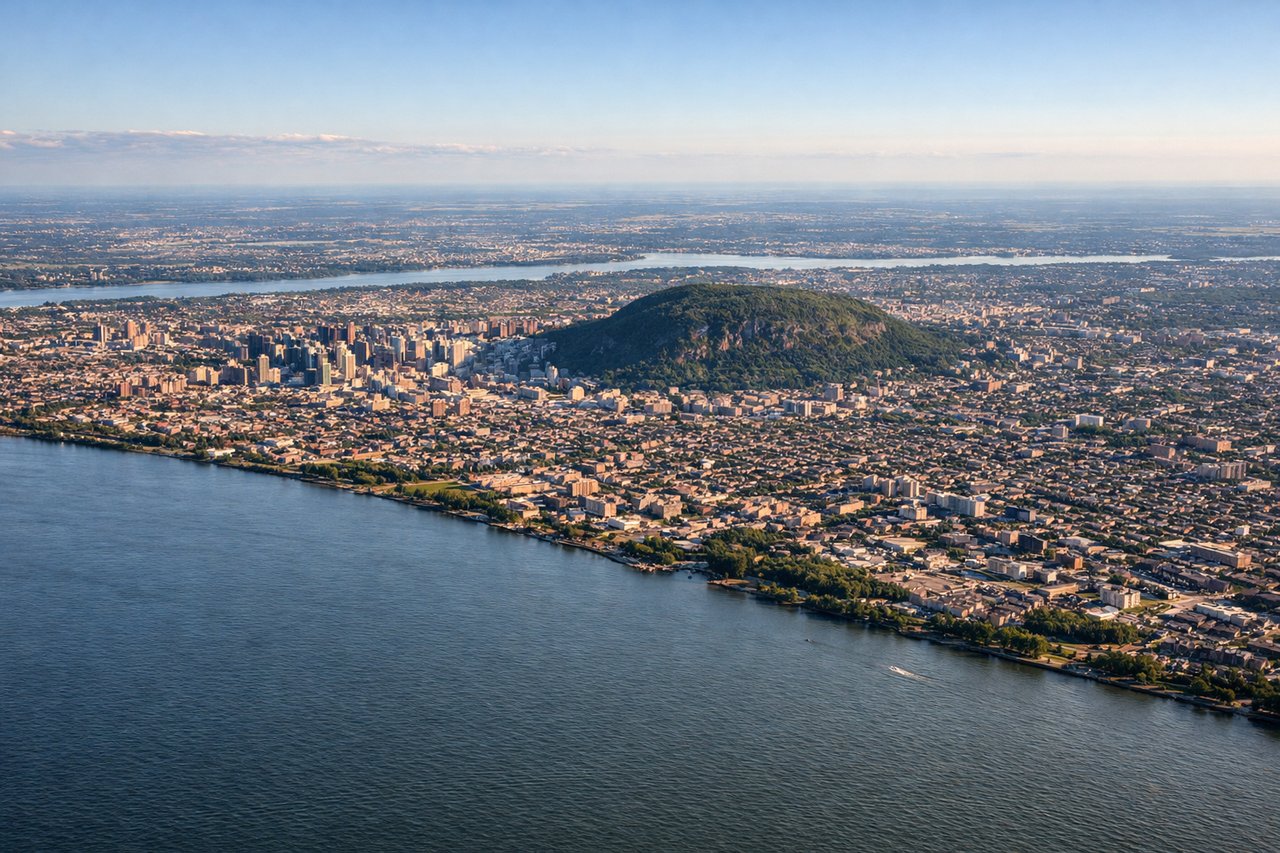
Landing at YUL
RIGHTRight side provides views of the St. Lawrence River and Montreal's urban landscape as the aircraft descends toward Dorval. The river's distinctive curves and the city's sprawl across both banks are prominent during final approach from the southwest.
Landmarks on this routeAll landmarks →
Will your flight be in sunlight?
See exactly which side of the plane gets sun and shade at your departure time.
About This Route
Which side of the plane should I sit on flying from Blagnac (TLS) to Montreal International Dorval (YUL)?
Sit on the Left side of the plane for the best views on flights from Toulouse to Montreal. The takeoff view of the Pyrenees is more visually distinctive and geographically dramatic than the landing approach. While Montreal's river and cityscape are notable, the mountain range visible immediately after departure from Toulouse offers a more memorable scenic highlight for the flight.
What can I see during takeoff from Blagnac in Toulouse?
During takeoff from Blagnac (TLS), sit on the Left side for the best views. Left side offers views of the Pyrenees mountain range immediately south of Toulouse, visible as a distinct ridge on the horizon during climb-out. The right side faces north toward relatively flat terrain with scattered towns. Notable sights include: Pyrenees Mountains (south), Garonne River valley (west), Toulouse urban sprawl (beneath), foothills of the Massif Central (northeast).
What can I see when landing at Montreal International Dorval in Montreal?
When landing at Montreal International Dorval (YUL), sit on the Right side for the best views. Right side provides views of the St. Lawrence River and Montreal's urban landscape as the aircraft descends toward Dorval. The river's distinctive curves and the city's sprawl across both banks are prominent during final approach from the southwest. Notable sights include: St. Lawrence River (primary feature), Montreal downtown skyline and urban grid, Île de Montréal, Laurentian Mountains (distant north).
How long is the flight from Toulouse to Montreal?
The flight from Blagnac (TLS) to Montreal International Dorval (YUL) takes Approximately 8 hours 15 minutes.
What does the Toulouse to Montreal flight path pass over?
The flight path crosses the Atlantic Ocean for roughly 6 hours with no visible landmarks. Notable geographic transitions include: departure over the Pyrenees and southwestern France; crossing the Bay of Biscay (open ocean); passing south of the British Isles and Ireland; crossing the North Atlantic with occasional visibility of Greenland's southern coast (far north of typical routing); arrival over Newfoundland and Labrador's coastline before descending into the St. Lawrence River valley and Montreal basin.