The right side offers a more consistent scenic thread across the whole flight — Tampa Bay at departure and long stretches of the Atlantic coastline, barrier islands, and Chesapeake Bay during cruise — while the left side's best moment is confined to the final approach into JFK.
Flight Path
The route roughly follows the Atlantic seaboard, passing near the Georgia and South Carolina coastlines, with the Savannah River estuary and the barrier islands off Charleston sometimes visible before the path continues toward the Chesapeake Bay and the New York City area.
Great circle distance and headings ›
.jpg?width=600)
Phase by phase
Takeoff from TPA
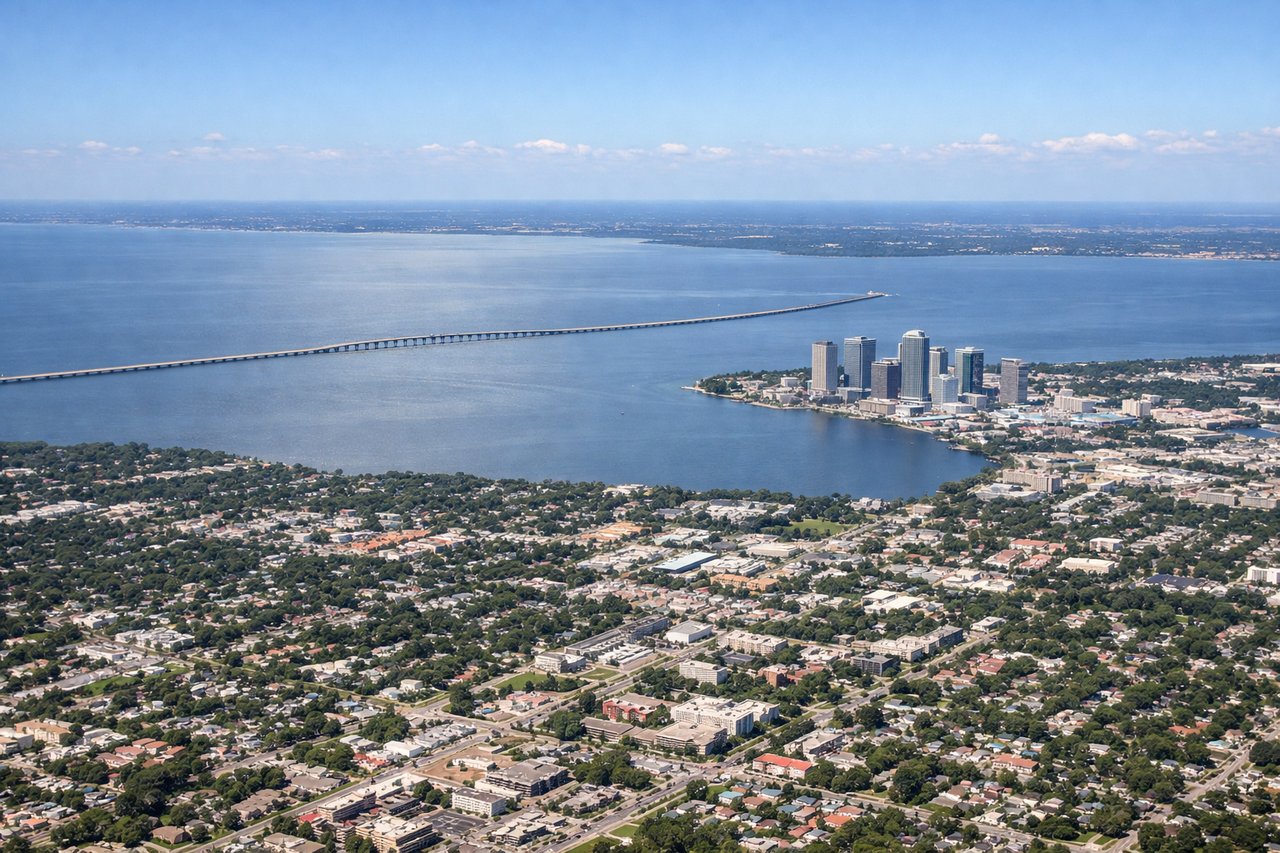
RIGHTDeparting TPA northbound, the right side looks east over Tampa's downtown skyline and Hillsborough Bay, with the causeways and barrier islands of Tampa Bay visible before the climb turns the aircraft onto its northeast route.
Landing at JFK
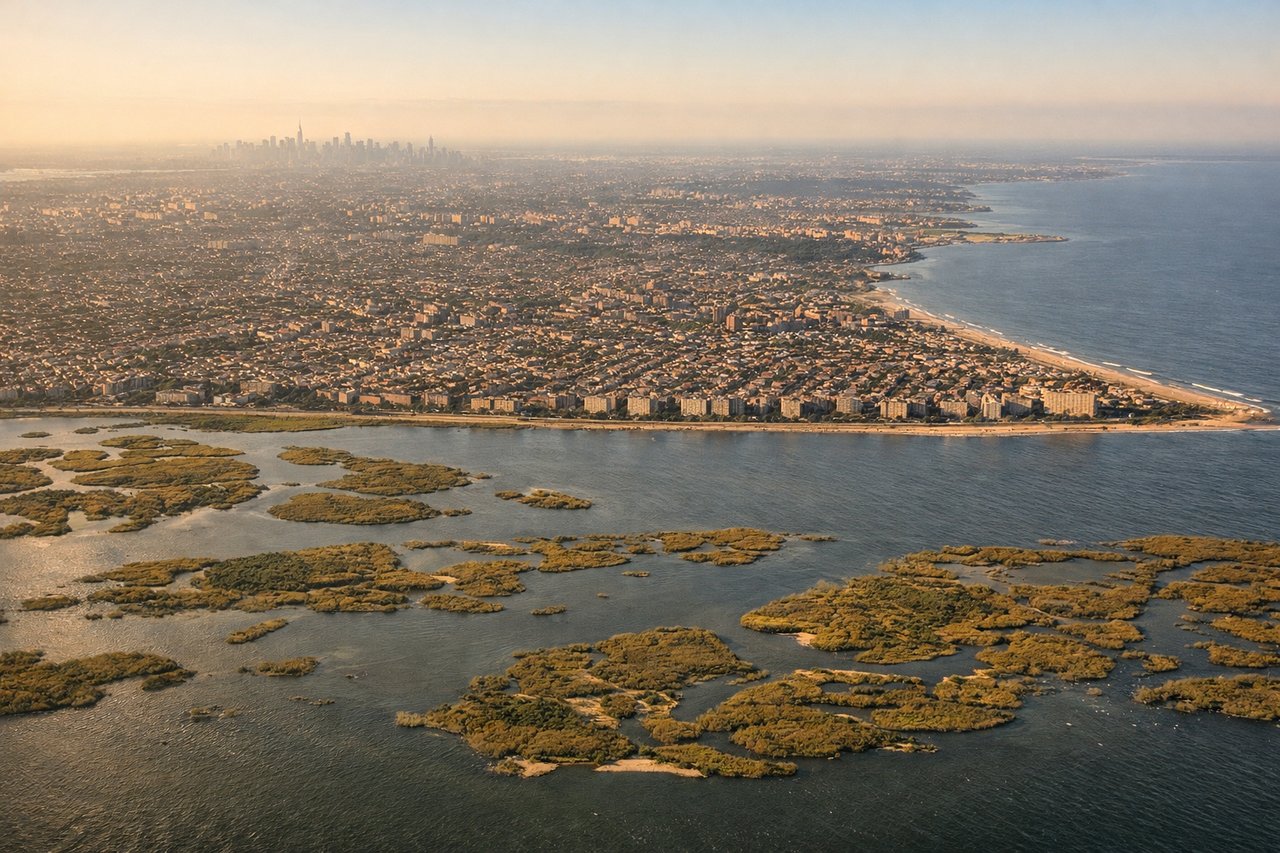
LEFTOn approach into JFK from the south, aircraft typically bank over Jamaica Bay before lining up for runway 22, giving left-side passengers a view of the Manhattan skyline and the Verrazzano-Narrows Bridge in the distance to the north.
Landmarks on this routeAll landmarks →
Will your flight be in sunlight?
See exactly which side of the plane gets sun and shade at your departure time.
About This Route
Which side of the plane should I sit on flying from Tampa International (TPA) to John F Kennedy International (JFK)?
Sit on the Right side of the plane for the best views on flights from Tampa to New York. The right side offers a more consistent scenic thread across the whole flight — Tampa Bay at departure and long stretches of the Atlantic coastline, barrier islands, and Chesapeake Bay during cruise — while the left side's best moment is confined to the final approach into JFK.
What can I see during takeoff from Tampa International in Tampa?
During takeoff from Tampa International (TPA), sit on the Right side for the best views. Departing TPA northbound, the right side looks east over Tampa's downtown skyline and Hillsborough Bay, with the causeways and barrier islands of Tampa Bay visible before the climb turns the aircraft onto its northeast route. Notable sights include: Downtown Tampa skyline, Hillsborough Bay, Davis Islands, Tampa Bay causeways.
What can I see when landing at John F Kennedy International in New York?
When landing at John F Kennedy International (JFK), sit on the Left side for the best views. On approach into JFK from the south, aircraft typically bank over Jamaica Bay before lining up for runway 22, giving left-side passengers a view of the Manhattan skyline and the Verrazzano-Narrows Bridge in the distance to the north. Notable sights include: Manhattan skyline, Verrazzano-Narrows Bridge, Jamaica Bay wetlands, Rockaway Peninsula.
How long is the flight from Tampa to New York?
The flight from Tampa International (TPA) to John F Kennedy International (JFK) takes 2h 35m.
What does the Tampa to New York flight path pass over?
The route roughly follows the Atlantic seaboard, passing near the Georgia and South Carolina coastlines, with the Savannah River estuary and the barrier islands off Charleston sometimes visible before the path continues toward the Chesapeake Bay and the New York City area.