Tucson to Las Vegas is 365 miles (587 km), a flight of about 1 hour 10 minutes.
The left side delivers the dramatic Santa Catalina Mountains on departure and then tracks the western Arizona desert, the Colorado River corridor, and the approach into Las Vegas where you still get partial Strip views on descent. The right side is better specifically for the Strip on landing, but the left side has stronger scenery across the full flight including the Catalinas on takeoff.
Flight Path
The flight crosses the Sonoran Desert northwest of Tucson, passes over the Phoenix metro area or just west of it, crosses the Hassayampa River plain, then traverses the Mojave Desert of western Arizona and southern Nevada. The Colorado River and Lake Havasu are visible below roughly mid-flight. The Hualapai Mountains near Kingman, AZ appear to the northeast. The final stretch crosses the flat Mojave before the Spring Mountains come into view framing Las Vegas.
Great circle distance and headings ›


Phase by phase
Takeoff from TUS
LEFTTucson typically departs northwest on runway 11L/29R or north on runway 03/21. A northwestbound departure puts the Santa Catalina Mountains directly on the left side, with the Rincon Mountains visible behind. The city of Tucson spreads out below on the left as you climb.
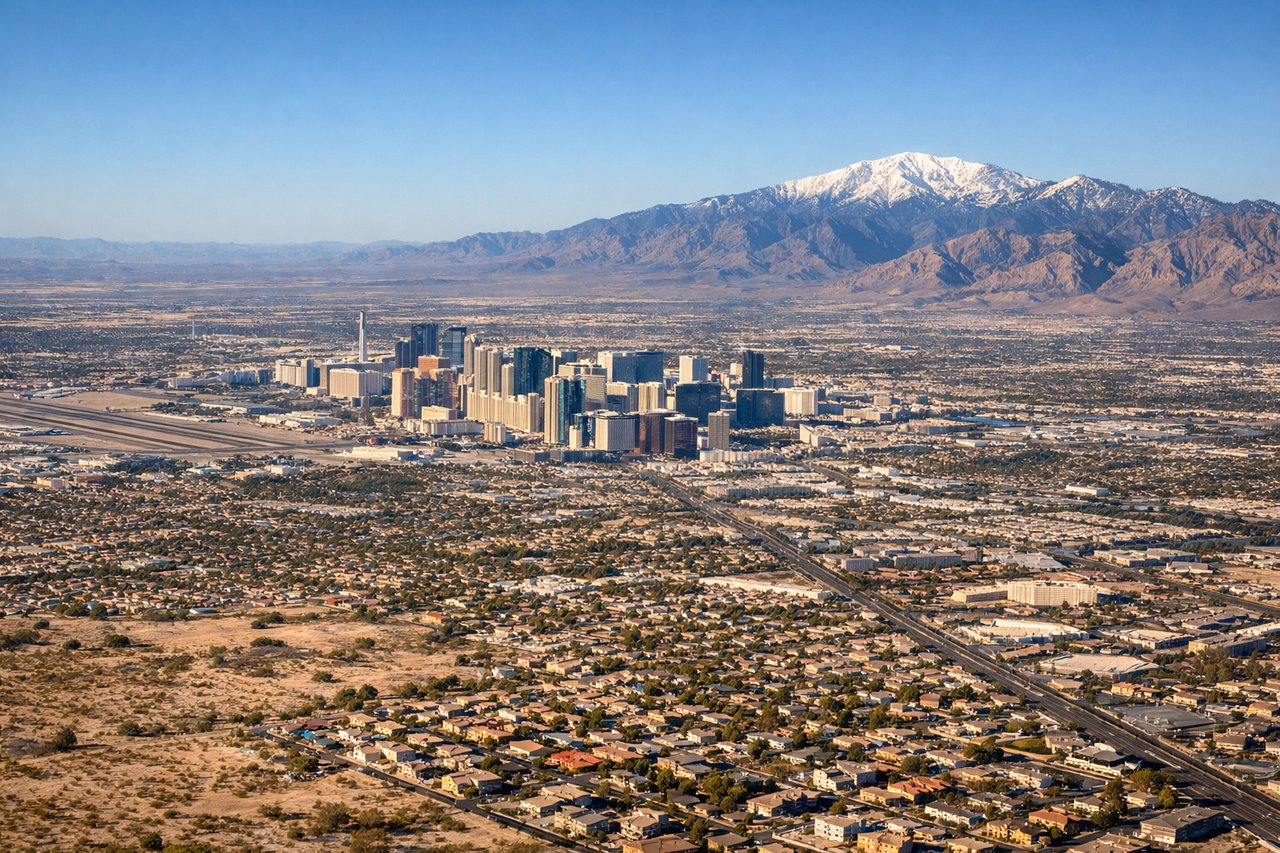
Landing at LAS
RIGHTLas Vegas McCarran typically lands from the south or southeast on runways 01L/01R or 07L/07R. Approaching from the south on a northbound final, the right side faces west and northwest, giving a direct view of the Las Vegas Strip and downtown Las Vegas laid out against the Spring Mountains backdrop. The left side faces east toward Frenchman Mountain and the desert.
Landmarks on this routeAll landmarks →
Will your flight be in sunlight?
Pick a date and time in the Sun Map to watch the sun move across your whole flight.
About This Route
Which side of the plane should I sit on flying from Tucson International (TUS) to Mc Carran International (LAS)?
Sit on the Left side of the plane for the best views on flights from Tucson to Las Vegas. The left side delivers the dramatic Santa Catalina Mountains on departure and then tracks the western Arizona desert, the Colorado River corridor, and the approach into Las Vegas where you still get partial Strip views on descent. The right side is better specifically for the Strip on landing, but the left side has stronger scenery across the full flight including the Catalinas on takeoff.
What can I see during takeoff from Tucson International in Tucson?
During takeoff from Tucson International (TUS), sit on the Left side for the best views. Tucson typically departs northwest on runway 11L/29R or north on runway 03/21. A northwestbound departure puts the Santa Catalina Mountains directly on the left side, with the Rincon Mountains visible behind. The city of Tucson spreads out below on the left as you climb. Notable sights include: Santa Catalina Mountains (Mt. Lemmon at 9,157 ft), Rincon Mountains to the southeast, downtown Tucson grid, Saguaro National Park East.
What can I see when landing at Mc Carran International in Las Vegas?
When landing at Mc Carran International (LAS), sit on the Right side for the best views. Las Vegas McCarran typically lands from the south or southeast on runways 01L/01R or 07L/07R. Approaching from the south on a northbound final, the right side faces west and northwest, giving a direct view of the Las Vegas Strip and downtown Las Vegas laid out against the Spring Mountains backdrop. The left side faces east toward Frenchman Mountain and the desert. Notable sights include: Las Vegas Strip (visible as a dense cluster of large hotel towers), Spring Mountains and Charleston Peak (11,918 ft) to the west, Lake Mead to the northeast, Frenchman Mountain to the east.
How long is the flight from Tucson to Las Vegas?
The flight from Tucson International (TUS) to Mc Carran International (LAS) takes about 1 hour 10 minutes. The shortest flight path between them is 365 miles (587 km); winds and air traffic control usually add a few percent.
What does the Tucson to Las Vegas flight path pass over?
The flight crosses the Sonoran Desert northwest of Tucson, passes over the Phoenix metro area or just west of it, crosses the Hassayampa River plain, then traverses the Mojave Desert of western Arizona and southern Nevada. The Colorado River and Lake Havasu are visible below roughly mid-flight. The Hualapai Mountains near Kingman, AZ appear to the northeast. The final stretch crosses the flat Mojave before the Spring Mountains come into view framing Las Vegas.