Hewandorra to London is 4,225 miles (6,800 km), a flight of about 7 hours 45 minutes.
Right-side seats win overall because the dramatic takeoff scenery over Saint Lucia's Pitons is more visually distinctive than the landing approach. While both directions offer legitimate views, the volcanic peaks and Caribbean coastline provide a more memorable start to the journey than the suburban approach to London.
Flight Path
Atlantic Ocean crossing with no major landmarks visible for approximately 5 hours; approach to European airspace brings views of the Iberian Peninsula (Portugal/Spain coastline if routed via southern corridor), Bay of Biscay, and eventually the English Channel and southern English coastline (Dorset/Sussex cliffs) before reaching Gatwick
Great circle distance and headings ›
.jpeg?width=600)
Phase by phase
Takeoff from UVF
RIGHTRight-side seats capture the dramatic volcanic peaks of Saint Lucia's Pitons and the island's rugged southern coastline as you climb out over the Caribbean. The left side faces open ocean with minimal visual interest during the initial climb.
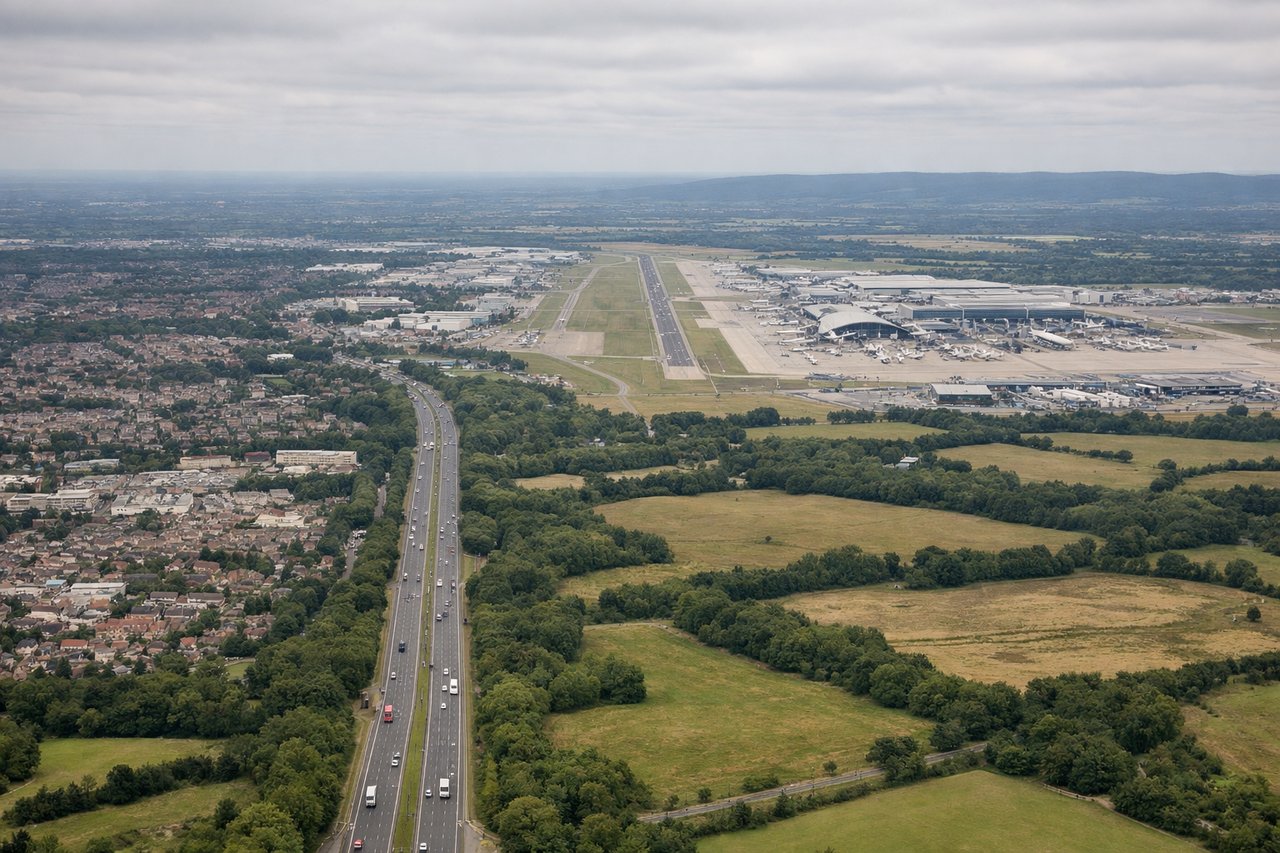
Landing at LGW
LEFTLeft-side seats offer the best views during approach to Gatwick, showing the Thames Valley, London's urban sprawl, and the distinctive patchwork of Surrey and Sussex farmland. You'll see the approach path over southern England's green belt before final descent.
Landmarks on this routeAll landmarks →
Will your flight be in sunlight?
Pick a date and time in the Sun Map to watch the sun move across your whole flight.
About This Route
Which side of the plane should I sit on flying from Hewanorra International (UVF) to Gatwick (LGW)?
Sit on the Right side of the plane for the best views on flights from Hewandorra to London. Right-side seats win overall because the dramatic takeoff scenery over Saint Lucia's Pitons is more visually distinctive than the landing approach. While both directions offer legitimate views, the volcanic peaks and Caribbean coastline provide a more memorable start to the journey than the suburban approach to London.
What can I see during takeoff from Hewanorra International in Hewandorra?
During takeoff from Hewanorra International (UVF), sit on the Right side for the best views. Right-side seats capture the dramatic volcanic peaks of Saint Lucia's Pitons and the island's rugged southern coastline as you climb out over the Caribbean. The left side faces open ocean with minimal visual interest during the initial climb. Notable sights include: Gros Piton and Petit Piton (UNESCO-listed volcanic peaks), Saint Lucia's southern coastline, Soufrière Bay, Caribbean Sea.
What can I see when landing at Gatwick in London?
When landing at Gatwick (LGW), sit on the Left side for the best views. Left-side seats offer the best views during approach to Gatwick, showing the Thames Valley, London's urban sprawl, and the distinctive patchwork of Surrey and Sussex farmland. You'll see the approach path over southern England's green belt before final descent. Notable sights include: Thames River and its meanders, London metropolitan area (visible as urban grid), North Downs ridge, Gatwick's runway orientation and surrounding towns (Crawley, Horley).
How long is the flight from Hewandorra to London?
The flight from Hewanorra International (UVF) to Gatwick (LGW) takes about 7 hours 45 minutes. The shortest flight path between them is 4,225 miles (6,800 km); winds and air traffic control usually add a few percent.
What does the Hewandorra to London flight path pass over?
Atlantic Ocean crossing with no major landmarks visible for approximately 5 hours; approach to European airspace brings views of the Iberian Peninsula (Portugal/Spain coastline if routed via southern corridor), Bay of Biscay, and eventually the English Channel and southern English coastline (Dorset/Sussex cliffs) before reaching Gatwick