While takeoff from Saint Lucia favors the right side, the landing approach into Philadelphia on the left side is more visually rewarding. The Delaware River, urban grid, and suburban landscape provide continuous interest during descent. The northbound flight path over the Atlantic offers limited dramatic scenery at cruise altitude.
Flown UVF to PHL? Did we get it right?
Flight Path
Hewandorra to Philadelphia is 2,003 miles (3,224 km), a flight of about 4 hours 45 minutes.
The flight path crosses the Atlantic Ocean at cruise altitude (typically 30,000-35,000 feet). At this altitude, individual landmarks are not visible, but the curvature of the Atlantic coastline becomes apparent as the aircraft transitions from the Caribbean to the US East Coast. The Bahamas and Florida peninsula may be visible as faint landmasses if flying at lower cruise altitudes or during clear conditions, but they appear as small features on the horizon. The majority of the midpoint journey is open ocean with no significant visible landmarks.
Great circle distance and headings ›Phase by phase
Takeoff from UVF
RIGHTRight-side seats capture the dramatic northern coastline of Saint Lucia as the aircraft climbs northwestward. You'll see the island's volcanic peaks and the Caribbean Sea stretching toward the Lesser Antilles chain.
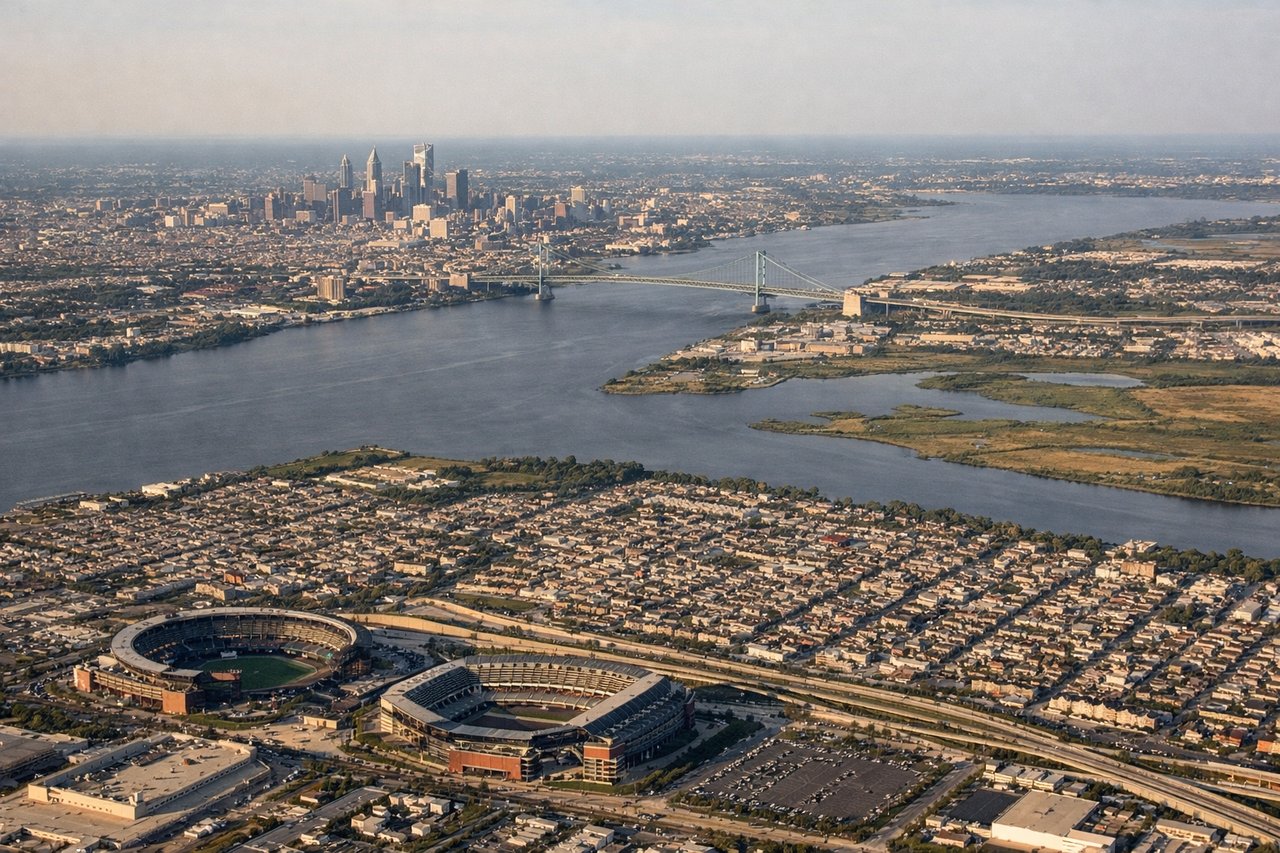
Landing at PHL
LEFTLeft-side seats offer the best views during the final approach into Philadelphia. You'll see the Delaware River, the urban grid of Philadelphia, and the surrounding Pennsylvania landscape as the aircraft descends from the southwest.
Will your flight be in sunlight?
Pick a date and time in the Sun Map to watch the sun move across your whole flight.
About This Route
Which side of the plane should I sit on flying from Hewanorra International (UVF) to Philadelphia International (PHL)?
Sit on the Left side of the plane for the best views on flights from Hewandorra to Philadelphia. While takeoff from Saint Lucia favors the right side, the landing approach into Philadelphia on the left side is more visually rewarding. The Delaware River, urban grid, and suburban landscape provide continuous interest during descent. The northbound flight path over the Atlantic offers limited dramatic scenery at cruise altitude.
What can I see during takeoff from Hewanorra International in Hewandorra?
During takeoff from Hewanorra International (UVF), sit on the Right side for the best views. Right-side seats capture the dramatic northern coastline of Saint Lucia as the aircraft climbs northwestward. You'll see the island's volcanic peaks and the Caribbean Sea stretching toward the Lesser Antilles chain. Notable sights include: Pitons (UNESCO twin peaks on southwest coast), Morne Fortune ridge, Caribbean Sea, northern Saint Lucia coastline.
What can I see when landing at Philadelphia International in Philadelphia?
When landing at Philadelphia International (PHL), sit on the Left side for the best views. Left-side seats offer the best views during the final approach into Philadelphia. You'll see the Delaware River, the urban grid of Philadelphia, and the surrounding Pennsylvania landscape as the aircraft descends from the southwest. Notable sights include: Delaware River, Philadelphia skyline and downtown grid, Schuylkill River, Pennsylvania farmland and suburbs.
How long is the flight from Hewandorra to Philadelphia?
The flight from Hewanorra International (UVF) to Philadelphia International (PHL) takes about 4 hours 45 minutes. The shortest flight path between them is 2,003 miles (3,224 km); winds and air traffic control usually add a few percent.
What does the Hewandorra to Philadelphia flight path pass over?
The flight path crosses the Atlantic Ocean at cruise altitude (typically 30,000-35,000 feet). At this altitude, individual landmarks are not visible, but the curvature of the Atlantic coastline becomes apparent as the aircraft transitions from the Caribbean to the US East Coast. The Bahamas and Florida peninsula may be visible as faint landmasses if flying at lower cruise altitudes or during clear conditions, but they appear as small features on the horizon. The majority of the midpoint journey is open ocean with no significant visible landmarks.