Xi'an to Beijing is 580 miles (934 km), a flight of about 2 hours 15 minutes.
Right-side seats capture the most dramatic scenery: the Qinling Mountains during takeoff and the transition from plain to foothills during descent. The left side offers more urban and agricultural views but fewer distinctive natural landmarks.
Flight Path
The flight path crosses the Guanzhong Plain northeastward, passing over Baoji and Weinan regions. The Taihang Mountains appear on the eastern horizon during cruise. The Yellow River (Huang He) may be visible as a pale ribbon in the distance if flying near its course. The transition from the loess plateau terrain of Shaanxi to the flatter North China Plain occurs in the latter half of the flight. No major lakes or dramatic terrain features dominate the midpoint, but the gradual landscape shift from hilly western terrain to flat eastern plains is geographically significant.
Great circle distance and headings ›

Phase by phase
Takeoff from XIY
RIGHTRight-side seats offer views of the Wei River valley and the Qinling Mountains to the south as the aircraft climbs northeastward. The left side faces the flat Guanzhong Plain with fewer distinctive features during initial climb.
Landing at PEK
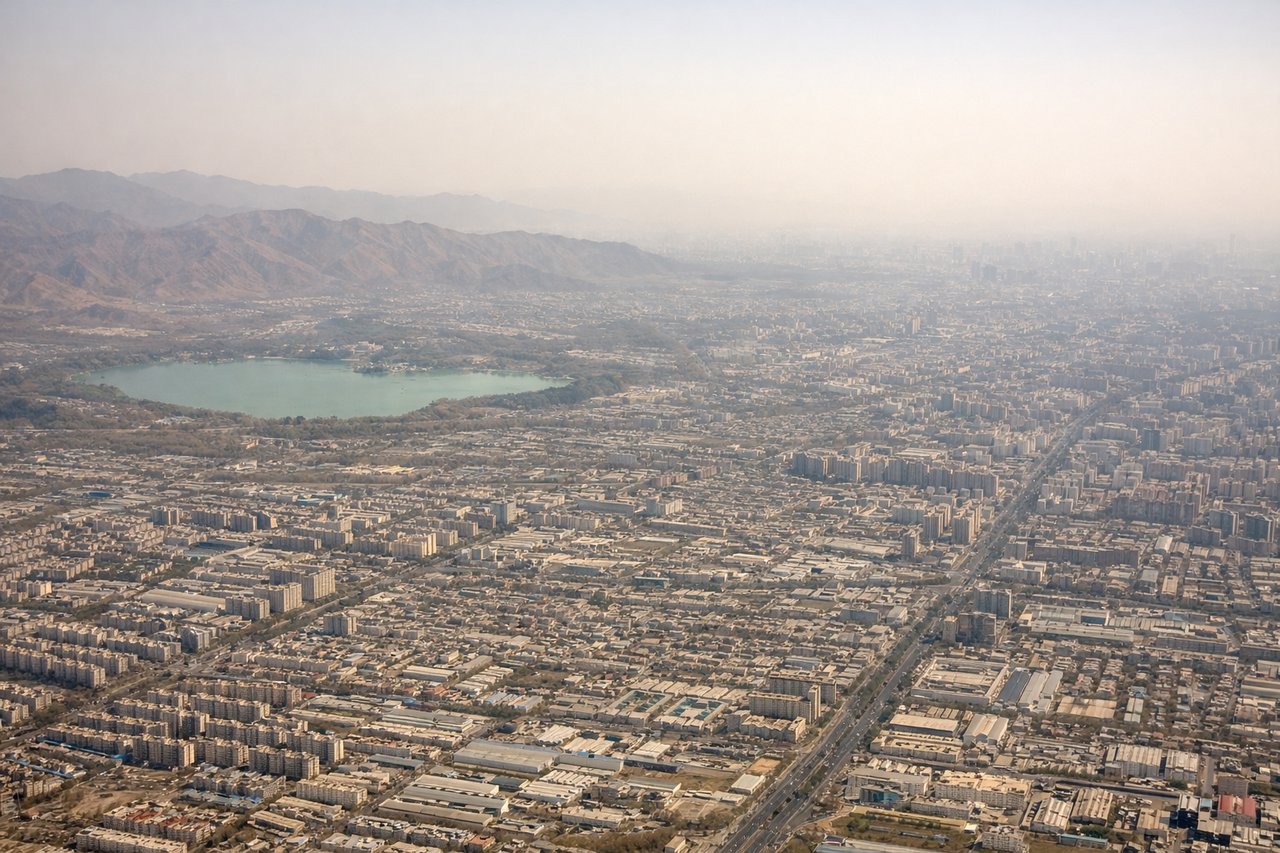
LEFTLeft-side seats provide views of the North China Plain, the Ming Tombs area, and the approach to Beijing's urban sprawl from the southwest. Descent paths typically bring aircraft over Zhuozhou and Daxing districts, visible on the left during final approach.
Landmarks on this routeAll landmarks →
Will your flight be in sunlight?
Pick a date and time in the Sun Map to watch the sun move across your whole flight.
About This Route
Which side of the plane should I sit on flying from Xianyang (XIY) to Capital (PEK)?
Sit on the Right side of the plane for the best views on flights from Xi'an to Beijing. Right-side seats capture the most dramatic scenery: the Qinling Mountains during takeoff and the transition from plain to foothills during descent. The left side offers more urban and agricultural views but fewer distinctive natural landmarks.
What can I see during takeoff from Xianyang in Xi'an?
During takeoff from Xianyang (XIY), sit on the Right side for the best views. Right-side seats offer views of the Wei River valley and the Qinling Mountains to the south as the aircraft climbs northeastward. The left side faces the flat Guanzhong Plain with fewer distinctive features during initial climb. Notable sights include: Qinling Mountains (southern horizon), Wei River (winding through foreground), Xi'an urban sprawl (receding westward), Xianyang airfield (beneath/behind during climb).
What can I see when landing at Capital in Beijing?
When landing at Capital (PEK), sit on the Left side for the best views. Left-side seats provide views of the North China Plain, the Ming Tombs area, and the approach to Beijing's urban sprawl from the southwest. Descent paths typically bring aircraft over Zhuozhou and Daxing districts, visible on the left during final approach. Notable sights include: Ming Tombs area (northwest of Beijing), North China Plain (flat agricultural expanse), Yanqing District foothills (western horizon), Beijing urban grid (expanding toward landing).
How long is the flight from Xi'an to Beijing?
The flight from Xianyang (XIY) to Capital (PEK) takes about 2 hours 15 minutes. The shortest flight path between them is 580 miles (934 km); winds and air traffic control usually add a few percent.
What does the Xi'an to Beijing flight path pass over?
The flight path crosses the Guanzhong Plain northeastward, passing over Baoji and Weinan regions. The Taihang Mountains appear on the eastern horizon during cruise. The Yellow River (Huang He) may be visible as a pale ribbon in the distance if flying near its course. The transition from the loess plateau terrain of Shaanxi to the flatter North China Plain occurs in the latter half of the flight. No major lakes or dramatic terrain features dominate the midpoint, but the gradual landscape shift from hilly western terrain to flat eastern plains is geographically significant.