Xi'an to Tokyo is 1,782 miles (2,868 km), a flight of about 3 hours 30 minutes.
The right side captures the dramatic Qinling Mountains at takeoff and provides better views of the Japanese Alps and mountainous terrain during the mid-flight crossing of central Japan. While Tokyo Bay is impressive on the left during landing, the sustained mountain scenery on the right throughout the flight offers more consistent visual interest.
Flight Path
The flight crosses the East China Sea for approximately 1.5 hours. Notable features include the Izu Peninsula (volcanic, mountainous) and the Japanese Alps (Hida Mountains) visible on the right side during the approach to Japan. The Izu Islands may be visible as small dark features in the sea if flying at optimal altitude and visibility. The transition from sea to Japanese landmass occurs roughly 45 minutes before landing, with the Izu Peninsula's distinctive volcanic topography appearing first on the right side of the aircraft.
Great circle distance and headings ›


Phase by phase
Takeoff from XIY
RIGHTRight-side seats offer views of the Qinling Mountains immediately south of Xi'an during climb-out. The range rises steeply from the Guanzhong Plain and creates dramatic elevation changes visible within the first 10-15 minutes of flight.
Landing at NRT
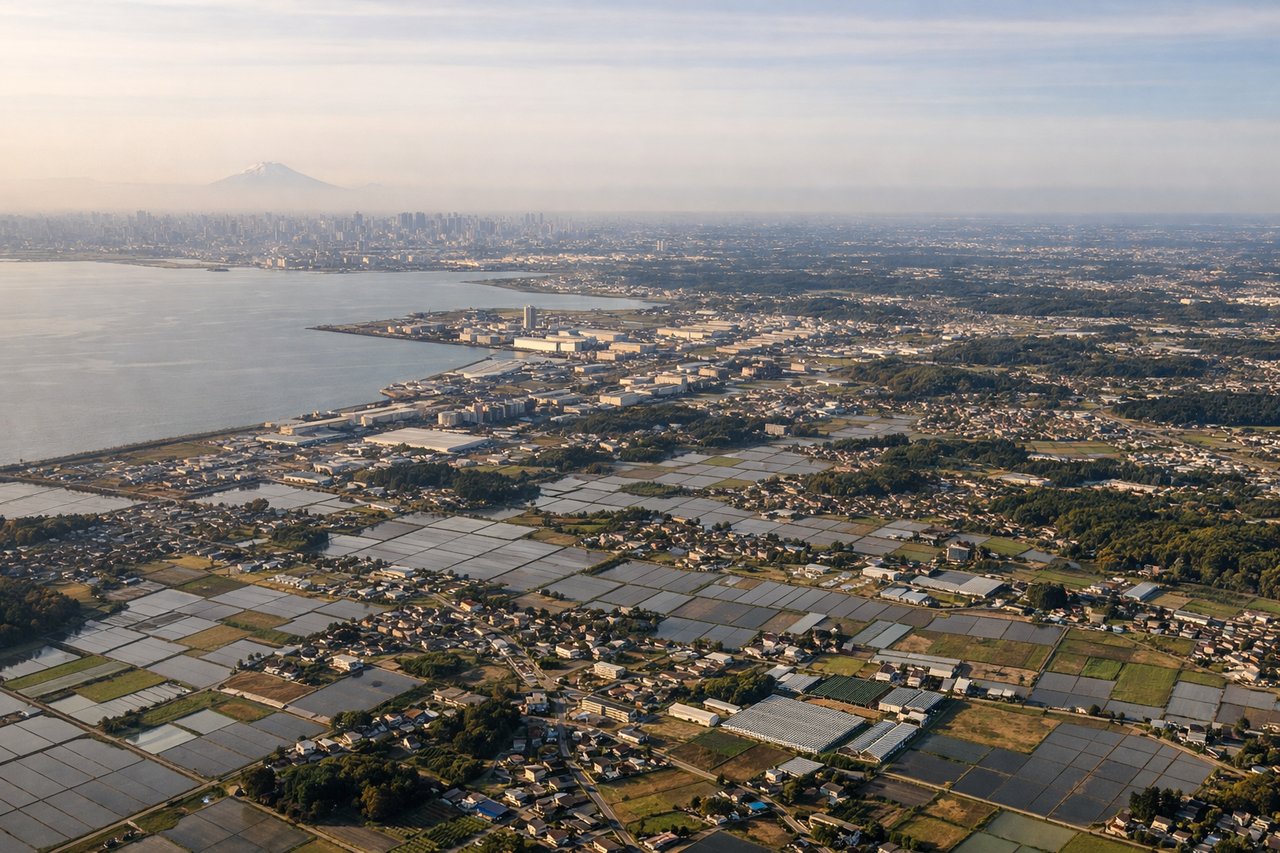
LEFTLeft-side seats provide views of Tokyo Bay, the Kanto Plain, and Mount Fuji during descent into Narita. The bay's distinctive shape and the sprawling metropolitan area of greater Tokyo are unmistakable landmarks visible from 15,000+ feet on approach.
Landmarks on this routeAll landmarks →
Will your flight be in sunlight?
Pick a date and time in the Sun Map to watch the sun move across your whole flight.
About This Route
Which side of the plane should I sit on flying from Xianyang (XIY) to New Tokyo International (NRT)?
Sit on the Right side of the plane for the best views on flights from Xi'an to Tokyo. The right side captures the dramatic Qinling Mountains at takeoff and provides better views of the Japanese Alps and mountainous terrain during the mid-flight crossing of central Japan. While Tokyo Bay is impressive on the left during landing, the sustained mountain scenery on the right throughout the flight offers more consistent visual interest.
What can I see during takeoff from Xianyang in Xi'an?
During takeoff from Xianyang (XIY), sit on the Right side for the best views. Right-side seats offer views of the Qinling Mountains immediately south of Xi'an during climb-out. The range rises steeply from the Guanzhong Plain and creates dramatic elevation changes visible within the first 10-15 minutes of flight. Notable sights include: Qinling Mountains (south), Guanzhong Plain (north/foreground), Wei River valley (east), Xi'an urban sprawl (immediate ground reference).
What can I see when landing at New Tokyo International in Tokyo?
When landing at New Tokyo International (NRT), sit on the Left side for the best views. Left-side seats provide views of Tokyo Bay, the Kanto Plain, and Mount Fuji during descent into Narita. The bay's distinctive shape and the sprawling metropolitan area of greater Tokyo are unmistakable landmarks visible from 15,000+ feet on approach. Notable sights include: Tokyo Bay (west/left), Kanto Plain urban grid (south), Mount Fuji (southwest, weather permitting), Narita International Airport area (east/right).
How long is the flight from Xi'an to Tokyo?
The flight from Xianyang (XIY) to New Tokyo International (NRT) takes about 3 hours 30 minutes. The shortest flight path between them is 1,782 miles (2,868 km); winds and air traffic control usually add a few percent.
What does the Xi'an to Tokyo flight path pass over?
The flight crosses the East China Sea for approximately 1.5 hours. Notable features include the Izu Peninsula (volcanic, mountainous) and the Japanese Alps (Hida Mountains) visible on the right side during the approach to Japan. The Izu Islands may be visible as small dark features in the sea if flying at optimal altitude and visibility. The transition from sea to Japanese landmass occurs roughly 45 minutes before landing, with the Izu Peninsula's distinctive volcanic topography appearing first on the right side of the aircraft.