While takeoff favors the right, the landing view from the left is significantly more dramatic and geographically distinctive. The Firth of Forth and Arthur's Seat provide iconic Scottish geography that outweighs the Halifax departure views.
Flown YHZ to EDI? Did we get it right?
Flight Path
Halifax to Edinburgh is 2,663 miles (4,285 km), a flight of about 6 hours.
The flight path crosses the North Atlantic at roughly 35,000 feet. Notable features include: the Grand Banks region southeast of Newfoundland (visible only on lower-altitude segments), the open Atlantic with occasional weather systems, and the approach to the UK via the Celtic Sea and Irish Sea. The Hebrides and Scottish Highlands become visible roughly 30-45 minutes before Edinburgh arrival. No major mountain ranges or distinctive landmarks are visible during the mid-ocean cruise phase at typical cruising altitude.
Great circle distance and headings ›Phase by phase
Takeoff from YHZ
RIGHTHalifax typically departs runway 05 or 23 depending on wind. Right-side seats offer views of the Atlantic coastline and Halifax Harbour as you climb out over water, with the city visible to the left but the open ocean and coastal geography more prominent on the right.
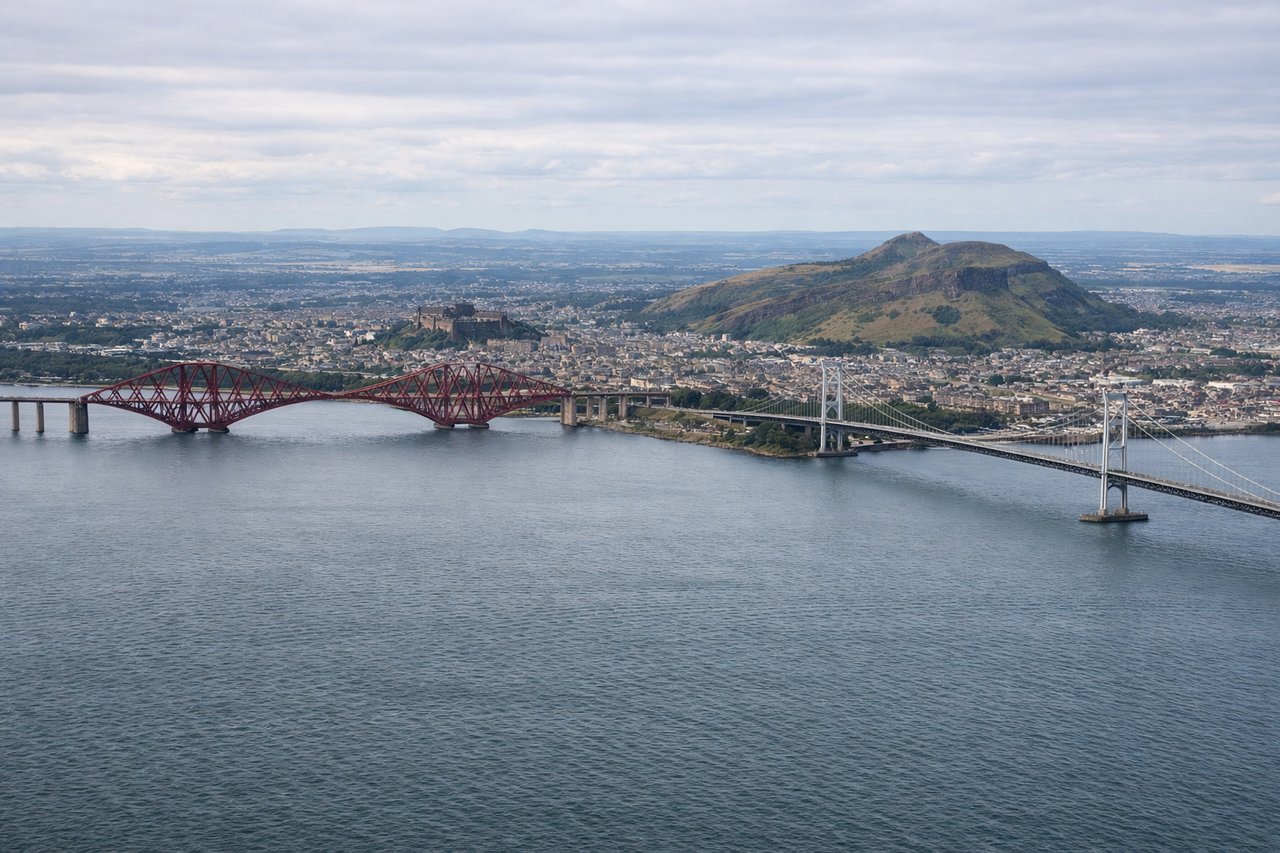
Landing at EDI
LEFTEdinburgh typically lands runway 06 or 24. Left-side seats during approach offer views of the Firth of Forth, the Scottish coastline, and the city's distinctive geography including Arthur's Seat and the castle ridge. Right-side views are mostly inland terrain.
Will your flight be in sunlight?
Pick a date and time in the Sun Map to watch the sun move across your whole flight.
About This Route
Which side of the plane should I sit on flying from Halifax International (YHZ) to Edinburgh (EDI)?
Sit on the Left side of the plane for the best views on flights from Halifax to Edinburgh. While takeoff favors the right, the landing view from the left is significantly more dramatic and geographically distinctive. The Firth of Forth and Arthur's Seat provide iconic Scottish geography that outweighs the Halifax departure views.
What can I see during takeoff from Halifax International in Halifax?
During takeoff from Halifax International (YHZ), sit on the Right side for the best views. Halifax typically departs runway 05 or 23 depending on wind. Right-side seats offer views of the Atlantic coastline and Halifax Harbour as you climb out over water, with the city visible to the left but the open ocean and coastal geography more prominent on the right. Notable sights include: Halifax Harbour, Atlantic Ocean, McNabs Island, Dartmouth waterfront.
What can I see when landing at Edinburgh in Edinburgh?
When landing at Edinburgh (EDI), sit on the Left side for the best views. Edinburgh typically lands runway 06 or 24. Left-side seats during approach offer views of the Firth of Forth, the Scottish coastline, and the city's distinctive geography including Arthur's Seat and the castle ridge. Right-side views are mostly inland terrain. Notable sights include: Firth of Forth, Arthur's Seat, Edinburgh Castle ridge, Pentland Hills.
How long is the flight from Halifax to Edinburgh?
The flight from Halifax International (YHZ) to Edinburgh (EDI) takes about 6 hours. The shortest flight path between them is 2,663 miles (4,285 km); winds and air traffic control usually add a few percent.
What does the Halifax to Edinburgh flight path pass over?
The flight path crosses the North Atlantic at roughly 35,000 feet. Notable features include: the Grand Banks region southeast of Newfoundland (visible only on lower-altitude segments), the open Atlantic with occasional weather systems, and the approach to the UK via the Celtic Sea and Irish Sea. The Hebrides and Scottish Highlands become visible roughly 30-45 minutes before Edinburgh arrival. No major mountain ranges or distinctive landmarks are visible during the mid-ocean cruise phase at typical cruising altitude.