While takeoff from Toronto offers brief urban scenery, the 13+ hour flight is dominated by open Atlantic and Indian Ocean (scoring maximum 2.0 for ocean-heavy routes). The right side's advantage comes from the landing sequence: Dubai's artificial islands (Palm Jumeirah, The World) and Marina skyline provide distinctive, recognizable landmarks visible from altitude that the left side's desert interior cannot match. Both sides score equally for the cruise phase (open ocean), but the landing experience tips the overall score to the right.
Flown YTZ to DXB? Did we get it right?
Flight Path
Toronto to Dubai is 6,881 miles (11,075 km), a flight of about 13 hours 45 minutes.
The flight path crosses the Atlantic Ocean (no visible landmarks for approximately 6 hours), then transitions over North Africa and the Mediterranean. Passengers may glimpse the Atlas Mountains of Morocco or Algeria during the southern route leg, the Sahara Desert as a tan expanse, and the Red Sea's narrow blue corridor before reaching the Persian Gulf. Most of the cruise phase is open ocean with no terrain features.
Great circle distance and headings ›Phase by phase
Takeoff from YTZ
LEFTLeft side (north) offers views of Toronto's downtown skyline and Lake Ontario waterfront during initial climb. Right side faces inland toward the Greater Toronto Area suburbs with minimal visual interest during departure.
Landing at DXB
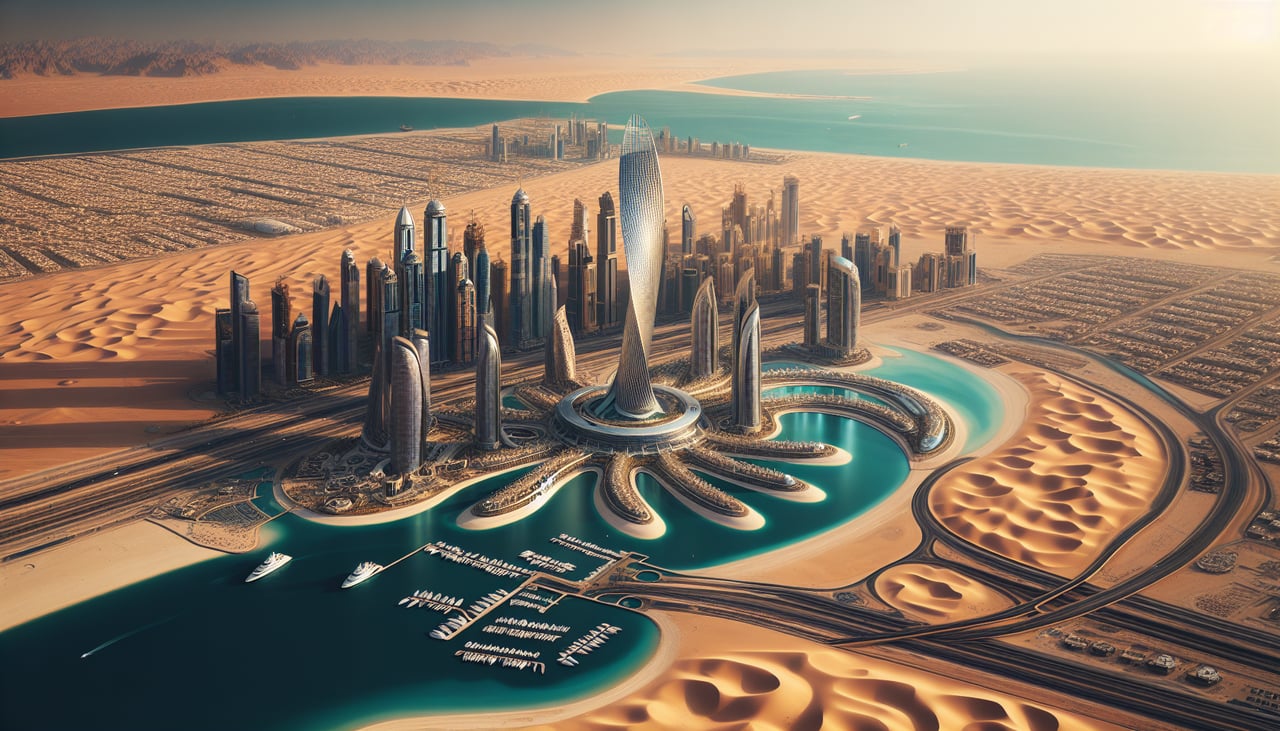
RIGHTRight side (southeast approach) provides views of the Persian Gulf coastline, Dubai's Palm Jumeirah artificial islands, and the Dubai Marina skyline during descent and approach. Left side faces the inland desert with minimal urban features until final approach.
Will your flight be in sunlight?
Pick a date and time in the Sun Map to watch the sun move across your whole flight.
About This Route
Which side of the plane should I sit on flying from City Centre (YTZ) to Dubai International (DXB)?
Sit on the Right side of the plane for the best views on flights from Toronto to Dubai. While takeoff from Toronto offers brief urban scenery, the 13+ hour flight is dominated by open Atlantic and Indian Ocean (scoring maximum 2.0 for ocean-heavy routes). The right side's advantage comes from the landing sequence: Dubai's artificial islands (Palm Jumeirah, The World) and Marina skyline provide distinctive, recognizable landmarks visible from altitude that the left side's desert interior cannot match. Both sides score equally for the cruise phase (open ocean), but the landing experience tips the overall score to the right.
What can I see during takeoff from City Centre in Toronto?
During takeoff from City Centre (YTZ), sit on the Left side for the best views. Left side (north) offers views of Toronto's downtown skyline and Lake Ontario waterfront during initial climb. Right side faces inland toward the Greater Toronto Area suburbs with minimal visual interest during departure. Notable sights include: Toronto CN Tower and downtown core, Lake Ontario shoreline, Toronto Islands (Ward's Island, Algonquin Island visible as green strips in the lake).
What can I see when landing at Dubai International in Dubai?
When landing at Dubai International (DXB), sit on the Right side for the best views. Right side (southeast approach) provides views of the Persian Gulf coastline, Dubai's Palm Jumeirah artificial islands, and the Dubai Marina skyline during descent and approach. Left side faces the inland desert with minimal urban features until final approach. Notable sights include: Palm Jumeirah (distinctive palm-shaped artificial islands), Dubai Marina with its crescent-shaped breakwater and high-rise towers, The World islands (smaller artificial archipelago), Persian Gulf coastline.
How long is the flight from Toronto to Dubai?
The flight from City Centre (YTZ) to Dubai International (DXB) takes about 13 hours 45 minutes. The shortest flight path between them is 6,881 miles (11,075 km); winds and air traffic control usually add a few percent.
What does the Toronto to Dubai flight path pass over?
The flight path crosses the Atlantic Ocean (no visible landmarks for approximately 6 hours), then transitions over North Africa and the Mediterranean. Passengers may glimpse the Atlas Mountains of Morocco or Algeria during the southern route leg, the Sahara Desert as a tan expanse, and the Red Sea's narrow blue corridor before reaching the Persian Gulf. Most of the cruise phase is open ocean with no terrain features.