The right side wins at takeoff for the Toronto skyline, but the left side delivers the more dramatic and sustained views: crossing the northern Pacific you get Alaska and the Aleutian Islands on the left, and the Tokyo Bay and Mount Fuji approach on the left at landing. The left side has the edge for the overall journey.
Flight Path
The great circle route from Toronto to Tokyo tracks northwest over Lake Huron and Lake Superior, then across Manitoba and Saskatchewan, over the Yukon and southern Alaska including the Alaska Range, out over the Aleutian Islands chain into the North Pacific, then descends toward Hokkaido and Honshu. Key features include the Great Lakes visible early in the flight, the Canadian Rockies if the route dips slightly south, the Alaska Range and Denali region, the volcanic Aleutian Islands as a chain of dark peaks rising from the Pacific, and the Japanese Alps of central Honshu on descent.
Great circle distance and headings ›


Phase by phase
Takeoff from YTZ
RIGHTBilly Bishop uses runway 08/26 and 15/33. Departing eastbound or northbound, the right side gives you the Toronto downtown skyline including the CN Tower, and a clear view across Lake Ontario toward the eastern lakeshore. The left side faces the industrial port lands and less scenic western waterfront.
Landing at HND
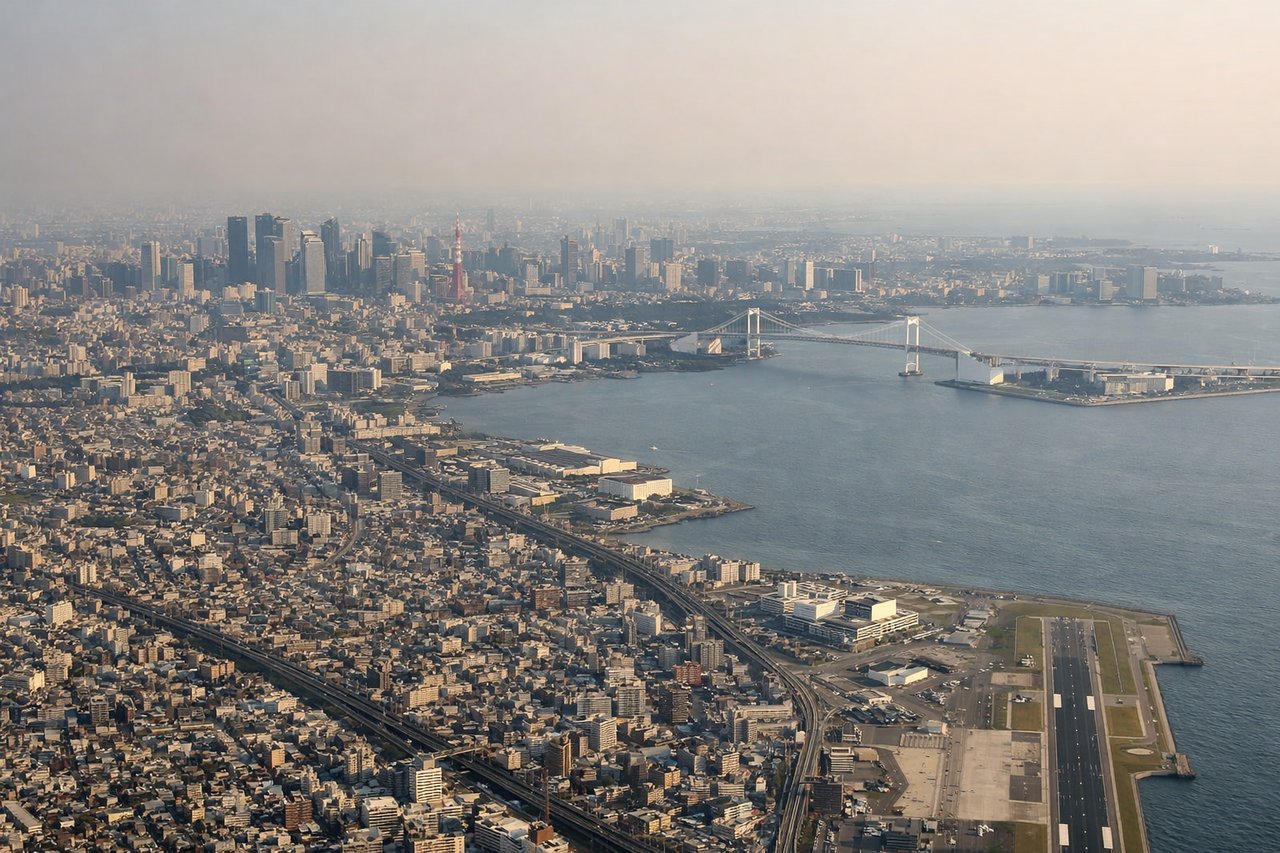
LEFTHND primarily uses runways 16L/34R and 16R/34L oriented north-south, and 04/22 oriented northeast-southwest. Arriving from the north or northeast over Tokyo Bay, the left side gives you Tokyo Bay, the city of Tokyo, and Mount Fuji on the western horizon on clear days. The right side faces Chiba Prefecture and the less distinctive eastern suburbs.
Landmarks on this routeAll landmarks →
Will your flight be in sunlight?
See exactly which side of the plane gets sun and shade at your departure time.
About This Route
Which side of the plane should I sit on flying from City Centre (YTZ) to Tokyo International (HND)?
Sit on the Left side of the plane for the best views on flights from Toronto to Tokyo. The right side wins at takeoff for the Toronto skyline, but the left side delivers the more dramatic and sustained views: crossing the northern Pacific you get Alaska and the Aleutian Islands on the left, and the Tokyo Bay and Mount Fuji approach on the left at landing. The left side has the edge for the overall journey.
What can I see during takeoff from City Centre in Toronto?
During takeoff from City Centre (YTZ), sit on the Right side for the best views. Billy Bishop uses runway 08/26 and 15/33. Departing eastbound or northbound, the right side gives you the Toronto downtown skyline including the CN Tower, and a clear view across Lake Ontario toward the eastern lakeshore. The left side faces the industrial port lands and less scenic western waterfront. Notable sights include: CN Tower and downtown Toronto skyline, Lake Ontario eastern basin, Toronto Islands below the aircraft, Scarborough Bluffs along the lakeshore to the east.
What can I see when landing at Tokyo International in Tokyo?
When landing at Tokyo International (HND), sit on the Left side for the best views. HND primarily uses runways 16L/34R and 16R/34L oriented north-south, and 04/22 oriented northeast-southwest. Arriving from the north or northeast over Tokyo Bay, the left side gives you Tokyo Bay, the city of Tokyo, and Mount Fuji on the western horizon on clear days. The right side faces Chiba Prefecture and the less distinctive eastern suburbs. Notable sights include: Tokyo Bay and its reclaimed land districts, Mount Fuji on the western horizon (clear days), the dense urban grid of central Tokyo and Shibuya/Shinjuku districts, Yokohama port and bay to the southwest.
How long is the flight from Toronto to Tokyo?
The flight from City Centre (YTZ) to Tokyo International (HND) takes Approximately 13 to 14 hours nonstop, though this route typically operates via a connection as YTZ is a regional airport — a realistic itinerary connects through YYZ or another hub.
What does the Toronto to Tokyo flight path pass over?
The great circle route from Toronto to Tokyo tracks northwest over Lake Huron and Lake Superior, then across Manitoba and Saskatchewan, over the Yukon and southern Alaska including the Alaska Range, out over the Aleutian Islands chain into the North Pacific, then descends toward Hokkaido and Honshu. Key features include the Great Lakes visible early in the flight, the Canadian Rockies if the route dips slightly south, the Alaska Range and Denali region, the volcanic Aleutian Islands as a chain of dark peaks rising from the Pacific, and the Japanese Alps of central Honshu on descent.