The left side wins on the strength of a genuinely dramatic mountain departure — the Rockies rising right at takeoff is hard to beat — while the rest of the flight is dominated by remote Yukon/Alaska terrain, the Bering Sea, and Kamchatka's volcanic spine, which offer occasional striking peaks on clear days but are largely obscured by long ocean and tundra stretches on both sides.
Flight Path
The great-circle route arcs up over the Yukon and central Alaska near its highest latitude (around 63-64N), crosses the Bering Sea, and runs down along the volcanic spine of Russia's Kamchatka Peninsula and the Sea of Okhotsk before descending toward Sakhalin, the Sea of Japan, and the Korean coast.
Great circle distance and headings ›

.jpg?width=600)


Phase by phase
Takeoff from YYC
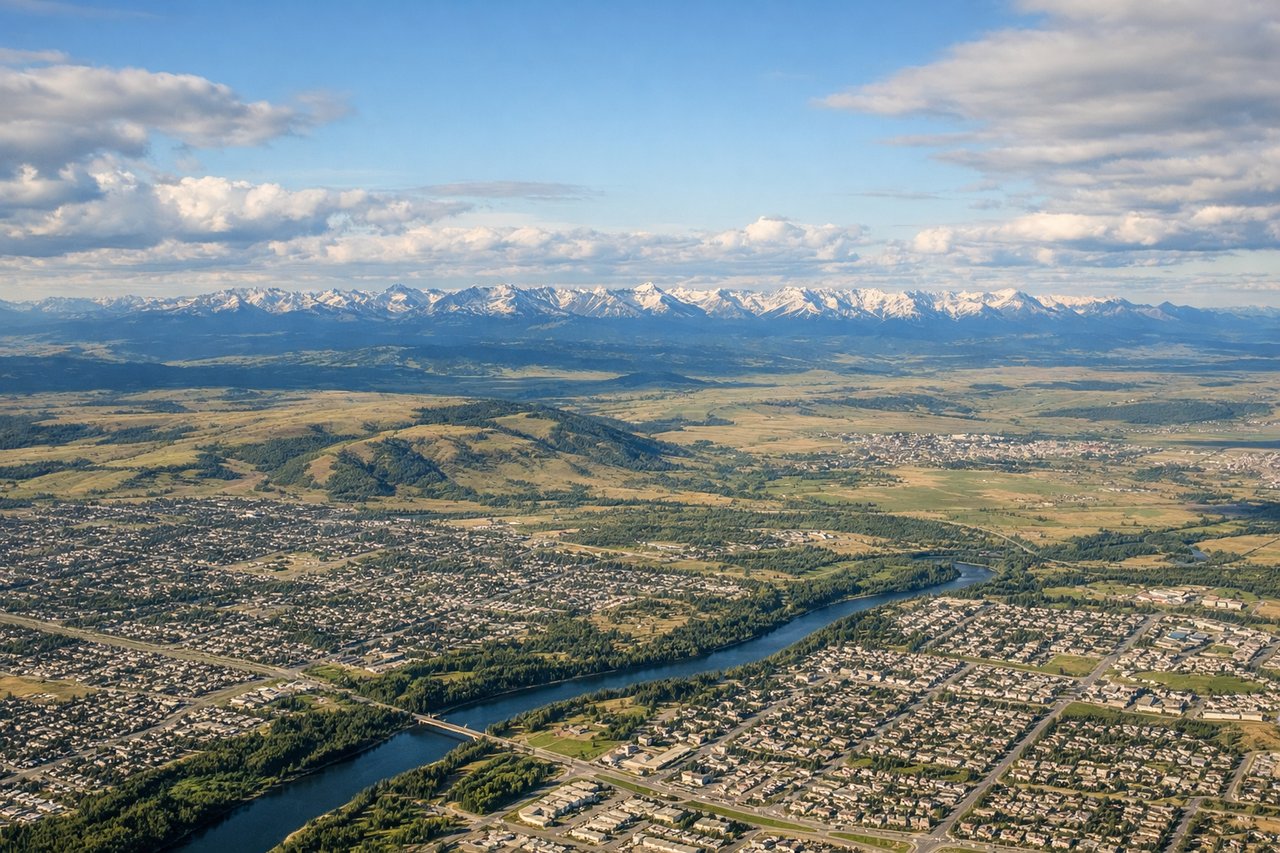
LEFTYYC departures typically run north on runway 35 before turning left onto the northwest routing toward Alaska, and that turn swings the Canadian Rockies front ranges right into view on the left side. It's a genuinely dramatic mountain wall rising out of the foothills just minutes after liftoff, while the right side only shows flat prairie receding toward Calgary's downtown.
Landing at ICN
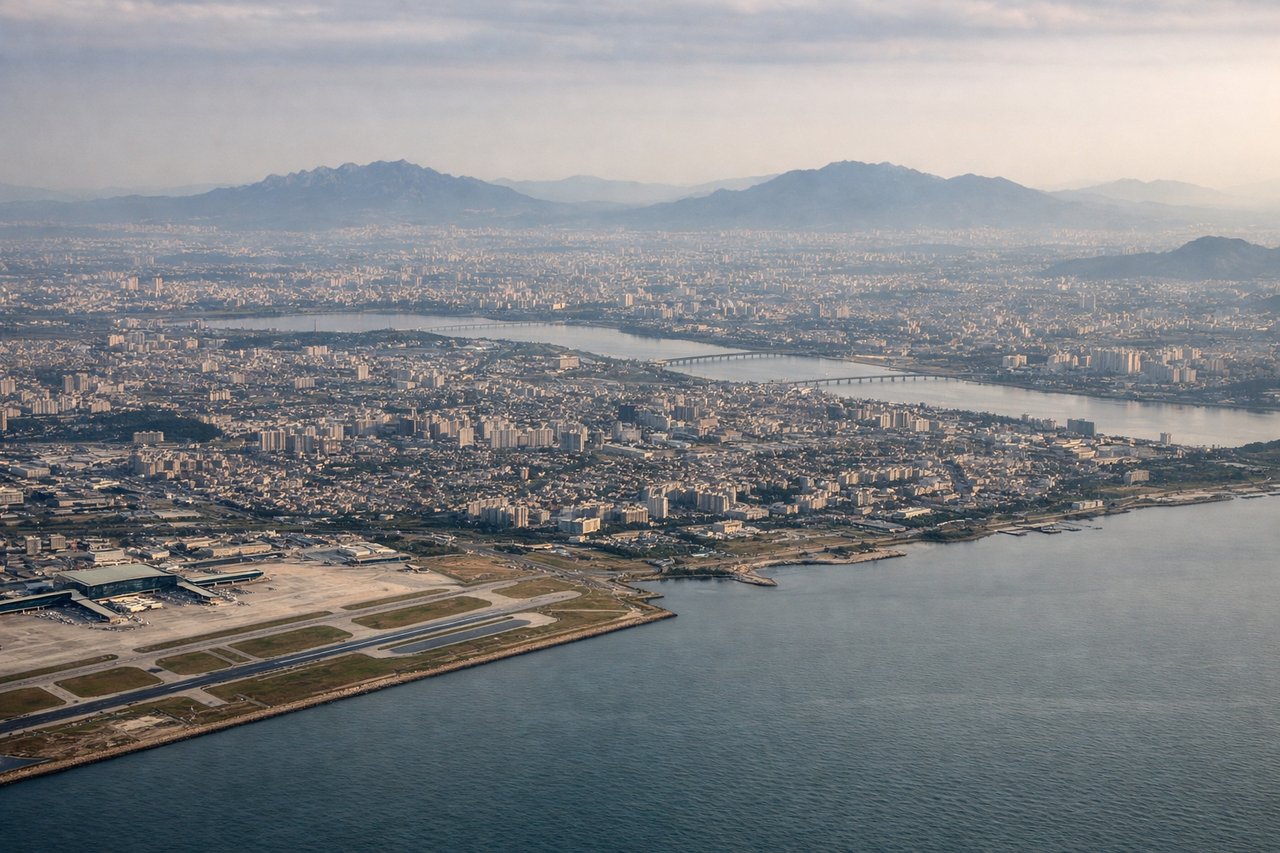
RIGHTICN arrivals in prevailing westerly winds approach from the southeast and land heading northwest on the 33/34 runways, which puts the Seoul metro area and Han River off to the right during descent, with the Yellow Sea's mudflats and islands passing on the left. The right side gets the more varied view: distant skyline, river, and coastline all in sequence.
Landmarks on this routeAll landmarks →
Will your flight be in sunlight?
See exactly which side of the plane gets sun and shade at your departure time.
About This Route
Which side of the plane should I sit on flying from Calgary International (YYC) to Incheon International (ICN)?
Sit on the Left side of the plane for the best views on flights from Calgary to Seoul. The left side wins on the strength of a genuinely dramatic mountain departure — the Rockies rising right at takeoff is hard to beat — while the rest of the flight is dominated by remote Yukon/Alaska terrain, the Bering Sea, and Kamchatka's volcanic spine, which offer occasional striking peaks on clear days but are largely obscured by long ocean and tundra stretches on both sides.
What can I see during takeoff from Calgary International in Calgary?
During takeoff from Calgary International (YYC), sit on the Left side for the best views. YYC departures typically run north on runway 35 before turning left onto the northwest routing toward Alaska, and that turn swings the Canadian Rockies front ranges right into view on the left side. It's a genuinely dramatic mountain wall rising out of the foothills just minutes after liftoff, while the right side only shows flat prairie receding toward Calgary's downtown. Notable sights include: Bow Valley and the town of Banff, Mount Rundle's tilted profile, the Fisher Range foothills, Calgary's downtown skyline falling away to the south.
What can I see when landing at Incheon International in Seoul?
When landing at Incheon International (ICN), sit on the Right side for the best views. ICN arrivals in prevailing westerly winds approach from the southeast and land heading northwest on the 33/34 runways, which puts the Seoul metro area and Han River off to the right during descent, with the Yellow Sea's mudflats and islands passing on the left. The right side gets the more varied view: distant skyline, river, and coastline all in sequence. Notable sights include: Distant Seoul skyline along the Han River, Incheon Bridge spanning the bay, tidal mudflats and small islands near Yeongjong Island, the Yellow Sea coastline.
How long is the flight from Calgary to Seoul?
The flight from Calgary International (YYC) to Incheon International (ICN) takes 13h 05m.
What does the Calgary to Seoul flight path pass over?
The great-circle route arcs up over the Yukon and central Alaska near its highest latitude (around 63-64N), crosses the Bering Sea, and runs down along the volcanic spine of Russia's Kamchatka Peninsula and the Sea of Okhotsk before descending toward Sakhalin, the Sea of Japan, and the Korean coast.