The left side wins on both ends of the flight — Rocky Mountain views at departure and Atlantic coastline views at arrival — while the right side sees mostly flat prairie and forest with no comparable landmarks.
Flown YYC to YHZ? Did we get it right?
Flight Path
Calgary to Halifax is 2,327 miles (3,744 km), a flight of about 4 hours 20 minutes.
Prairie farmland of Saskatchewan and Manitoba, countless lakes and boreal forest of the Canadian Shield across Ontario, and forested terrain of western Quebec before descending toward the Maritimes
Great circle distance and headings ›

Phase by phase
Takeoff from YYC
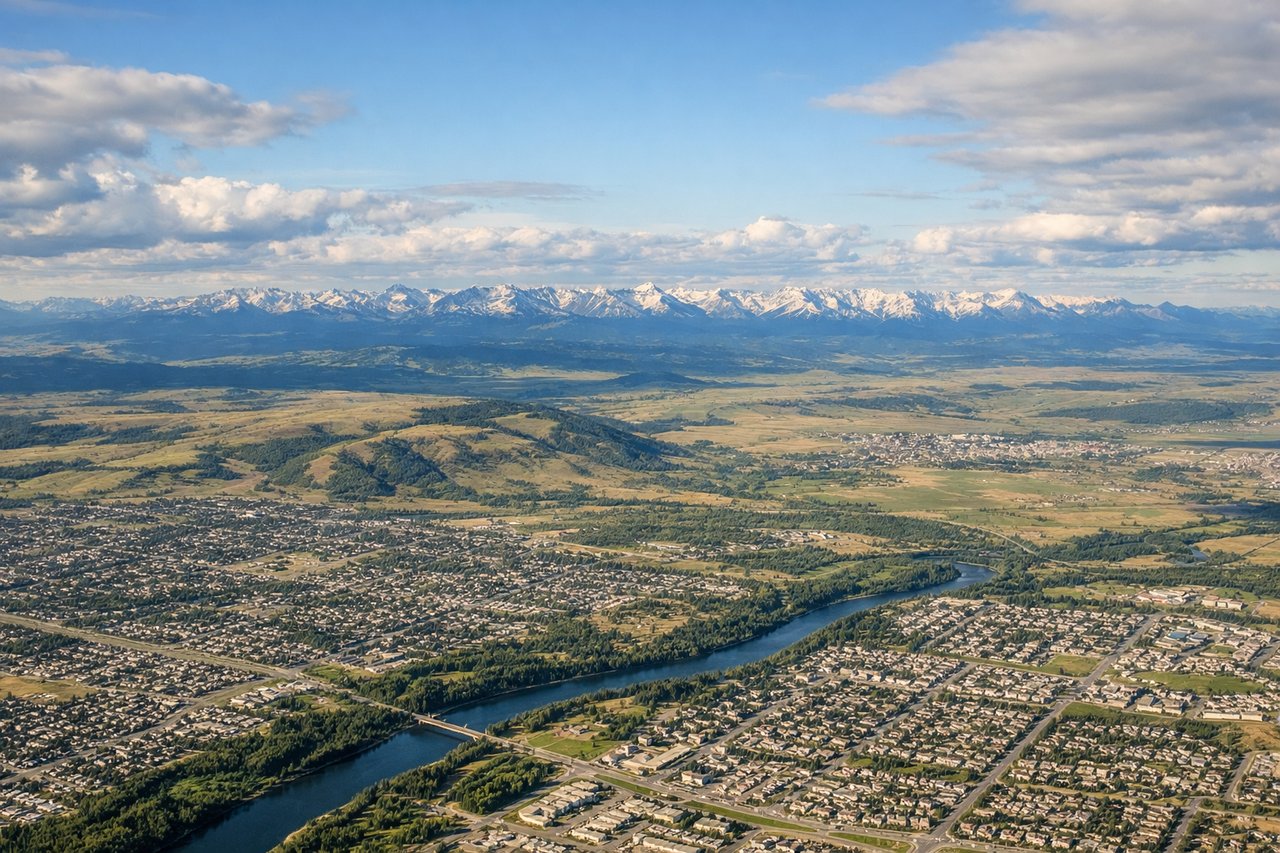
LEFTDeparting YYC on runway 35 climbs north before turning east, giving left-side passengers a clear view of the Rocky Mountain foothills and front ranges rising to the west, along with downtown Calgary's skyline just below. The right side only sees the flat prairie stretching east.
Landing at YHZ
LEFTArrivals into YHZ on runway 23 typically approach from the northeast, and during the turn onto final, left-side passengers get a sweeping view of the Atlantic coastline, Halifax Harbour, and the city's downtown peninsula. The right side mostly faces inland toward wooded, feature-poor terrain.
Will your flight be in sunlight?
Pick a date and time in the Sun Map to watch the sun move across your whole flight.
About This Route
Which side of the plane should I sit on flying from Calgary International (YYC) to Halifax International (YHZ)?
Sit on the Left side of the plane for the best views on flights from Calgary to Halifax. The left side wins on both ends of the flight — Rocky Mountain views at departure and Atlantic coastline views at arrival — while the right side sees mostly flat prairie and forest with no comparable landmarks.
What can I see during takeoff from Calgary International in Calgary?
During takeoff from Calgary International (YYC), sit on the Left side for the best views. Departing YYC on runway 35 climbs north before turning east, giving left-side passengers a clear view of the Rocky Mountain foothills and front ranges rising to the west, along with downtown Calgary's skyline just below. The right side only sees the flat prairie stretching east. Notable sights include: Rocky Mountain foothills, Bow River valley, downtown Calgary skyline, Canadian prairie horizon.
What can I see when landing at Halifax International in Halifax?
When landing at Halifax International (YHZ), sit on the Left side for the best views. Arrivals into YHZ on runway 23 typically approach from the northeast, and during the turn onto final, left-side passengers get a sweeping view of the Atlantic coastline, Halifax Harbour, and the city's downtown peninsula. The right side mostly faces inland toward wooded, feature-poor terrain. Notable sights include: Halifax Harbour, Atlantic coastline, downtown Halifax peninsula, McNabs Island.
How long is the flight from Calgary to Halifax?
The flight from Calgary International (YYC) to Halifax International (YHZ) takes about 4 hours 20 minutes. The shortest flight path between them is 2,327 miles (3,744 km); winds and air traffic control usually add a few percent.
What does the Calgary to Halifax flight path pass over?
Prairie farmland of Saskatchewan and Manitoba, countless lakes and boreal forest of the Canadian Shield across Ontario, and forested terrain of western Quebec before descending toward the Maritimes