The left side offers a stronger visual arc across the flight: island and coastal mountain views on departure from YYJ, glimpses of the Canadian Shield's lakes and forests during cruise, and a scenic St. Lawrence/Montreal skyline view on final approach, while the right side stays mostly over featureless prairie and shield terrain.
Flight Path
Columbia Mountains and Rocky Mountain foothills near the BC-Alberta border, followed by the flat expanse of the Canadian Prairies and the forested, lake-studded Canadian Shield over Ontario
Great circle distance and headings ›
.jpg?width=600)
Phase by phase
Takeoff from YYJ
LEFTDeparting YYJ on runway 27, the aircraft climbs out over the Strait of Juan de Fuca before turning east toward the mainland, giving left-side passengers a view north across the Gulf Islands and the mountainous spine of Vancouver Island before the turn inland toward the Coast and Columbia Mountains.
Landing at YUL
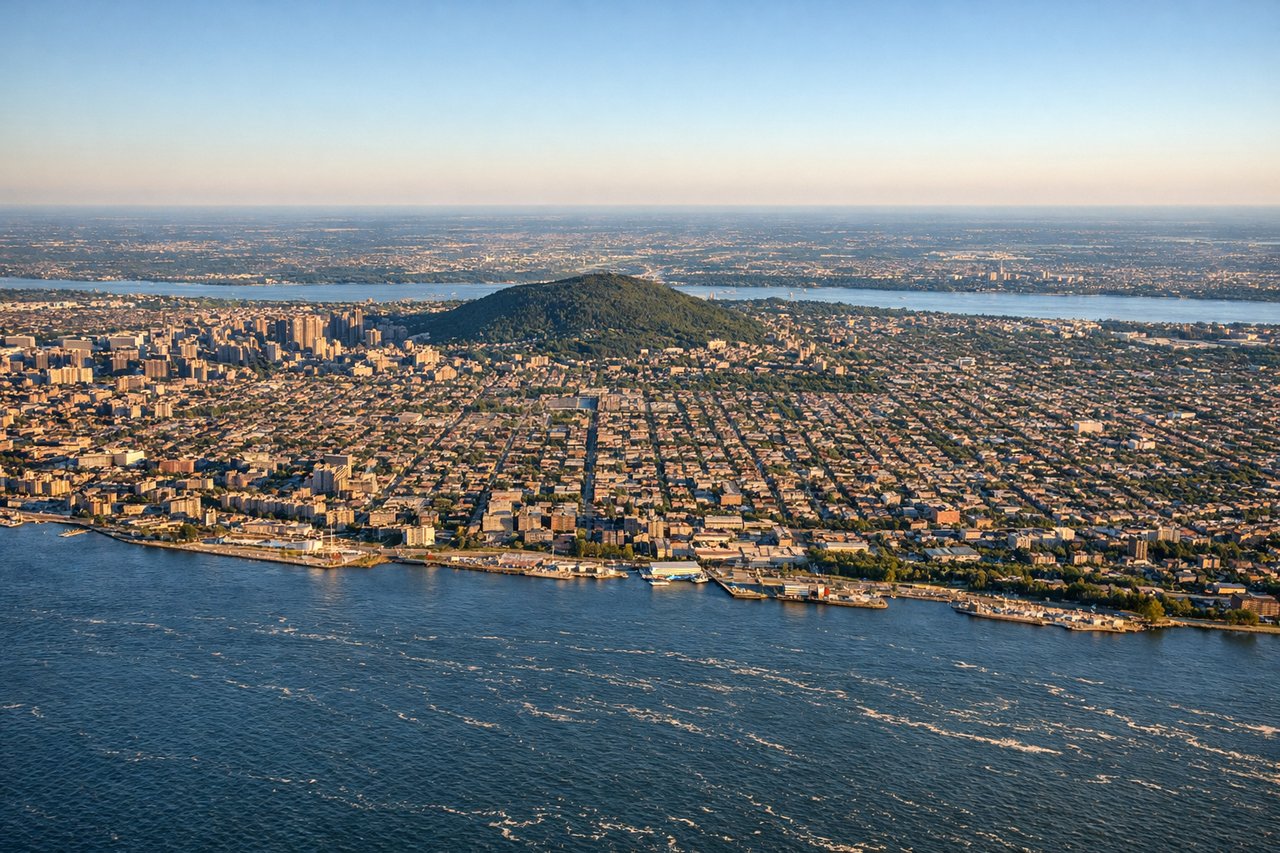
LEFTArriving into YUL on runway 24 from the northeast, the aircraft descends over the St. Lawrence Lowlands with Montreal's skyline and the St. Lawrence River visible off the left side just before touchdown.
Landmarks on this routeAll landmarks →
Will your flight be in sunlight?
See exactly which side of the plane gets sun and shade at your departure time.
About This Route
Which side of the plane should I sit on flying from Victoria International (YYJ) to Montreal International Dorval (YUL)?
Sit on the Left side of the plane for the best views on flights from Victoria to Montreal. The left side offers a stronger visual arc across the flight: island and coastal mountain views on departure from YYJ, glimpses of the Canadian Shield's lakes and forests during cruise, and a scenic St. Lawrence/Montreal skyline view on final approach, while the right side stays mostly over featureless prairie and shield terrain.
What can I see during takeoff from Victoria International in Victoria?
During takeoff from Victoria International (YYJ), sit on the Left side for the best views. Departing YYJ on runway 27, the aircraft climbs out over the Strait of Juan de Fuca before turning east toward the mainland, giving left-side passengers a view north across the Gulf Islands and the mountainous spine of Vancouver Island before the turn inland toward the Coast and Columbia Mountains. Notable sights include: Gulf Islands, Vancouver Island mountains, Strait of Juan de Fuca, Olympic Mountains on the horizon.
What can I see when landing at Montreal International Dorval in Montreal?
When landing at Montreal International Dorval (YUL), sit on the Left side for the best views. Arriving into YUL on runway 24 from the northeast, the aircraft descends over the St. Lawrence Lowlands with Montreal's skyline and the St. Lawrence River visible off the left side just before touchdown. Notable sights include: St. Lawrence River, Montreal downtown skyline, Mont Royal, Île de Montréal farmland patchwork.
How long is the flight from Victoria to Montreal?
The flight from Victoria International (YYJ) to Montreal International Dorval (YUL) takes 4h 45m.
What does the Victoria to Montreal flight path pass over?
Columbia Mountains and Rocky Mountain foothills near the BC-Alberta border, followed by the flat expanse of the Canadian Prairies and the forested, lake-studded Canadian Shield over Ontario