Toronto to Buenos Aires is 5,568 miles (8,961 km), a flight of about 9 hours 15 minutes.
While takeoff offers Lake Ontario views from the left, the landing approach over the Río de la Plata and Buenos Aires' distinctive urban grid from the right provides more dramatic and visually distinctive scenery. The estuary's scale and the city's geometric layout are more striking than Toronto's departure views.
Flight Path
The flight path crosses the Appalachian Mountains (visible during climb-out over eastern North America), then traverses the Atlantic Ocean for approximately 4,500 miles. Over the Atlantic, passengers may see the Mid-Atlantic Ridge's influence on water color and cloud formations, though no land is visible for most of the crossing. As the aircraft approaches South America, the Brazilian coast becomes visible, followed by the inland pampas of Argentina before descent into Buenos Aires.
Great circle distance and headings ›
.jpeg?width=600)
_(cropped).jpg?width=600)
Phase by phase
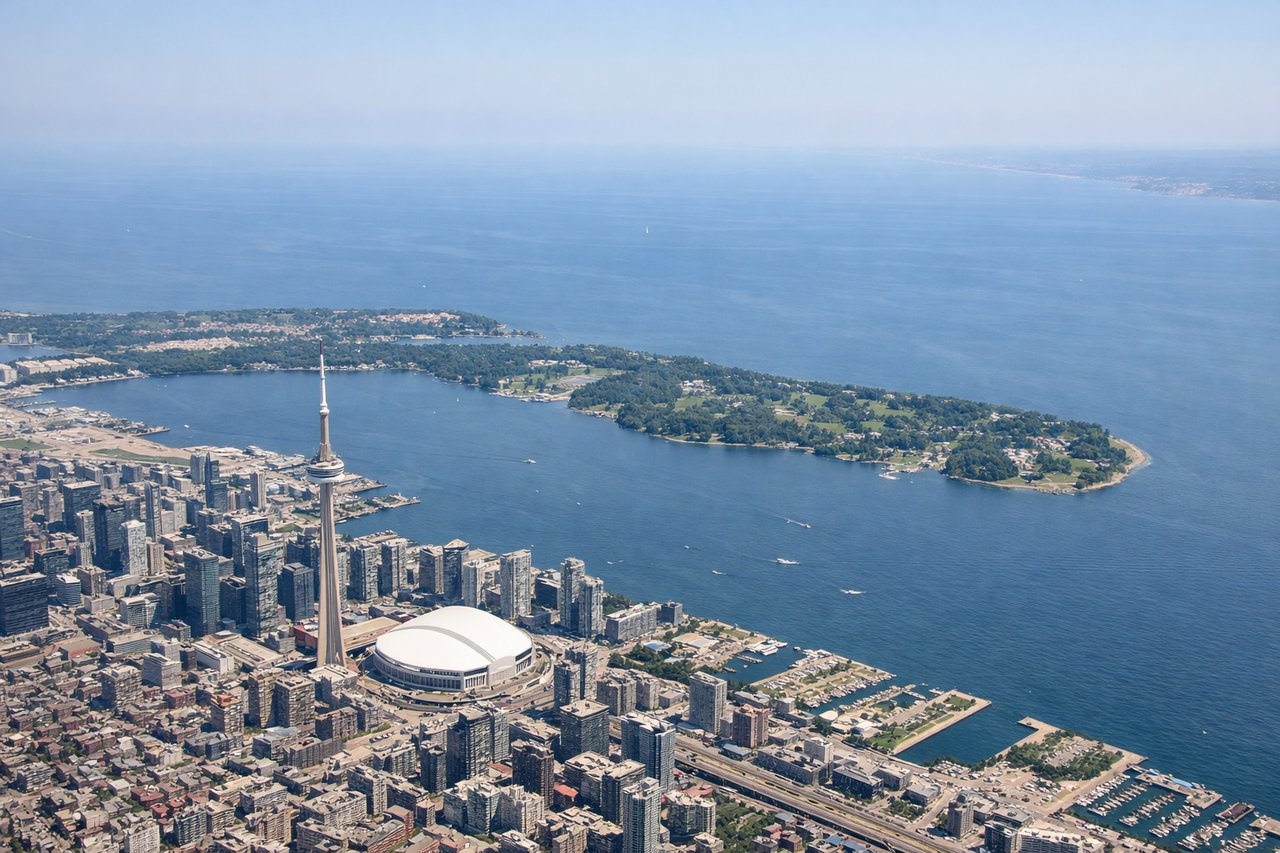
Takeoff from YYZ
LEFTLeft seats offer views of Lake Ontario immediately after departure, with the Toronto waterfront and downtown skyline visible during climb-out. Right seats face inland toward the Greater Toronto Area sprawl with less distinctive scenery.
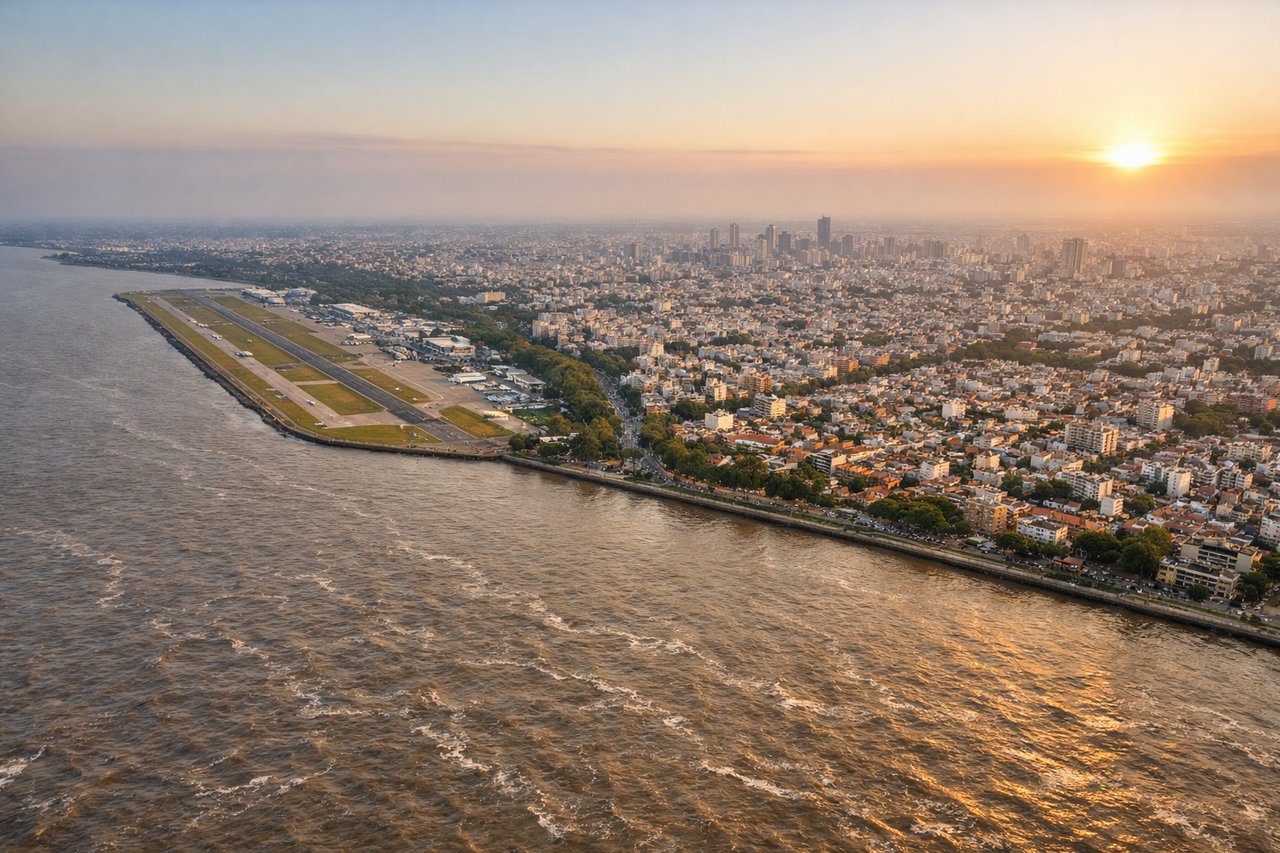
Landing at AEP
RIGHTRight seats provide views of the Río de la Plata estuary and Buenos Aires' distinctive grid layout during approach. The river's wide, muddy waters and the city's organized street pattern are striking from altitude. Left seats face away from the river toward the inland pampas.
Landmarks on this routeAll landmarks →
Will your flight be in sunlight?
Pick a date and time in the Sun Map to watch the sun move across your whole flight.
About This Route
Which side of the plane should I sit on flying from Lester B Pearson International (YYZ) to Aeroparque Jorge Newbery (AEP)?
Sit on the Right side of the plane for the best views on flights from Toronto to Buenos Aires. While takeoff offers Lake Ontario views from the left, the landing approach over the Río de la Plata and Buenos Aires' distinctive urban grid from the right provides more dramatic and visually distinctive scenery. The estuary's scale and the city's geometric layout are more striking than Toronto's departure views.
What can I see during takeoff from Lester B Pearson International in Toronto?
During takeoff from Lester B Pearson International (YYZ), sit on the Left side for the best views. Left seats offer views of Lake Ontario immediately after departure, with the Toronto waterfront and downtown skyline visible during climb-out. Right seats face inland toward the Greater Toronto Area sprawl with less distinctive scenery. Notable sights include: Lake Ontario, Toronto Islands, Niagara Escarpment (distant), Downtown Toronto skyline.
What can I see when landing at Aeroparque Jorge Newbery in Buenos Aires?
When landing at Aeroparque Jorge Newbery (AEP), sit on the Right side for the best views. Right seats provide views of the Río de la Plata estuary and Buenos Aires' distinctive grid layout during approach. The river's wide, muddy waters and the city's organized street pattern are striking from altitude. Left seats face away from the river toward the inland pampas. Notable sights include: Río de la Plata estuary, Buenos Aires city grid, Aeroparque Jorge Newbery airport, La Boca waterfront district.
How long is the flight from Toronto to Buenos Aires?
The flight from Lester B Pearson International (YYZ) to Aeroparque Jorge Newbery (AEP) takes about 9 hours 15 minutes. The shortest flight path between them is 5,568 miles (8,961 km); winds and air traffic control usually add a few percent.
What does the Toronto to Buenos Aires flight path pass over?
The flight path crosses the Appalachian Mountains (visible during climb-out over eastern North America), then traverses the Atlantic Ocean for approximately 4,500 miles. Over the Atlantic, passengers may see the Mid-Atlantic Ridge's influence on water color and cloud formations, though no land is visible for most of the crossing. As the aircraft approaches South America, the Brazilian coast becomes visible, followed by the inland pampas of Argentina before descent into Buenos Aires.