While takeoff offers urban and lakefront scenery, the landing approach over Lake Timiskaming and pristine boreal forest provides more distinctive and visually striking views. The contrast between Toronto's developed landscape and the remote Canadian Shield wilderness makes the northbound journey scenic overall, but the destination landscape is more memorable.
Flight Path
The flight path heads northwest from Toronto, crossing the Oak Ridges Moraine and entering the Canadian Shield. You'll pass over the Kawartha Lakes region (series of interconnected lakes), then transition into increasingly sparse boreal forest with scattered lakes and wetlands. The landscape becomes progressively more remote and forested as you move north. Lake Nipissing lies to the west of the flight path. The terrain is characterized by the Canadian Shield's rocky, lake-dotted landscape with minimal urban development after leaving the Greater Toronto Area.
Great circle distance and headings ›Phase by phase
Takeoff from YYZ
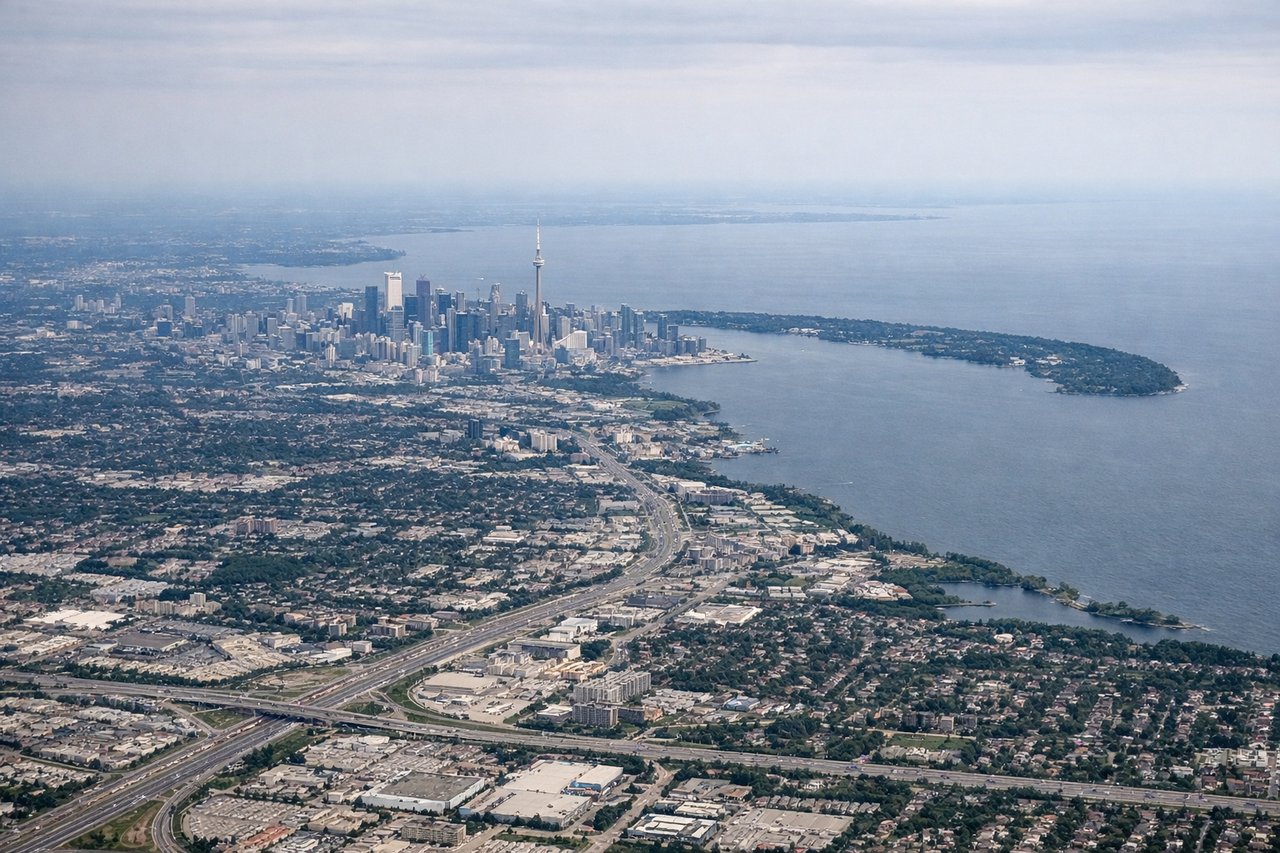
RIGHTRight-side seats offer views of Lake Ontario and the Greater Toronto Area sprawl during the initial climb northwestward. You'll see the shoreline, Toronto's urban grid, and the transition to suburban development before heading inland.
Landing at YXR
LEFTLeft-side seats provide views of the Timiskaming region's lakes and boreal forest landscape during descent. The approach path brings you over Lake Timiskaming and the surrounding Canadian Shield terrain, which is the dominant visual feature in this remote area.
Will your flight be in sunlight?
See exactly which side of the plane gets sun and shade at your departure time.
About This Route
Which side of the plane should I sit on flying from Lester B Pearson International (YYZ) to Timiskaming Rgnl (YXR)?
Sit on the Left side of the plane for the best views on flights from Toronto to Earlton. While takeoff offers urban and lakefront scenery, the landing approach over Lake Timiskaming and pristine boreal forest provides more distinctive and visually striking views. The contrast between Toronto's developed landscape and the remote Canadian Shield wilderness makes the northbound journey scenic overall, but the destination landscape is more memorable.
What can I see during takeoff from Lester B Pearson International in Toronto?
During takeoff from Lester B Pearson International (YYZ), sit on the Right side for the best views. Right-side seats offer views of Lake Ontario and the Greater Toronto Area sprawl during the initial climb northwestward. You'll see the shoreline, Toronto's urban grid, and the transition to suburban development before heading inland. Notable sights include: Lake Ontario (south), Toronto downtown core and waterfront (southeast), Scarborough Bluffs (east), suburban sprawl extending north toward the Oak Ridges Moraine.
What can I see when landing at Timiskaming Rgnl in Earlton?
When landing at Timiskaming Rgnl (YXR), sit on the Left side for the best views. Left-side seats provide views of the Timiskaming region's lakes and boreal forest landscape during descent. The approach path brings you over Lake Timiskaming and the surrounding Canadian Shield terrain, which is the dominant visual feature in this remote area. Notable sights include: Lake Timiskaming (west/left), boreal forest and Canadian Shield (surrounding), Earlton settlement (small, difficult to distinguish), Matachewan area to the north.
How long is the flight from Toronto to Earlton?
The flight from Lester B Pearson International (YYZ) to Timiskaming Rgnl (YXR) takes Approximately 1 hour 15 minutes.
What does the Toronto to Earlton flight path pass over?
The flight path heads northwest from Toronto, crossing the Oak Ridges Moraine and entering the Canadian Shield. You'll pass over the Kawartha Lakes region (series of interconnected lakes), then transition into increasingly sparse boreal forest with scattered lakes and wetlands. The landscape becomes progressively more remote and forested as you move north. Lake Nipissing lies to the west of the flight path. The terrain is characterized by the Canadian Shield's rocky, lake-dotted landscape with minimal urban development after leaving the Greater Toronto Area.