Left side wins at both ends of the flight. Over the Alps on departure and over Lake Ontario with the Toronto skyline on arrival, the left seat delivers the two most dramatic visual moments of this transatlantic route.
Flight Path
The route tracks northwest over the Rhine Valley and southern Germany, then across the Netherlands and exits Europe near the UK's northern coast. It crosses the North Atlantic at high latitudes, passing south of Greenland's ice sheet, then enters Canadian airspace over Newfoundland and Labrador, crossing the St. Lawrence River and southern Quebec before descending into Toronto. The North Atlantic crossing offers occasional views of sea ice and icebergs near Greenland at high latitudes, and the rugged coastline of Newfoundland is often visible during descent into Canadian airspace.
Great circle distance and headings ›


Phase by phase

Takeoff from ZRH
LEFTZurich typically departs on runway 16 heading south or runway 28 heading west. On a westbound departure toward North America, the aircraft turns northwest, putting the Alps on the left side. You get a clear view of Lake Zurich stretching southeast and the Glarus Alps and Bernese Oberland in the distance.
Landing at YYZ
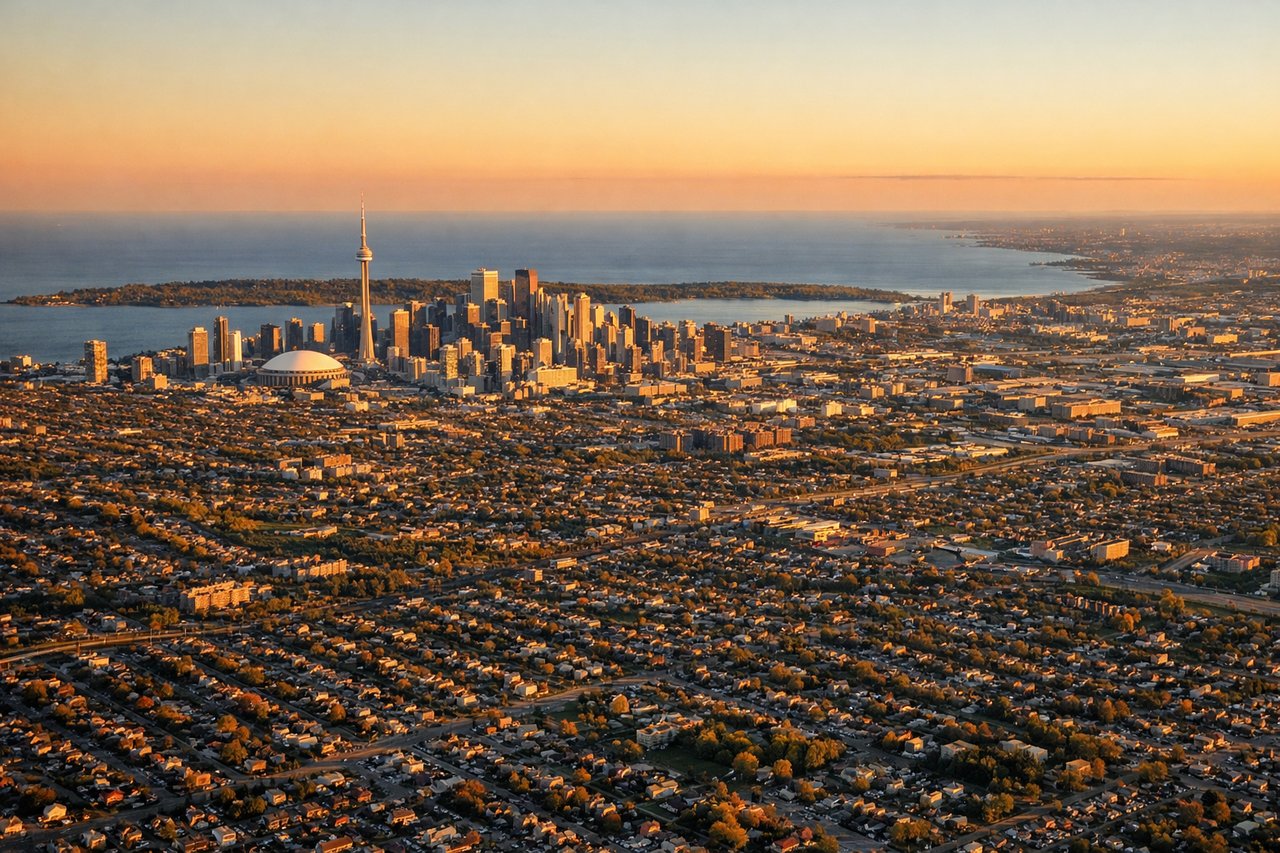
LEFTPearson typically lands on runways 05 or 06L/06R from the west, meaning the aircraft approaches from the southwest over Lake Ontario. The left side gives you the Toronto skyline and the CN Tower clearly visible across the lake as you descend, while the right side faces north toward suburban sprawl.
Landmarks on this routeAll landmarks →
Will your flight be in sunlight?
See exactly which side of the plane gets sun and shade at your departure time.
About This Route
Which side of the plane should I sit on flying from Zurich (ZRH) to Lester B Pearson International (YYZ)?
Sit on the Left side of the plane for the best views on flights from Zurich to Toronto. Left side wins at both ends of the flight. Over the Alps on departure and over Lake Ontario with the Toronto skyline on arrival, the left seat delivers the two most dramatic visual moments of this transatlantic route.
What can I see during takeoff from Zurich in Zurich?
During takeoff from Zurich (ZRH), sit on the Left side for the best views. Zurich typically departs on runway 16 heading south or runway 28 heading west. On a westbound departure toward North America, the aircraft turns northwest, putting the Alps on the left side. You get a clear view of Lake Zurich stretching southeast and the Glarus Alps and Bernese Oberland in the distance. Notable sights include: Lake Zurich, Glarus Alps, Zurich city center, Lake Greifen.
What can I see when landing at Lester B Pearson International in Toronto?
When landing at Lester B Pearson International (YYZ), sit on the Left side for the best views. Pearson typically lands on runways 05 or 06L/06R from the west, meaning the aircraft approaches from the southwest over Lake Ontario. The left side gives you the Toronto skyline and the CN Tower clearly visible across the lake as you descend, while the right side faces north toward suburban sprawl. Notable sights include: CN Tower and Toronto skyline, Lake Ontario, Toronto Islands, Mississauga waterfront.
How long is the flight from Zurich to Toronto?
The flight from Zurich (ZRH) to Lester B Pearson International (YYZ) takes Approximately 9 to 9.5 hours.
What does the Zurich to Toronto flight path pass over?
The route tracks northwest over the Rhine Valley and southern Germany, then across the Netherlands and exits Europe near the UK's northern coast. It crosses the North Atlantic at high latitudes, passing south of Greenland's ice sheet, then enters Canadian airspace over Newfoundland and Labrador, crossing the St. Lawrence River and southern Quebec before descending into Toronto. The North Atlantic crossing offers occasional views of sea ice and icebergs near Greenland at high latitudes, and the rugged coastline of Newfoundland is often visible during descent into Canadian airspace.