Right-side seats win overall due to superior takeoff scenery (Ethiopian Highlands escarpment is dramatic and sustained), though landing views favor the left. The takeoff experience is more visually rewarding on this route.
Flight Path
The flight path crosses the East African plateau southward, passing over the Rift Valley's eastern escarpment and scattered volcanic terrain. The Taita Hills appear as a small isolated range roughly midway through the flight. The landscape transitions from highland plateau to lower savanna and eventually to coastal plains approaching Dar es Salaam. The Rufiji River delta becomes visible in the final descent phase, appearing as a brown-green network of channels entering the Indian Ocean south of the city.
Great circle distance and headings ›

Phase by phase
Takeoff from ADD
RIGHTRight-side seats capture the Ethiopian Highlands immediately after departure, with the escarpment edge and valleys visible as the aircraft climbs southward. Left side faces inland plateau with less dramatic relief.
Landing at DAR
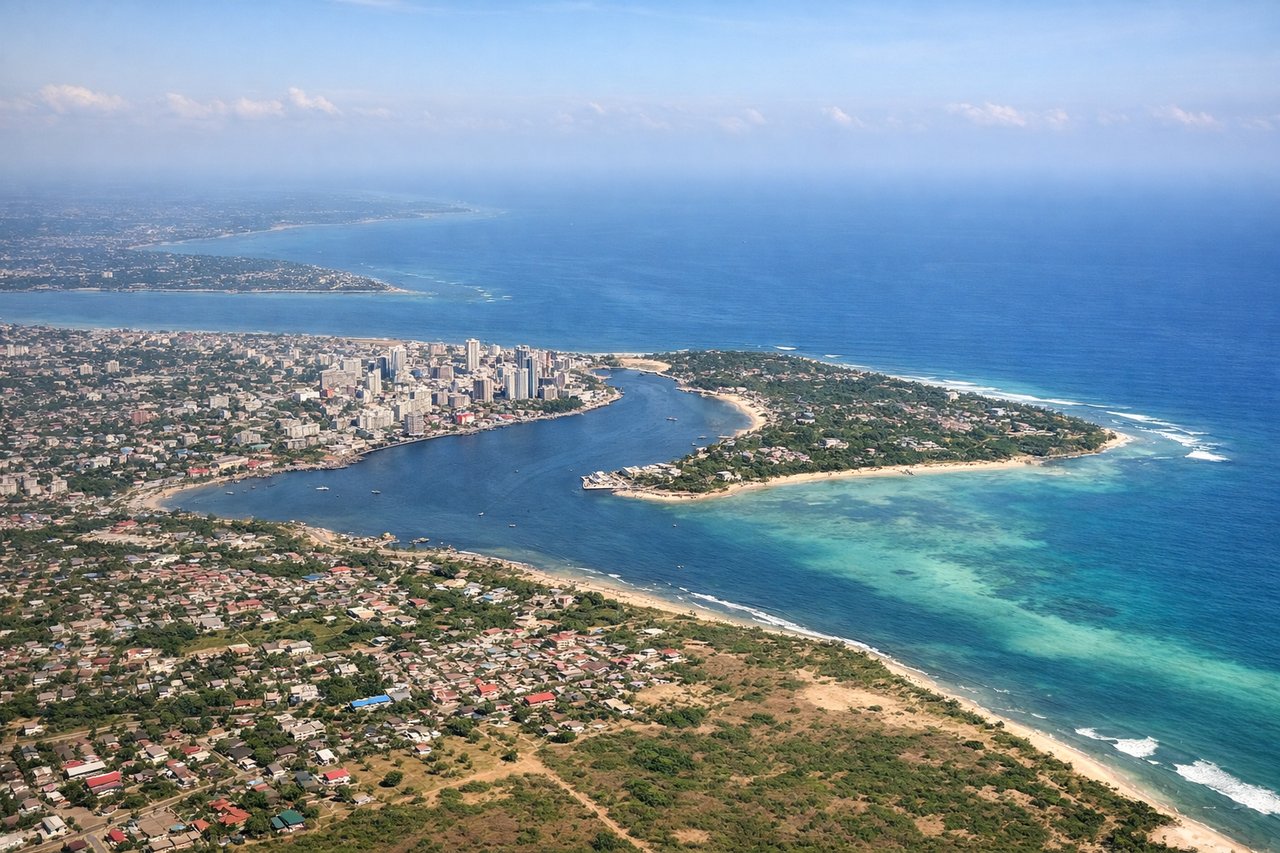
LEFTLeft-side seats provide the best view during descent into Dar es Salaam, showing the Indian Ocean coastline, the city's waterfront, and Dar harbor as the aircraft approaches from the northwest. Right side faces inland over less distinctive terrain.
Landmarks on this routeAll landmarks →
Will your flight be in sunlight?
See exactly which side of the plane gets sun and shade at your departure time.
About This Route
Which side of the plane should I sit on flying from Bole International (ADD) to Dar Es Salaam (DAR)?
Sit on the Right side of the plane for the best views on flights from Addis Ababa to Dar Es Salaam. Right-side seats win overall due to superior takeoff scenery (Ethiopian Highlands escarpment is dramatic and sustained), though landing views favor the left. The takeoff experience is more visually rewarding on this route.
What can I see during takeoff from Bole International in Addis Ababa?
During takeoff from Bole International (ADD), sit on the Right side for the best views. Right-side seats capture the Ethiopian Highlands immediately after departure, with the escarpment edge and valleys visible as the aircraft climbs southward. Left side faces inland plateau with less dramatic relief. Notable sights include: Ethiopian Highlands escarpment, Addis Ababa urban sprawl receding northward, Awash River valley to the southeast, volcanic plateau terrain.
What can I see when landing at Dar Es Salaam in Dar Es Salaam?
When landing at Dar Es Salaam (DAR), sit on the Left side for the best views. Left-side seats provide the best view during descent into Dar es Salaam, showing the Indian Ocean coastline, the city's waterfront, and Dar harbor as the aircraft approaches from the northwest. Right side faces inland over less distinctive terrain. Notable sights include: Indian Ocean and Dar es Salaam coastline, Dar harbor and port facilities, Kunduchi Beach area to the north, Uluguru Mountains inland to the west.
How long is the flight from Addis Ababa to Dar Es Salaam?
The flight from Bole International (ADD) to Dar Es Salaam (DAR) takes Approximately 2 hours 15 minutes.
What does the Addis Ababa to Dar Es Salaam flight path pass over?
The flight path crosses the East African plateau southward, passing over the Rift Valley's eastern escarpment and scattered volcanic terrain. The Taita Hills appear as a small isolated range roughly midway through the flight. The landscape transitions from highland plateau to lower savanna and eventually to coastal plains approaching Dar es Salaam. The Rufiji River delta becomes visible in the final descent phase, appearing as a brown-green network of channels entering the Indian Ocean south of the city.