Right-side seats score higher (3.5 vs 2.5) due to superior scenery on both legs: the Ethiopian Highlands escarpment during departure provides dramatic terrain relief, and the approach into Incheon over the Yellow Sea and harbor complex offers substantial urban and coastal scenery. Left-side views are dominated by flatter terrain and open ocean with minimal landmark density.
Flown ADD to ICN? Did we get it right?
Flight Path
Addis Ababa to Seoul is 5,714 miles (9,196 km), a flight of about 11 hours 10 minutes.
The flight path crosses the Arabian Sea, the Indian subcontinent's western coast, the Himalayan mountain range (visible at cruise altitude as a distant snow-capped ridge), the Tibetan Plateau, and enters East Asia over China before descending toward the Korean Peninsula. The Himalayas represent the most dramatic midpoint feature, though visibility depends on weather and exact cruise altitude routing.
Great circle distance and headings ›


Phase by phase
Takeoff from ADD
RIGHTRight-side departures from ADD typically climb eastward over the Ethiopian Highlands, offering immediate views of the Addis Ababa plateau and surrounding escarpments. Left-side departures face westward toward flatter terrain with less dramatic relief.
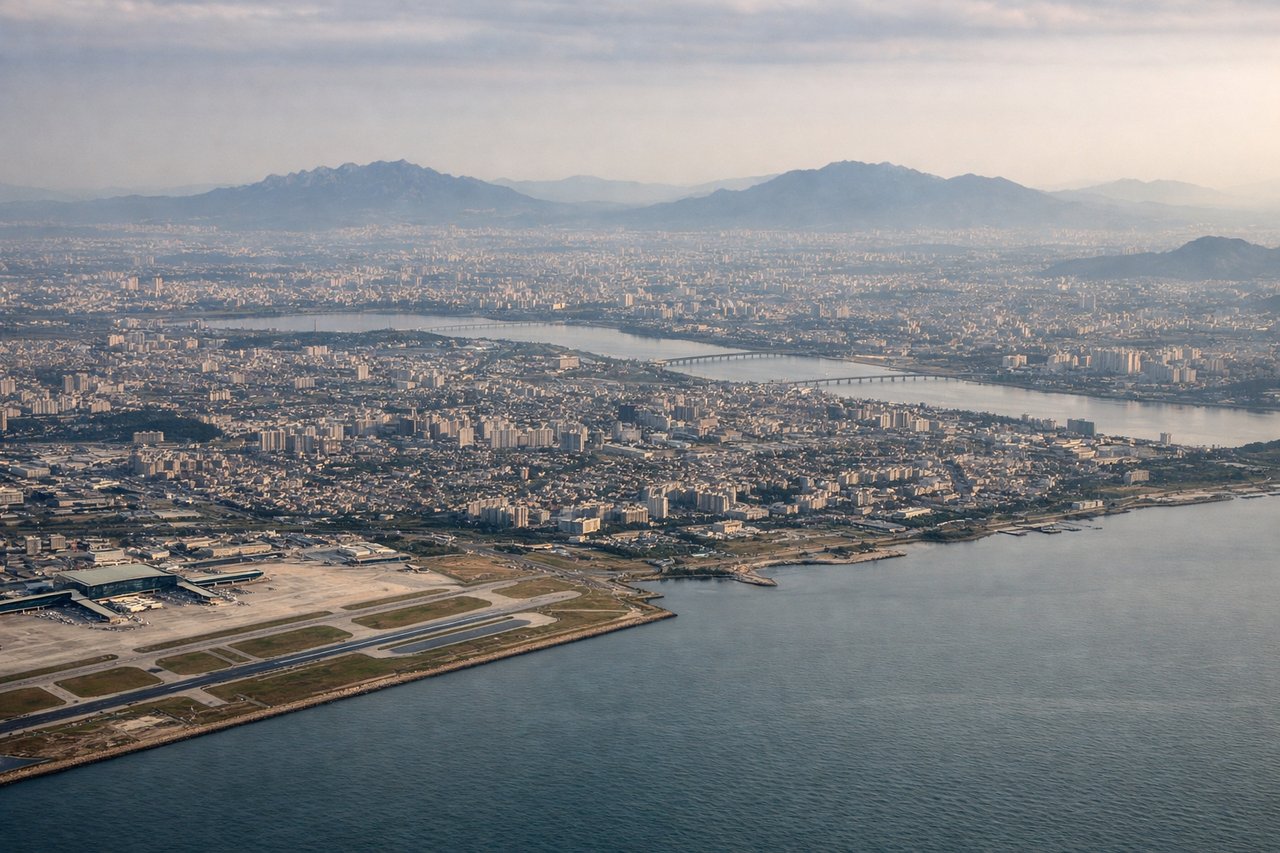
Landing at ICN
RIGHTRight-side approaches into ICN during prevailing westerly winds (standard configuration) descend over the Yellow Sea and approach from the southeast, offering views of South Korea's western coastline, Incheon harbor, and the city's industrial waterfront. Left-side approaches would face inland terrain with less dramatic scenery.
Will your flight be in sunlight?
Pick a date and time in the Sun Map to watch the sun move across your whole flight.
About This Route
Which side of the plane should I sit on flying from Bole International (ADD) to Incheon International (ICN)?
Sit on the Right side of the plane for the best views on flights from Addis Ababa to Seoul. Right-side seats score higher (3.5 vs 2.5) due to superior scenery on both legs: the Ethiopian Highlands escarpment during departure provides dramatic terrain relief, and the approach into Incheon over the Yellow Sea and harbor complex offers substantial urban and coastal scenery. Left-side views are dominated by flatter terrain and open ocean with minimal landmark density.
What can I see during takeoff from Bole International in Addis Ababa?
During takeoff from Bole International (ADD), sit on the Right side for the best views. Right-side departures from ADD typically climb eastward over the Ethiopian Highlands, offering immediate views of the Addis Ababa plateau and surrounding escarpments. Left-side departures face westward toward flatter terrain with less dramatic relief. Notable sights include: Addis Ababa urban sprawl and surrounding plateau edge, Ethiopian Highlands escarpment to the east, Entoto Mountains visible during initial climb.
What can I see when landing at Incheon International in Seoul?
When landing at Incheon International (ICN), sit on the Right side for the best views. Right-side approaches into ICN during prevailing westerly winds (standard configuration) descend over the Yellow Sea and approach from the southeast, offering views of South Korea's western coastline, Incheon harbor, and the city's industrial waterfront. Left-side approaches would face inland terrain with less dramatic scenery. Notable sights include: Incheon harbor and port facilities, Yellow Sea coastline with tidal mudflats, Seoul metropolitan area skyline visible inland, Incheon Bridge spanning the harbor approach.
How long is the flight from Addis Ababa to Seoul?
The flight from Bole International (ADD) to Incheon International (ICN) takes about 11 hours 10 minutes. The shortest flight path between them is 5,714 miles (9,196 km); winds and air traffic control usually add a few percent.
What does the Addis Ababa to Seoul flight path pass over?
The flight path crosses the Arabian Sea, the Indian subcontinent's western coast, the Himalayan mountain range (visible at cruise altitude as a distant snow-capped ridge), the Tibetan Plateau, and enters East Asia over China before descending toward the Korean Peninsula. The Himalayas represent the most dramatic midpoint feature, though visibility depends on weather and exact cruise altitude routing.