Bangkok to Kimhae is 2,298 miles (3,698 km), a flight of about 5 hours 15 minutes.
The left side tracks the mainland Asian coastline and terrain for much of the route — Vietnam's hills, the Chinese coast, and Korea's southern shoreline near landing — while the right side faces mostly open water across the South China Sea and East China Sea for hours with little to see.
Flight Path
Northern Vietnam highlands, South China Sea, Taiwan Strait, East China Sea
Great circle distance and headings ›.jpg?width=600)
.jpg?width=600)

Phase by phase
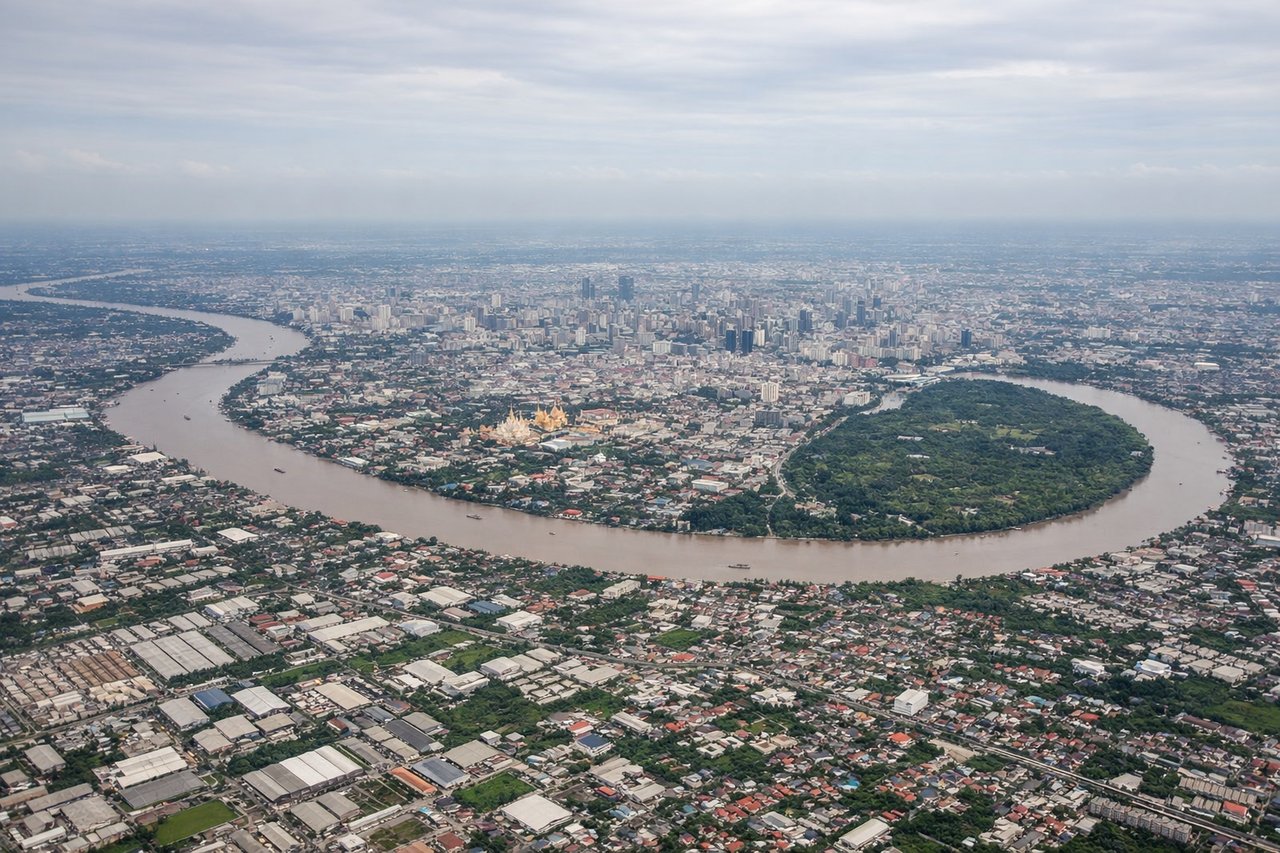
Takeoff from BKK
LEFTDeparting BKK on a northbound runway before turning northeast, the left side offers a good look back over Bangkok's sprawling grid, the Chao Phraya River delta, and the patchwork rice paddies of the central plain before the aircraft climbs away from the city.
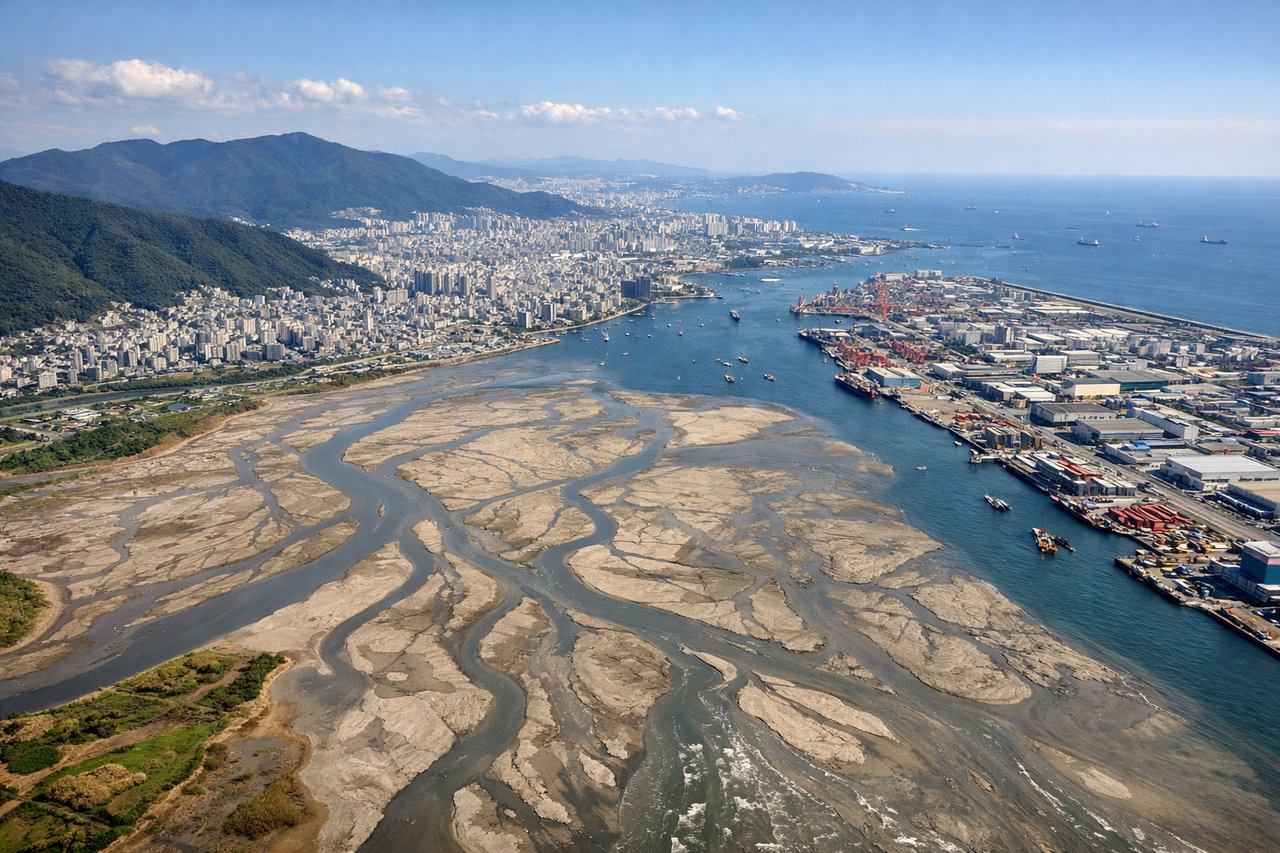
Landing at PUS
LEFTOn the approach into PUS from the north in winter conditions, the left side reveals the hilly coastline around Busan, the Nakdong River delta, and glimpses of the Korea Strait as the aircraft turns to align with the runway.
Landmarks on this routeAll landmarks →
Will your flight be in sunlight?
Pick a date and time in the Sun Map to watch the sun move across your whole flight.
About This Route
Which side of the plane should I sit on flying from Suvarnabhumi Airport (BKK) to Gimhae International (PUS)?
Sit on the Left side of the plane for the best views on flights from Bangkok to Kimhae. The left side tracks the mainland Asian coastline and terrain for much of the route — Vietnam's hills, the Chinese coast, and Korea's southern shoreline near landing — while the right side faces mostly open water across the South China Sea and East China Sea for hours with little to see.
What can I see during takeoff from Suvarnabhumi Airport in Bangkok?
During takeoff from Suvarnabhumi Airport (BKK), sit on the Left side for the best views. Departing BKK on a northbound runway before turning northeast, the left side offers a good look back over Bangkok's sprawling grid, the Chao Phraya River delta, and the patchwork rice paddies of the central plain before the aircraft climbs away from the city. Notable sights include: Chao Phraya River, Bangkok skyline, central Thailand rice paddies, Gulf of Thailand shoreline.
What can I see when landing at Gimhae International in Kimhae?
When landing at Gimhae International (PUS), sit on the Left side for the best views. On the approach into PUS from the north in winter conditions, the left side reveals the hilly coastline around Busan, the Nakdong River delta, and glimpses of the Korea Strait as the aircraft turns to align with the runway. Notable sights include: Nakdong River delta, Busan coastal hills, Korea Strait, Gadeokdo Island.
How long is the flight from Bangkok to Kimhae?
The flight from Suvarnabhumi Airport (BKK) to Gimhae International (PUS) takes about 5 hours 15 minutes. The shortest flight path between them is 2,298 miles (3,698 km); winds and air traffic control usually add a few percent.
What does the Bangkok to Kimhae flight path pass over?
Northern Vietnam highlands, South China Sea, Taiwan Strait, East China Sea