Burbank to Honolulu is 2,559 miles (4,118 km), a flight of about 5 hours 40 minutes.
While the takeoff slightly favors the right side for a glimpse of the Santa Monica Mountains, the five-hour open-ocean cruise offers little to differentiate sides, and the spectacular Diamond Head/Waikiki approach on the left during landing is the flight's standout scenic moment, pushing the left side ahead overall.
Flight Path
Open Pacific Ocean with no landmarks visible for the majority of cruise; the North Pacific high seas dominate the view until the Hawaiian Islands appear near descent.
Great circle distance and headings ›.jpg?width=600)

Phase by phase
Takeoff from BUR
RIGHTDeparting Runway 15 southbound, the right side faces west toward the San Fernando Valley and the Santa Monica Mountains, giving a brief but clear view of the ridgeline before the turn toward the coast. Left side initially shows the flatter valley floor with less definition.
Landing at HNL
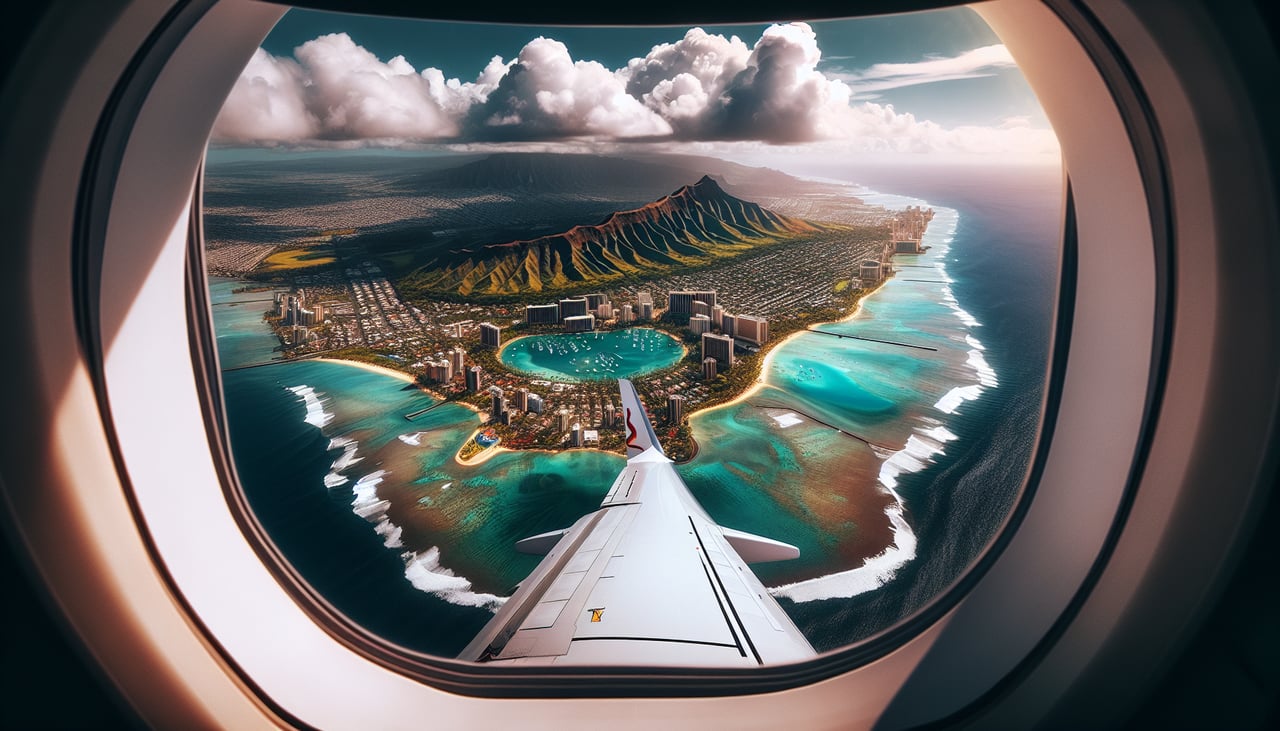
LEFTOn approach to HNL from the east, the left side of the aircraft faces north toward Diamond Head, Waikiki's shoreline, and the volcanic ridgeline of the Ko'olau Range as the plane descends over Mamala Bay toward the Reef Runway. This is a dramatic, classic Hawaiian volcanic-coastal approach.
Landmarks on this routeAll landmarks →
Will your flight be in sunlight?
Pick a date and time in the Sun Map to watch the sun move across your whole flight.
About This Route
Which side of the plane should I sit on flying from Burbank Glendale Pasadena (BUR) to Honolulu International (HNL)?
Sit on the Left side of the plane for the best views on flights from Burbank to Honolulu. While the takeoff slightly favors the right side for a glimpse of the Santa Monica Mountains, the five-hour open-ocean cruise offers little to differentiate sides, and the spectacular Diamond Head/Waikiki approach on the left during landing is the flight's standout scenic moment, pushing the left side ahead overall.
What can I see during takeoff from Burbank Glendale Pasadena in Burbank?
During takeoff from Burbank Glendale Pasadena (BUR), sit on the Right side for the best views. Departing Runway 15 southbound, the right side faces west toward the San Fernando Valley and the Santa Monica Mountains, giving a brief but clear view of the ridgeline before the turn toward the coast. Left side initially shows the flatter valley floor with less definition. Notable sights include: Santa Monica Mountains, San Fernando Valley, Hollywood Hills ridgeline.
What can I see when landing at Honolulu International in Honolulu?
When landing at Honolulu International (HNL), sit on the Left side for the best views. On approach to HNL from the east, the left side of the aircraft faces north toward Diamond Head, Waikiki's shoreline, and the volcanic ridgeline of the Ko'olau Range as the plane descends over Mamala Bay toward the Reef Runway. This is a dramatic, classic Hawaiian volcanic-coastal approach. Notable sights include: Diamond Head crater, Waikiki coastline, Ko'olau mountain range, Honolulu harbor.
How long is the flight from Burbank to Honolulu?
The flight from Burbank Glendale Pasadena (BUR) to Honolulu International (HNL) takes about 5 hours 40 minutes. The shortest flight path between them is 2,559 miles (4,118 km); winds and air traffic control usually add a few percent.
What does the Burbank to Honolulu flight path pass over?
Open Pacific Ocean with no landmarks visible for the majority of cruise; the North Pacific high seas dominate the view until the Hawaiian Islands appear near descent.