While takeoff favors the right with Pearl River Delta urban views, the landing sequence on the left offers Tokyo Bay and a chance at Mount Fuji, a more memorable and higher-scoring feature than the delta scenery, giving the left side the edge overall.
Flown CAN to NRT? Did we get it right?
Flight Path
Guangzhou to Tokyo is 1,830 miles (2,945 km), a flight of about 4 hours 40 minutes.
East China Sea open water, with occasional distant views of the Ryukyu Islands or Kyushu's southern coast depending on routing
Great circle distance and headings ›

Phase by phase
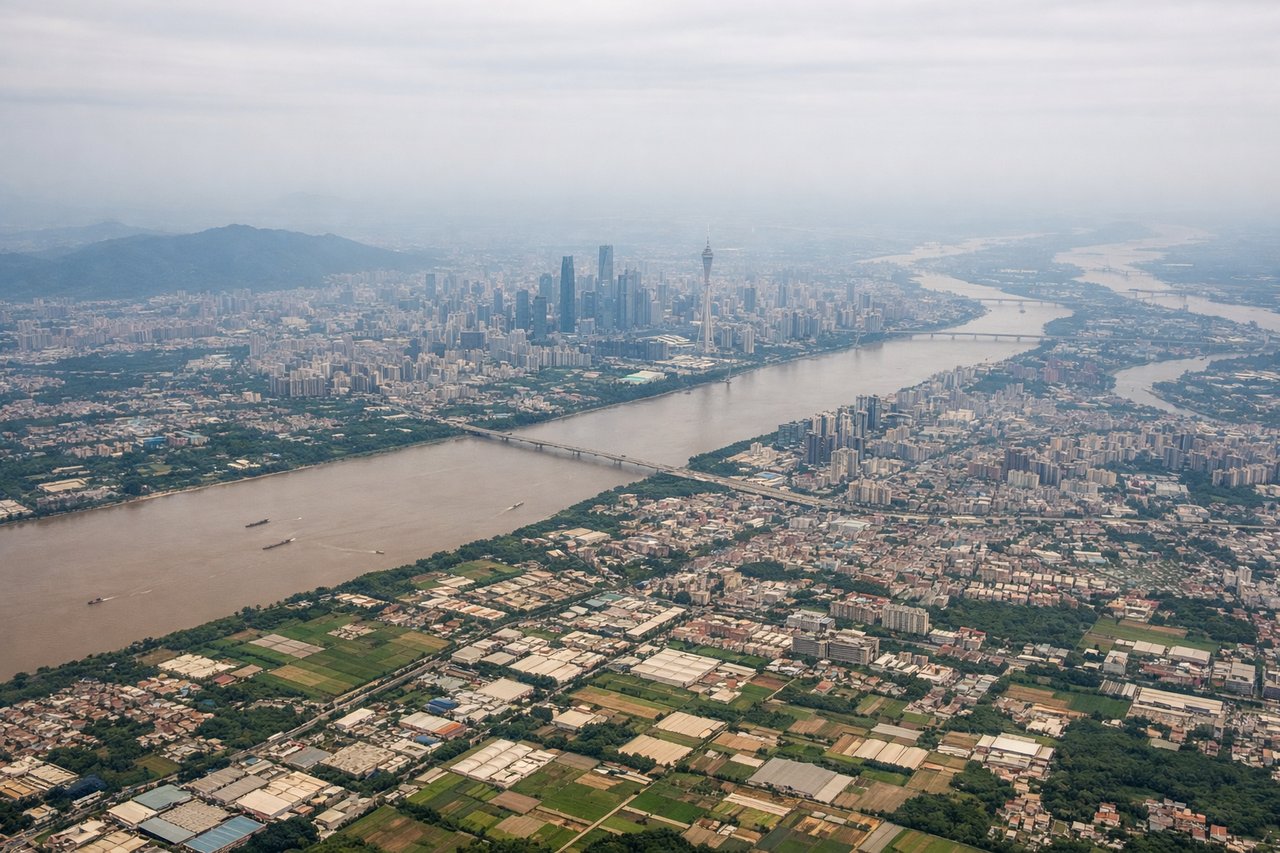
Takeoff from CAN
RIGHTDeparting CAN, the aircraft climbs out over the Pearl River Delta and typically turns east toward the coast, putting Guangzhou's dense urban sprawl, the Pearl River's braided channels, and the industrial Dongguan-Shenzhen corridor on the right side as the plane banks seaward.
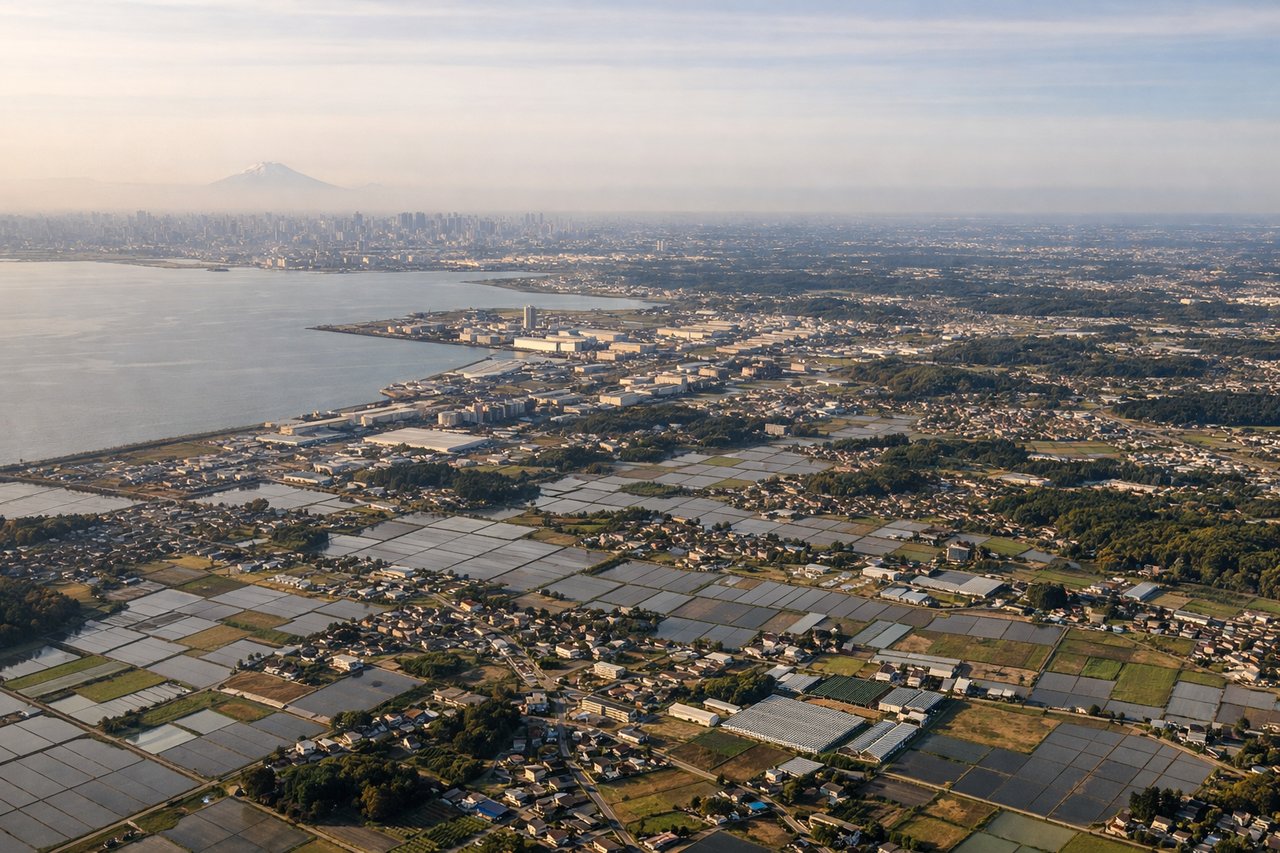
Landing at NRT
LEFTArriving into NRT from the south on runway 34, the plane tracks north over the Boso Peninsula and Tokyo Bay, putting the bay, the edge of the Tokyo urban sprawl, and on clear days the distant silhouette of Mount Fuji on the left side of the aircraft during final descent.
Will your flight be in sunlight?
Pick a date and time in the Sun Map to watch the sun move across your whole flight.
About This Route
Which side of the plane should I sit on flying from Guangzhou Baiyun International Airport (CAN) to New Tokyo International (NRT)?
Sit on the Left side of the plane for the best views on flights from Guangzhou to Tokyo. While takeoff favors the right with Pearl River Delta urban views, the landing sequence on the left offers Tokyo Bay and a chance at Mount Fuji, a more memorable and higher-scoring feature than the delta scenery, giving the left side the edge overall.
What can I see during takeoff from Guangzhou Baiyun International Airport in Guangzhou?
During takeoff from Guangzhou Baiyun International Airport (CAN), sit on the Right side for the best views. Departing CAN, the aircraft climbs out over the Pearl River Delta and typically turns east toward the coast, putting Guangzhou's dense urban sprawl, the Pearl River's braided channels, and the industrial Dongguan-Shenzhen corridor on the right side as the plane banks seaward. Notable sights include: Pearl River Delta, Guangzhou city center, Humen Bridge area, South China Sea coastline.
What can I see when landing at New Tokyo International in Tokyo?
When landing at New Tokyo International (NRT), sit on the Left side for the best views. Arriving into NRT from the south on runway 34, the plane tracks north over the Boso Peninsula and Tokyo Bay, putting the bay, the edge of the Tokyo urban sprawl, and on clear days the distant silhouette of Mount Fuji on the left side of the aircraft during final descent. Notable sights include: Tokyo Bay, Boso Peninsula coastline, Mount Fuji (distant), Chiba urban sprawl.
How long is the flight from Guangzhou to Tokyo?
The flight from Guangzhou Baiyun International Airport (CAN) to New Tokyo International (NRT) takes about 4 hours 40 minutes. The shortest flight path between them is 1,830 miles (2,945 km); winds and air traffic control usually add a few percent.
What does the Guangzhou to Tokyo flight path pass over?
East China Sea open water, with occasional distant views of the Ryukyu Islands or Kyushu's southern coast depending on routing