The landing approach on the right side delivers the most dramatic and sustained view — the Río de la Plata is one of the widest river mouths on Earth and is visually stunning from altitude, combined with the Buenos Aires urban grid. The takeoff left-side Paris view is excellent but brief. Over the Atlantic crossing the right side also faces west toward the South American coast as you approach, giving earlier views of the Brazilian and Argentine coastline.
Flown CDG to EZE? Did we get it right?
Flight Path
Paris to Buenos Aires is 6,897 miles (11,100 km), a flight of about 13 hours 30 minutes.
The route crosses the Bay of Biscay, then the Canary Islands region off the Moroccan coast, before a long Atlantic crossing. The Cape Verde Islands may be visible to the east. The flight crosses the equator over the open Atlantic, then approaches the Brazilian coast near Recife or Natal, tracking southwest over the Brazilian interior plateau and cerrado scrubland before descending toward the Río de la Plata basin and Buenos Aires.
Great circle distance and headings ›

Phase by phase
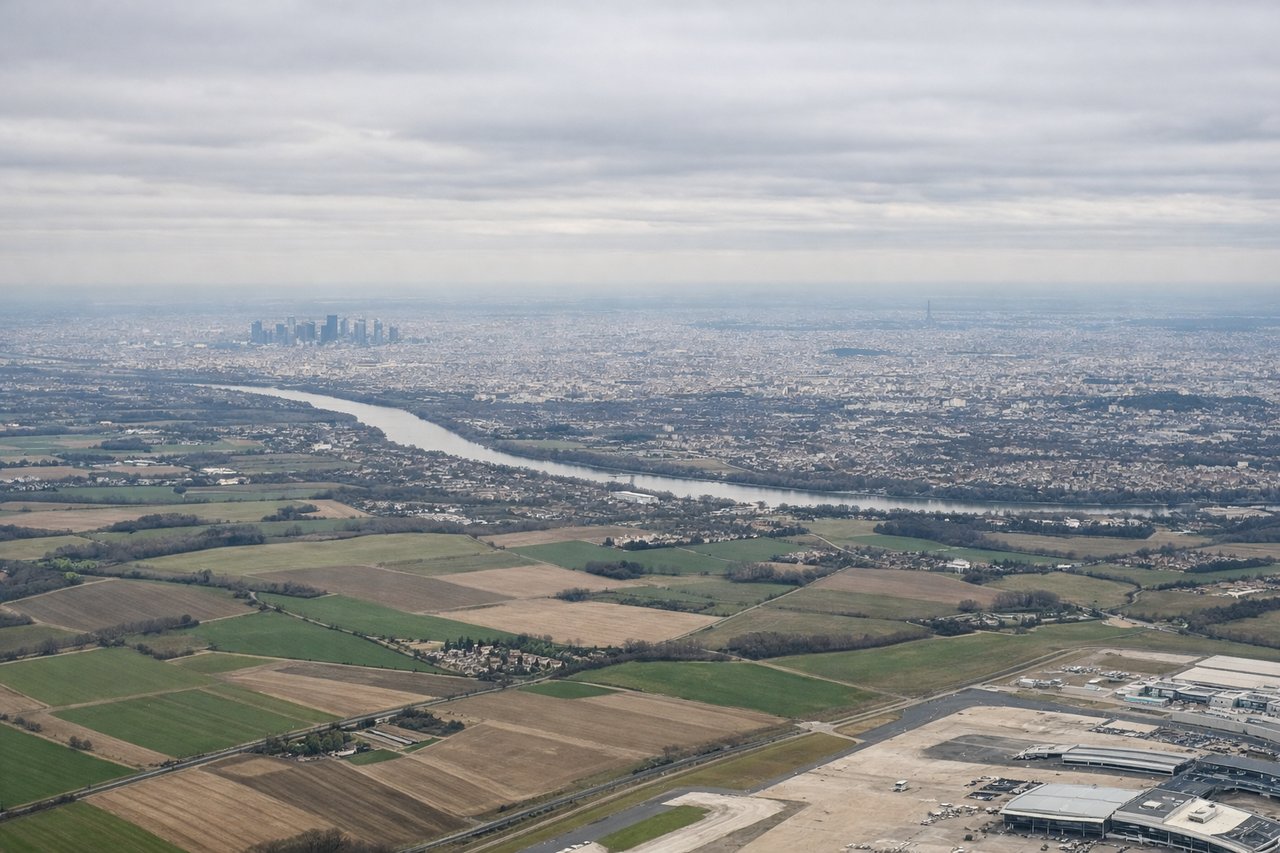
Takeoff from CDG
LEFTCDG typically departs westward on runways 08L/08R or southward on 26L/26R. On a westward departure climbing out, the left side gives you a clear view south toward Paris city center — the Seine river bends, the Eiffel Tower, and the dense urban grid of central Paris are all visible before the aircraft turns south. On a southward departure, the left side tracks east toward the Marne valley and the outer suburbs.
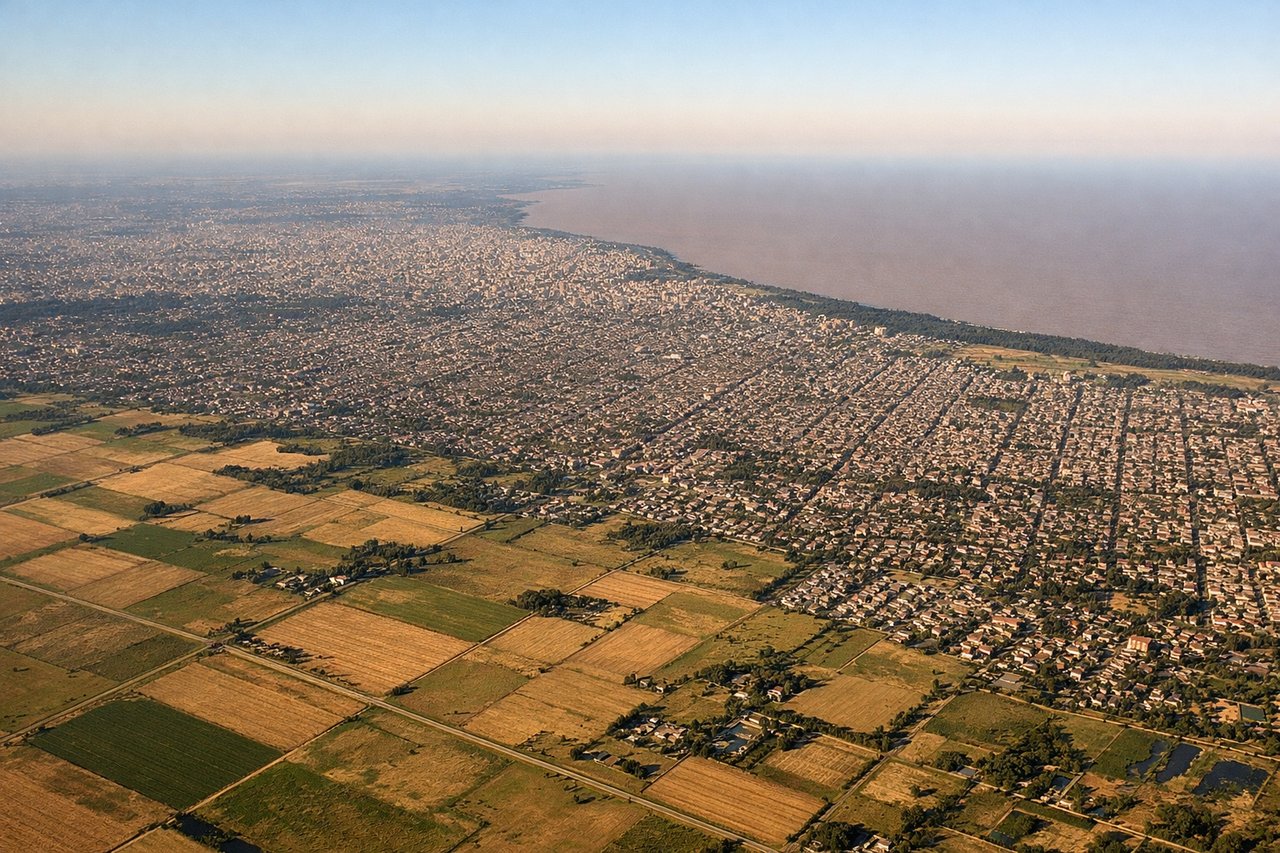
Landing at EZE
RIGHTEZE sits southwest of Buenos Aires city center. Aircraft typically approach from the northeast on runway 11 or from the north on runway 35, meaning the right side faces north and east toward the Río de la Plata estuary and the Buenos Aires city grid. The estuary is enormous and unmistakable, and the dense checkerboard street grid of Buenos Aires is clearly visible on approach.
Will your flight be in sunlight?
Pick a date and time in the Sun Map to watch the sun move across your whole flight.
About This Route
Which side of the plane should I sit on flying from Charles De Gaulle (CDG) to Ezeiza Ministro Pistarini (EZE)?
Sit on the Right side of the plane for the best views on flights from Paris to Buenos Aires. The landing approach on the right side delivers the most dramatic and sustained view — the Río de la Plata is one of the widest river mouths on Earth and is visually stunning from altitude, combined with the Buenos Aires urban grid. The takeoff left-side Paris view is excellent but brief. Over the Atlantic crossing the right side also faces west toward the South American coast as you approach, giving earlier views of the Brazilian and Argentine coastline.
What can I see during takeoff from Charles De Gaulle in Paris?
During takeoff from Charles De Gaulle (CDG), sit on the Left side for the best views. CDG typically departs westward on runways 08L/08R or southward on 26L/26R. On a westward departure climbing out, the left side gives you a clear view south toward Paris city center — the Seine river bends, the Eiffel Tower, and the dense urban grid of central Paris are all visible before the aircraft turns south. On a southward departure, the left side tracks east toward the Marne valley and the outer suburbs. Notable sights include: Seine river bends through central Paris, Eiffel Tower and Champ de Mars, La Défense business district tower cluster, Bois de Boulogne forest patch.
What can I see when landing at Ezeiza Ministro Pistarini in Buenos Aires?
When landing at Ezeiza Ministro Pistarini (EZE), sit on the Right side for the best views. EZE sits southwest of Buenos Aires city center. Aircraft typically approach from the northeast on runway 11 or from the north on runway 35, meaning the right side faces north and east toward the Río de la Plata estuary and the Buenos Aires city grid. The estuary is enormous and unmistakable, and the dense checkerboard street grid of Buenos Aires is clearly visible on approach. Notable sights include: Río de la Plata estuary (vast brown water body), Buenos Aires city grid and downtown skyline, Aeroparque Jorge Newbery airport on the riverbank, Paraná Delta wetlands north of the city.
How long is the flight from Paris to Buenos Aires?
The flight from Charles De Gaulle (CDG) to Ezeiza Ministro Pistarini (EZE) takes about 13 hours 30 minutes. The shortest flight path between them is 6,897 miles (11,100 km); winds and air traffic control usually add a few percent.
What does the Paris to Buenos Aires flight path pass over?
The route crosses the Bay of Biscay, then the Canary Islands region off the Moroccan coast, before a long Atlantic crossing. The Cape Verde Islands may be visible to the east. The flight crosses the equator over the open Atlantic, then approaches the Brazilian coast near Recife or Natal, tracking southwest over the Brazilian interior plateau and cerrado scrubland before descending toward the Río de la Plata basin and Buenos Aires.