While takeoff favors the right, the landing approach on the left provides more dramatic and sustained scenery—the Vistula River valley and Carpathian foothills are more visually distinctive than the Paris departure. The left side captures the most memorable portion of this route.
Flight Path
The flight path crosses northeastern France and southern Germany/Austria border region. Notable features include the Rhine River valley (visible from altitude around the Alsace region), the Black Forest (Schwarzwald) in southwestern Germany appearing as a forested highland, and the Bavarian plateau transitioning into the Alpine foothills. The Oder River valley marks the approach to Poland. The landscape gradually transitions from French agricultural plains through German forests and highlands to the Polish river valleys and Carpathian approaches.
Great circle distance and headings ›.jpg?width=600)
.jpg?width=600)
Phase by phase
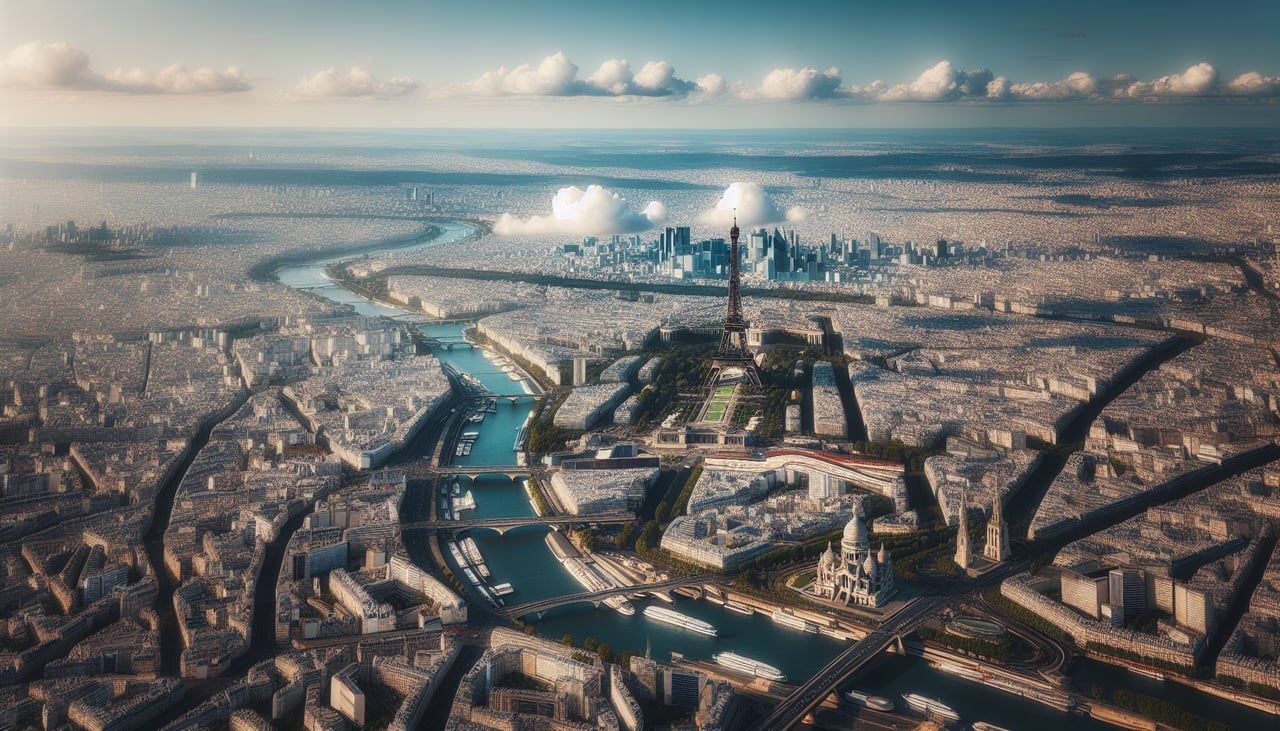
Takeoff from CDG
RIGHTRight-side seats offer views of the Seine River winding through Paris and the surrounding Île-de-France region as you climb northeast. You'll see the urban sprawl gradually give way to agricultural plains and forests.
Landing at KRK
LEFTLeft-side seats provide excellent views during descent into Kraków. You'll see the Vistula River valley, the Carpathian foothills rising to the south, and the city itself nestled in the river plain. The approach from the west gives clear sightlines to these features.
Landmarks on this routeAll landmarks →
Will your flight be in sunlight?
See exactly which side of the plane gets sun and shade at your departure time.
About This Route
Which side of the plane should I sit on flying from Charles De Gaulle (CDG) to Balice Jp Ii International Airport (KRK)?
Sit on the Left side of the plane for the best views on flights from Paris to Krakow. While takeoff favors the right, the landing approach on the left provides more dramatic and sustained scenery—the Vistula River valley and Carpathian foothills are more visually distinctive than the Paris departure. The left side captures the most memorable portion of this route.
What can I see during takeoff from Charles De Gaulle in Paris?
During takeoff from Charles De Gaulle (CDG), sit on the Right side for the best views. Right-side seats offer views of the Seine River winding through Paris and the surrounding Île-de-France region as you climb northeast. You'll see the urban sprawl gradually give way to agricultural plains and forests. Notable sights include: Seine River, Paris urban area, Fontainebleau Forest (southeast), Marne River tributaries.
What can I see when landing at Balice Jp Ii International Airport in Krakow?
When landing at Balice Jp Ii International Airport (KRK), sit on the Left side for the best views. Left-side seats provide excellent views during descent into Kraków. You'll see the Vistula River valley, the Carpathian foothills rising to the south, and the city itself nestled in the river plain. The approach from the west gives clear sightlines to these features. Notable sights include: Vistula River, Carpathian Mountains (southern horizon), Kraków city center, Tatra Mountains (distant south).
How long is the flight from Paris to Krakow?
The flight from Charles De Gaulle (CDG) to Balice Jp Ii International Airport (KRK) takes Approximately 2 hours 15 minutes.
What does the Paris to Krakow flight path pass over?
The flight path crosses northeastern France and southern Germany/Austria border region. Notable features include the Rhine River valley (visible from altitude around the Alsace region), the Black Forest (Schwarzwald) in southwestern Germany appearing as a forested highland, and the Bavarian plateau transitioning into the Alpine foothills. The Oder River valley marks the approach to Poland. The landscape gradually transitions from French agricultural plains through German forests and highlands to the Polish river valleys and Carpathian approaches.