Paris to Nanjing is 5,623 miles (9,050 km), a flight of about 10 hours 30 minutes.
The right side offers the more consistent scenic value — a glimpse of Paris on departure and a clear view of the Yangtze River, Nanjing skyline, and Purple Mountain on arrival — while the left side's views are dominated by flat plains at both ends and less distinct cruise-phase terrain.
Flight Path
The route crosses the Ural Mountains near the Europe-Asia boundary, the vast steppe and dune fields of the Gobi Desert in Mongolia, and the Yellow River basin before descending into the Yangtze River plain near Nanjing.
Great circle distance and headings ›.jpg?width=600)


Phase by phase
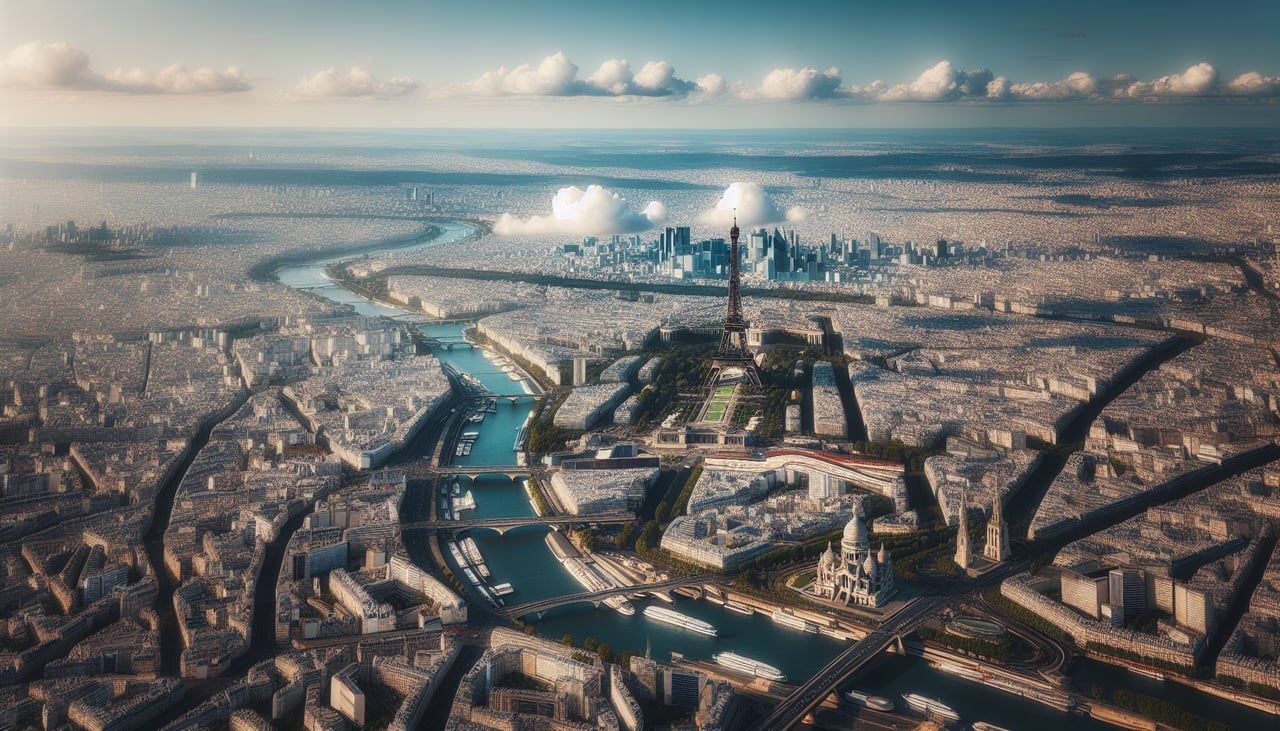
Takeoff from CDG
RIGHTDepartures from CDG typically lift off westbound then curve right (south, then east) toward the cruise corridor, giving right-side passengers a brief but clear view of central Paris — the Seine, La Défense towers, and the city grid — before the plane straightens onto its easterly heading. Left-side views are mostly flat Île-de-France farmland.
Landing at NKG
RIGHTOn approach into NKG, aircraft typically fly a southwest-to-northeast final, putting the Yangtze River, the Nanjing skyline, and the forested slopes of Purple Mountain (Zijin Shan) on the right side as the plane lines up with the runway. The left side mostly shows flat farmland south of the city.
Landmarks on this routeAll landmarks →
Will your flight be in sunlight?
Pick a date and time in the Sun Map to watch the sun move across your whole flight.
About This Route
Which side of the plane should I sit on flying from Charles De Gaulle (CDG) to Lu Kou Airport (NKG)?
Sit on the Right side of the plane for the best views on flights from Paris to Nanjing. The right side offers the more consistent scenic value — a glimpse of Paris on departure and a clear view of the Yangtze River, Nanjing skyline, and Purple Mountain on arrival — while the left side's views are dominated by flat plains at both ends and less distinct cruise-phase terrain.
What can I see during takeoff from Charles De Gaulle in Paris?
During takeoff from Charles De Gaulle (CDG), sit on the Right side for the best views. Departures from CDG typically lift off westbound then curve right (south, then east) toward the cruise corridor, giving right-side passengers a brief but clear view of central Paris — the Seine, La Défense towers, and the city grid — before the plane straightens onto its easterly heading. Left-side views are mostly flat Île-de-France farmland. Notable sights include: Seine River, La Défense business district, Paris city grid, Charles de Gaulle airport complex.
What can I see when landing at Lu Kou Airport in Nanjing?
When landing at Lu Kou Airport (NKG), sit on the Right side for the best views. On approach into NKG, aircraft typically fly a southwest-to-northeast final, putting the Yangtze River, the Nanjing skyline, and the forested slopes of Purple Mountain (Zijin Shan) on the right side as the plane lines up with the runway. The left side mostly shows flat farmland south of the city. Notable sights include: Yangtze River, Nanjing city skyline, Purple Mountain (Zijin Shan), Xuanwu Lake.
How long is the flight from Paris to Nanjing?
The flight from Charles De Gaulle (CDG) to Lu Kou Airport (NKG) takes about 10 hours 30 minutes. The shortest flight path between them is 5,623 miles (9,050 km); winds and air traffic control usually add a few percent.
What does the Paris to Nanjing flight path pass over?
The route crosses the Ural Mountains near the Europe-Asia boundary, the vast steppe and dune fields of the Gobi Desert in Mongolia, and the Yellow River basin before descending into the Yangtze River plain near Nanjing.