Right side scores higher (3.5 vs 2.5) because it captures more distinctive landmarks across the full flight: Rome's Tiber River and urban character on departure, the Rhine River valley and Cologne Cathedral on arrival. Left side offers less dramatic scenery—inland hills on departure and a less direct view of the Rhine approach. The flight is relatively short and crosses flat-to-rolling terrain, so neither side reaches 4.0+, but right-side landmarks are more recognizable and visually concentrated.
Flight Path
The flight path crosses the Alps' northern foothills (Apennines near Rome transition to the Po Valley), then the flat Lombard Plain, Lake Como or nearby Alpine lakes depending on routing, the Swiss Plateau, and the Rhine valley approaching Cologne. The most dramatic midpoint feature is the transition from Mediterranean climate and terrain to Central European landscape around the Swiss-German border, though at cruise altitude (typically 35,000 feet) individual peaks are distant and small on the horizon.
Great circle distance and headings ›


Phase by phase
Takeoff from CIA
RIGHTRight side captures Rome's urban sprawl and the Tiber River valley during initial climb. Left side faces inland toward the Alban Hills with less immediate visual interest from the airport environment.
Landing at CGN
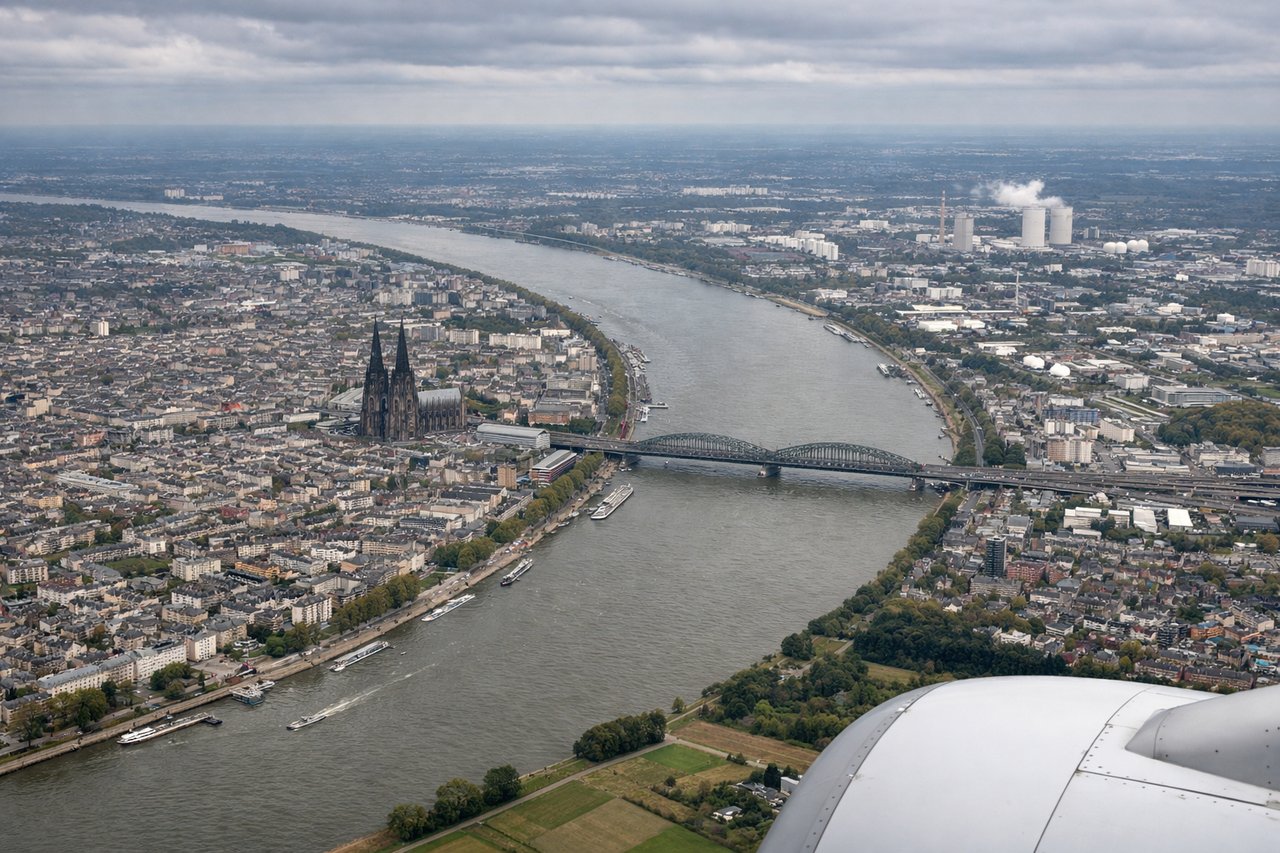
RIGHTRight side offers the Rhine River approach into Cologne, with the cathedral and city skyline visible during descent and final approach. Left side shows the Rhine valley but from a less dramatic angle relative to the airport's typical 31-direction landing pattern.
Landmarks on this routeAll landmarks →
Will your flight be in sunlight?
See exactly which side of the plane gets sun and shade at your departure time.
About This Route
Which side of the plane should I sit on flying from Ciampino (CIA) to Koln Bonn (CGN)?
Sit on the Right side of the plane for the best views on flights from Rome to Cologne. Right side scores higher (3.5 vs 2.5) because it captures more distinctive landmarks across the full flight: Rome's Tiber River and urban character on departure, the Rhine River valley and Cologne Cathedral on arrival. Left side offers less dramatic scenery—inland hills on departure and a less direct view of the Rhine approach. The flight is relatively short and crosses flat-to-rolling terrain, so neither side reaches 4.0+, but right-side landmarks are more recognizable and visually concentrated.
What can I see during takeoff from Ciampino in Rome?
During takeoff from Ciampino (CIA), sit on the Right side for the best views. Right side captures Rome's urban sprawl and the Tiber River valley during initial climb. Left side faces inland toward the Alban Hills with less immediate visual interest from the airport environment. Notable sights include: Tiber River winding through Rome, Alban Hills to the southeast, sprawling Roman suburbs and urban grid.
What can I see when landing at Koln Bonn in Cologne?
When landing at Koln Bonn (CGN), sit on the Right side for the best views. Right side offers the Rhine River approach into Cologne, with the cathedral and city skyline visible during descent and final approach. Left side shows the Rhine valley but from a less dramatic angle relative to the airport's typical 31-direction landing pattern. Notable sights include: Rhine River and its meanders, Cologne Cathedral and city center, Cologne-Bonn conurbation, forested Rhine valley slopes.
How long is the flight from Rome to Cologne?
The flight from Ciampino (CIA) to Koln Bonn (CGN) takes 2h 15m.
What does the Rome to Cologne flight path pass over?
The flight path crosses the Alps' northern foothills (Apennines near Rome transition to the Po Valley), then the flat Lombard Plain, Lake Como or nearby Alpine lakes depending on routing, the Swiss Plateau, and the Rhine valley approaching Cologne. The most dramatic midpoint feature is the transition from Mediterranean climate and terrain to Central European landscape around the Swiss-German border, though at cruise altitude (typically 35,000 feet) individual peaks are distant and small on the horizon.