Rome to Seattle is 5,682 miles (9,144 km), a flight of about 11 hours 20 minutes.
The left side wins on both ends of the flight: Rome's historic center at takeoff and the Seattle skyline with Mount Rainier on final approach, both far more distinctive than the countryside and Puget Sound views offered on the right.
Flight Path
After crossing the Alps near the Swiss-French border, the route heads out over the North Atlantic, passing near southern Greenland's ice sheet and coastal fjords, then continues over Davis Strait, Baffin Island, and the lake-studded Canadian Shield around Hudson Bay before crossing the Canadian Rockies and descending into the Pacific Northwest.
Great circle distance and headings ›
.jpg?width=600)

.jpg?width=600)


.jpg?width=600)

Phase by phase
Takeoff from CIA
LEFTDeparting Ciampino on runway 33 puts the aircraft on a heading of roughly 330°, almost exactly the great-circle track toward Seattle, so there's little need to turn. Rome's historic center sits just off the nose to the left as the plane climbs, giving a brief but clear view of the city before it recedes behind.
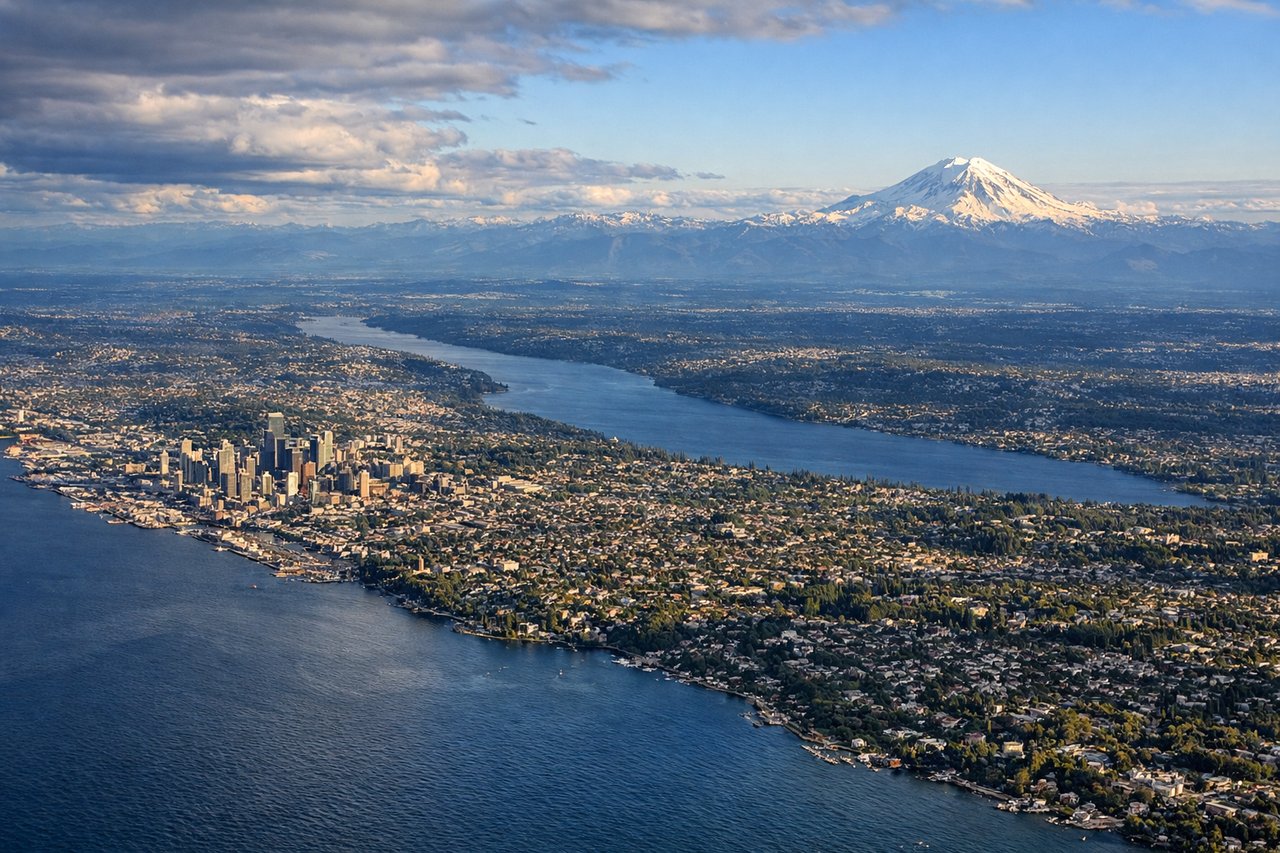
Landing at SEA
LEFTWith south winds favoring runway 16 approaches, the aircraft flies south down Puget Sound before landing, putting the Seattle skyline and Cascade foothills on the left side. Mount Rainier's snow-capped summit is often visible in the distance to the south, making this the more dramatic side during descent.
Landmarks on this routeAll landmarks →
Will your flight be in sunlight?
Pick a date and time in the Sun Map to watch the sun move across your whole flight.
About This Route
Which side of the plane should I sit on flying from Ciampino (CIA) to Seattle Tacoma International (SEA)?
Sit on the Left side of the plane for the best views on flights from Rome to Seattle. The left side wins on both ends of the flight: Rome's historic center at takeoff and the Seattle skyline with Mount Rainier on final approach, both far more distinctive than the countryside and Puget Sound views offered on the right.
What can I see during takeoff from Ciampino in Rome?
During takeoff from Ciampino (CIA), sit on the Left side for the best views. Departing Ciampino on runway 33 puts the aircraft on a heading of roughly 330°, almost exactly the great-circle track toward Seattle, so there's little need to turn. Rome's historic center sits just off the nose to the left as the plane climbs, giving a brief but clear view of the city before it recedes behind. Notable sights include: Rome historic center and the Tiber River bends, St. Peter's Basilica dome, the Alban Hills in the far distance, Tyrrhenian coastline haze on the horizon.
What can I see when landing at Seattle Tacoma International in Seattle?
When landing at Seattle Tacoma International (SEA), sit on the Left side for the best views. With south winds favoring runway 16 approaches, the aircraft flies south down Puget Sound before landing, putting the Seattle skyline and Cascade foothills on the left side. Mount Rainier's snow-capped summit is often visible in the distance to the south, making this the more dramatic side during descent. Notable sights include: Seattle downtown skyline and Space Needle, Lake Union and Lake Washington, Mount Rainier on the southern horizon, Cascade Range foothills.
How long is the flight from Rome to Seattle?
The flight from Ciampino (CIA) to Seattle Tacoma International (SEA) takes about 11 hours 20 minutes. The shortest flight path between them is 5,682 miles (9,144 km); winds and air traffic control usually add a few percent.
What does the Rome to Seattle flight path pass over?
After crossing the Alps near the Swiss-French border, the route heads out over the North Atlantic, passing near southern Greenland's ice sheet and coastal fjords, then continues over Davis Strait, Baffin Island, and the lake-studded Canadian Shield around Hudson Bay before crossing the Canadian Rockies and descending into the Pacific Northwest.