Left side wins at both ends of the flight. At departure you get Charlotte's skyline and the Blue Ridge; at arrival you get the full Hong Kong harbour panorama, Tsing Ma Bridge, and the iconic skyline approach. Over the Pacific the views are largely ocean regardless of side, so the bookend experiences at departure and arrival make left the clear overall choice.
Flown CLT to HKG? Did we get it right?
Flight Path
Charlotte to Hong Kong is 8,345 miles (13,429 km), a flight of about 16 hours 30 minutes.
The great circle route from Charlotte to Hong Kong tracks northwest across the Appalachians, then over the Great Lakes region, across central Canada and the Yukon, over the Aleutian Island chain (visible as a string of volcanic islands in the North Pacific), then south across the vast open North Pacific Ocean, before crossing the Japanese archipelago — Honshu and Kyushu are visible on clear days — then the East China Sea and finally the Pearl River Delta coastline on descent into Hong Kong
Great circle distance and headings ›


Phase by phase
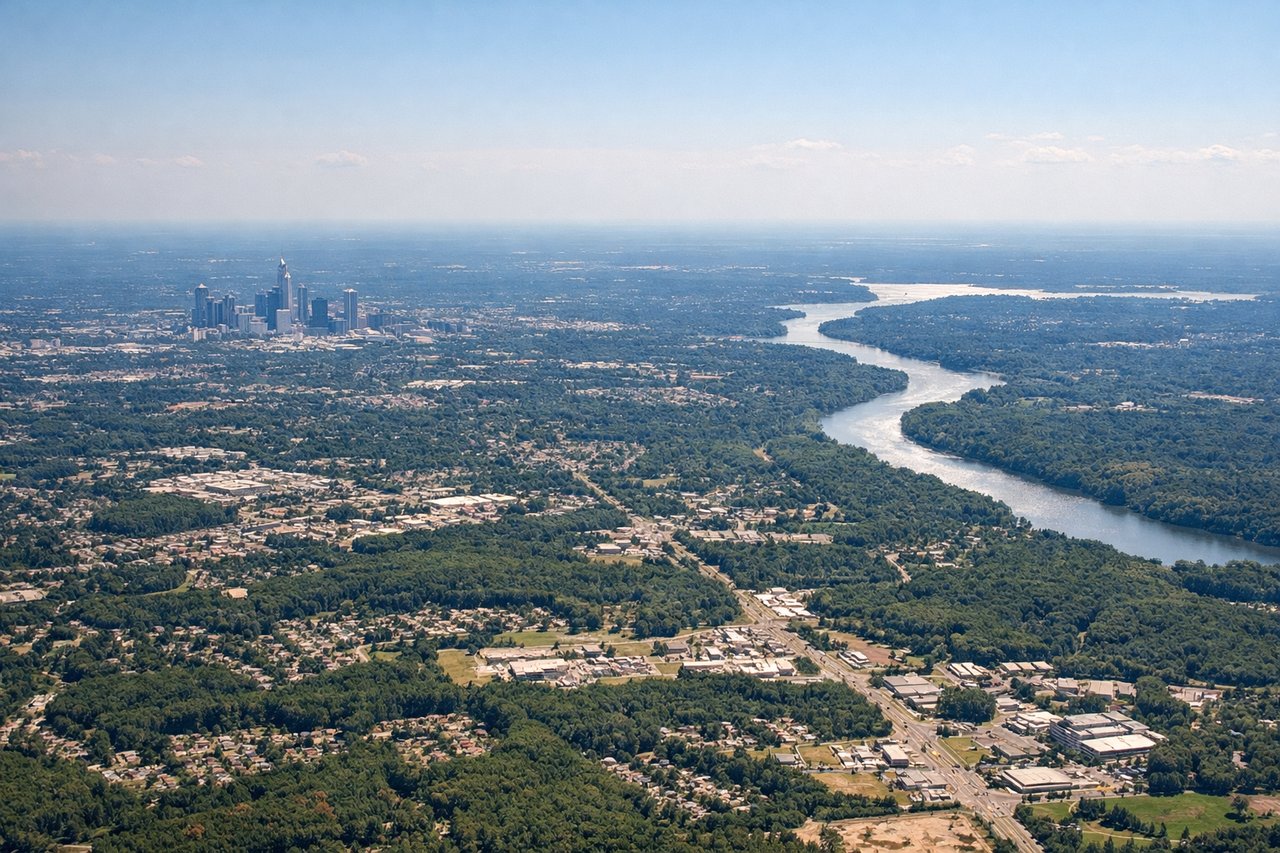
Takeoff from CLT
LEFTCLT primarily uses runways 18C/36C and 18L/36L oriented north-south. Departures heading west toward Asia typically use runway 18 (southbound) or 36 (northbound). On a northwesterly departure routing, the left side gives you a clear view back over uptown Charlotte's skyline and then the Appalachian ridgelines of the Blue Ridge as you climb out. The right side faces away from the city toward flat Piedmont farmland.

Landing at HKG
LEFTHong Kong International Airport sits on Lantau Island and aircraft typically approach from the east or northeast over the South China Sea, landing westbound on runway 07L/07R or 25L/25R. On a westbound approach from the northeast, the left side of the aircraft faces south, giving you a spectacular view of Lantau Island's mountainous interior, the Tsing Ma Bridge, and the dense urban mass of Kowloon and Hong Kong Island across Victoria Harbour. The right side faces north toward the Pearl River Delta and Shenzhen's sprawl.
Will your flight be in sunlight?
Pick a date and time in the Sun Map to watch the sun move across your whole flight.
About This Route
Which side of the plane should I sit on flying from Charlotte Douglas International (CLT) to Hong Kong International (HKG)?
Sit on the Left side of the plane for the best views on flights from Charlotte to Hong Kong. Left side wins at both ends of the flight. At departure you get Charlotte's skyline and the Blue Ridge; at arrival you get the full Hong Kong harbour panorama, Tsing Ma Bridge, and the iconic skyline approach. Over the Pacific the views are largely ocean regardless of side, so the bookend experiences at departure and arrival make left the clear overall choice.
What can I see during takeoff from Charlotte Douglas International in Charlotte?
During takeoff from Charlotte Douglas International (CLT), sit on the Left side for the best views. CLT primarily uses runways 18C/36C and 18L/36L oriented north-south. Departures heading west toward Asia typically use runway 18 (southbound) or 36 (northbound). On a northwesterly departure routing, the left side gives you a clear view back over uptown Charlotte's skyline and then the Appalachian ridgelines of the Blue Ridge as you climb out. The right side faces away from the city toward flat Piedmont farmland. Notable sights include: Uptown Charlotte skyline, Lake Norman to the north, Blue Ridge escarpment and Brushy Mountains to the northwest, Catawba River corridor.
What can I see when landing at Hong Kong International in Hong Kong?
When landing at Hong Kong International (HKG), sit on the Left side for the best views. Hong Kong International Airport sits on Lantau Island and aircraft typically approach from the east or northeast over the South China Sea, landing westbound on runway 07L/07R or 25L/25R. On a westbound approach from the northeast, the left side of the aircraft faces south, giving you a spectacular view of Lantau Island's mountainous interior, the Tsing Ma Bridge, and the dense urban mass of Kowloon and Hong Kong Island across Victoria Harbour. The right side faces north toward the Pearl River Delta and Shenzhen's sprawl. Notable sights include: Victoria Harbour and Hong Kong Island skyline, Tsing Ma Bridge, Lantau Peak and Sunset Peak ridgeline, Kowloon Peninsula urban grid.
How long is the flight from Charlotte to Hong Kong?
The flight from Charlotte Douglas International (CLT) to Hong Kong International (HKG) takes about 16 hours 30 minutes. The shortest flight path between them is 8,345 miles (13,429 km); winds and air traffic control usually add a few percent.
What does the Charlotte to Hong Kong flight path pass over?
The great circle route from Charlotte to Hong Kong tracks northwest across the Appalachians, then over the Great Lakes region, across central Canada and the Yukon, over the Aleutian Island chain (visible as a string of volcanic islands in the North Pacific), then south across the vast open North Pacific Ocean, before crossing the Japanese archipelago — Honshu and Kyushu are visible on clear days — then the East China Sea and finally the Pearl River Delta coastline on descent into Hong Kong