While the Detroit departure offers only a fleeting lake view, the right side delivers dramatic terrain throughout the second half of the flight — the Canadian Rockies during cruise and the Chugach Mountains and Cook Inlet on final approach into Anchorage.
Flight Path
Canadian prairies of Saskatchewan and Alberta, boreal forest, and the eastern foothills of the Canadian Rocky Mountains near the British Columbia-Alberta border
Great circle distance and headings ›
.jpg?width=600)


Phase by phase
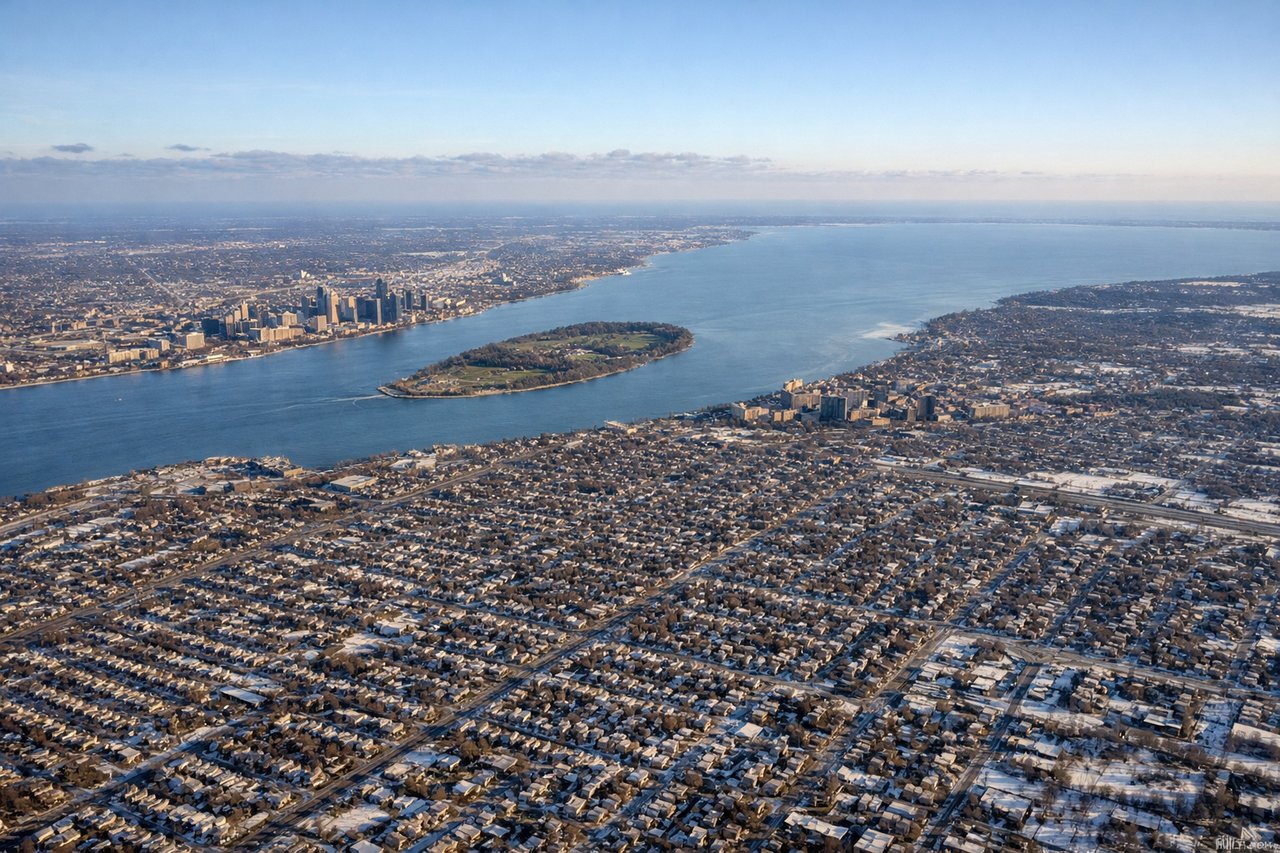
Takeoff from DTW
LEFTDeparting DTW to the southwest before turning northwest, the left side offers a brief glimpse of western Lake Erie and the Detroit River shoreline, while the right side shows only flat suburban Michigan farmland.
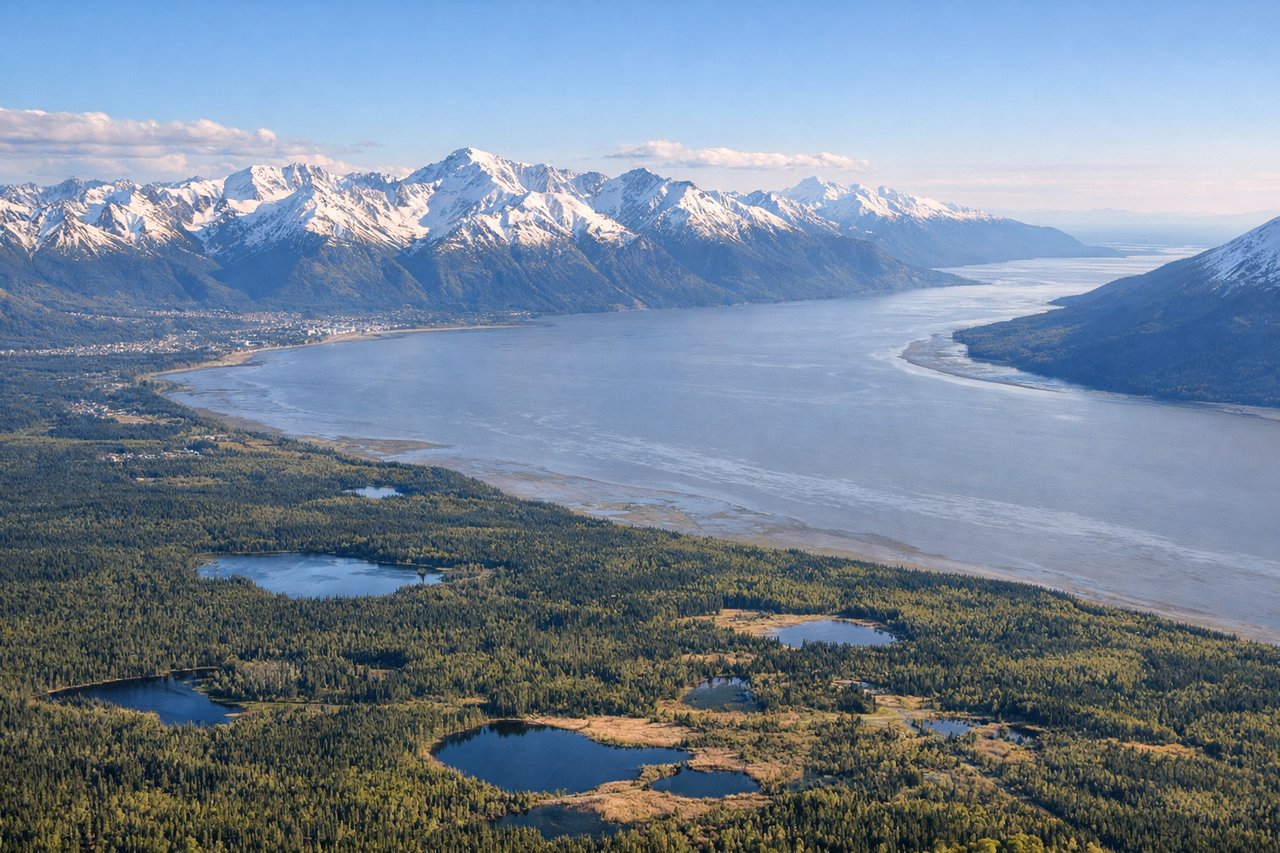
Landing at ANC
RIGHTOn approach into Anchorage from the northeast, the right side reveals the jagged Chugach Mountains rising directly beside the descent path, followed by views across Cook Inlet and the distinctive silhouette of Mount Susitna as the plane lines up for the east-west runways.
Landmarks on this routeAll landmarks →
Will your flight be in sunlight?
See exactly which side of the plane gets sun and shade at your departure time.
About This Route
Which side of the plane should I sit on flying from Detroit Metro Wayne Co (DTW) to Ted Stevens Anchorage International (ANC)?
Sit on the Right side of the plane for the best views on flights from Detroit to Anchorage. While the Detroit departure offers only a fleeting lake view, the right side delivers dramatic terrain throughout the second half of the flight — the Canadian Rockies during cruise and the Chugach Mountains and Cook Inlet on final approach into Anchorage.
What can I see during takeoff from Detroit Metro Wayne Co in Detroit?
During takeoff from Detroit Metro Wayne Co (DTW), sit on the Left side for the best views. Departing DTW to the southwest before turning northwest, the left side offers a brief glimpse of western Lake Erie and the Detroit River shoreline, while the right side shows only flat suburban Michigan farmland. Notable sights include: Lake Erie shoreline, Detroit River, Downriver Detroit suburbs, flat Michigan farmland.
What can I see when landing at Ted Stevens Anchorage International in Anchorage?
When landing at Ted Stevens Anchorage International (ANC), sit on the Right side for the best views. On approach into Anchorage from the northeast, the right side reveals the jagged Chugach Mountains rising directly beside the descent path, followed by views across Cook Inlet and the distinctive silhouette of Mount Susitna as the plane lines up for the east-west runways. Notable sights include: Chugach Mountains, Cook Inlet, Mount Susitna (Sleeping Lady), Knik Arm.
How long is the flight from Detroit to Anchorage?
The flight from Detroit Metro Wayne Co (DTW) to Ted Stevens Anchorage International (ANC) takes 6h 50m.
What does the Detroit to Anchorage flight path pass over?
Canadian prairies of Saskatchewan and Alberta, boreal forest, and the eastern foothills of the Canadian Rocky Mountains near the British Columbia-Alberta border