The right side captures the Wicklow Mountains and Dublin Bay coastline on departure and the Weald's rolling countryside on arrival, while the left side spends most of the short flight over flat midland Ireland, the open Irish Sea, and featureless Surrey suburbs.
Flown DUB to LGW? Did we get it right?
Flight Path
Dublin to London is 301 miles (485 km), a flight of about 1 hour 20 minutes.
Irish Sea crossing, Welsh coastline near Cardigan Bay, Cambrian Mountains foothills, and the rolling farmland of the English Midlands
Great circle distance and headings ›

Phase by phase

Takeoff from DUB
RIGHTDeparting Dublin on runway 28, the aircraft climbs west then banks south-southeast toward the Irish Sea, putting the Wicklow Mountains and the southern arc of Dublin Bay (Dun Laoghaire, Bray Head) on the right side. The left side mostly shows flat midland farmland receding behind the climb.
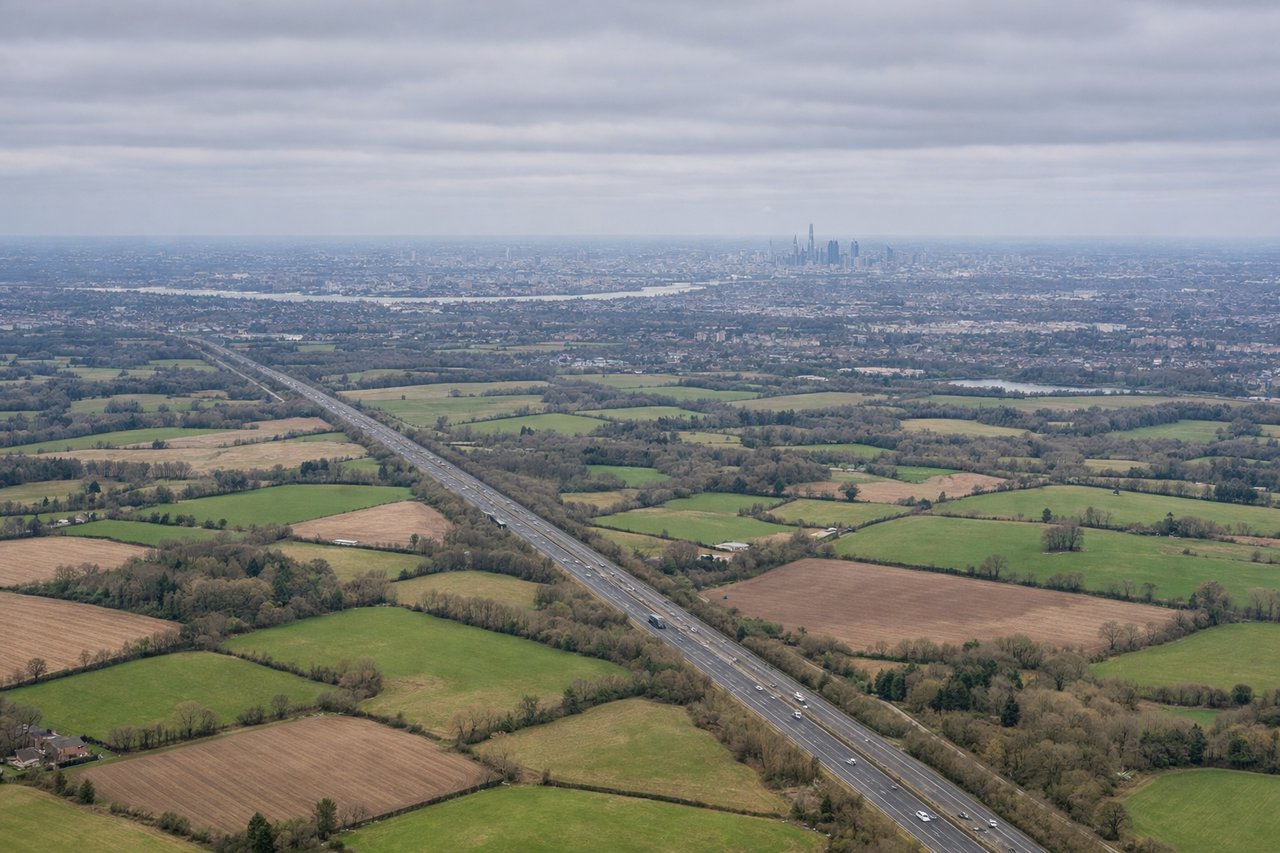
Landing at LGW
RIGHTOn approach to Gatwick's runway 26, the aircraft typically tracks in from the south over the High Weald and North Downs before turning onto final; the rolling wooded ridgelines and patchwork Sussex farmland are more visible on the right, while the left mostly faces flatter Surrey suburbs.
Will your flight be in sunlight?
Pick a date and time in the Sun Map to watch the sun move across your whole flight.
About This Route
Which side of the plane should I sit on flying from Dublin (DUB) to Gatwick (LGW)?
Sit on the Right side of the plane for the best views on flights from Dublin to London. The right side captures the Wicklow Mountains and Dublin Bay coastline on departure and the Weald's rolling countryside on arrival, while the left side spends most of the short flight over flat midland Ireland, the open Irish Sea, and featureless Surrey suburbs.
What can I see during takeoff from Dublin in Dublin?
During takeoff from Dublin (DUB), sit on the Right side for the best views. Departing Dublin on runway 28, the aircraft climbs west then banks south-southeast toward the Irish Sea, putting the Wicklow Mountains and the southern arc of Dublin Bay (Dun Laoghaire, Bray Head) on the right side. The left side mostly shows flat midland farmland receding behind the climb. Notable sights include: Wicklow Mountains, Dublin Bay coastline, Bray Head, Dun Laoghaire harbour.
What can I see when landing at Gatwick in London?
When landing at Gatwick (LGW), sit on the Right side for the best views. On approach to Gatwick's runway 26, the aircraft typically tracks in from the south over the High Weald and North Downs before turning onto final; the rolling wooded ridgelines and patchwork Sussex farmland are more visible on the right, while the left mostly faces flatter Surrey suburbs. Notable sights include: High Weald ridgelines, North Downs escarpment, Sussex farmland mosaic, Ashdown Forest woodland.
How long is the flight from Dublin to London?
The flight from Dublin (DUB) to Gatwick (LGW) takes about 1 hour 20 minutes. The shortest flight path between them is 301 miles (485 km); winds and air traffic control usually add a few percent.
What does the Dublin to London flight path pass over?
Irish Sea crossing, Welsh coastline near Cardigan Bay, Cambrian Mountains foothills, and the rolling farmland of the English Midlands