The GIG arrival on the right side delivers one of aviation's truly iconic approaches — Guanabara Bay, Sugarloaf, and Rio's skyline all in one sweeping view. The Dubai departure on the left is interesting but the Rio arrival is the clear highlight of this route.
Flight Path
The route crosses the Arabian Peninsula south of Riyadh, then tracks over the Horn of Africa and Ethiopia's highlands, crosses the equator over the Indian Ocean or East African coast near Kenya/Tanzania, traverses the full width of the South Atlantic Ocean — largely featureless open ocean — before making landfall on the Brazilian coast near Recife or Fortaleza in the northeast, then tracking south along the Brazilian coastline toward Rio.
Great circle distance and headings ›_and_the_Dubai_skyline_(25781049892).jpg?width=600)
.jpg?width=600)


.jpg?width=600)
.jpg?width=600)

Phase by phase
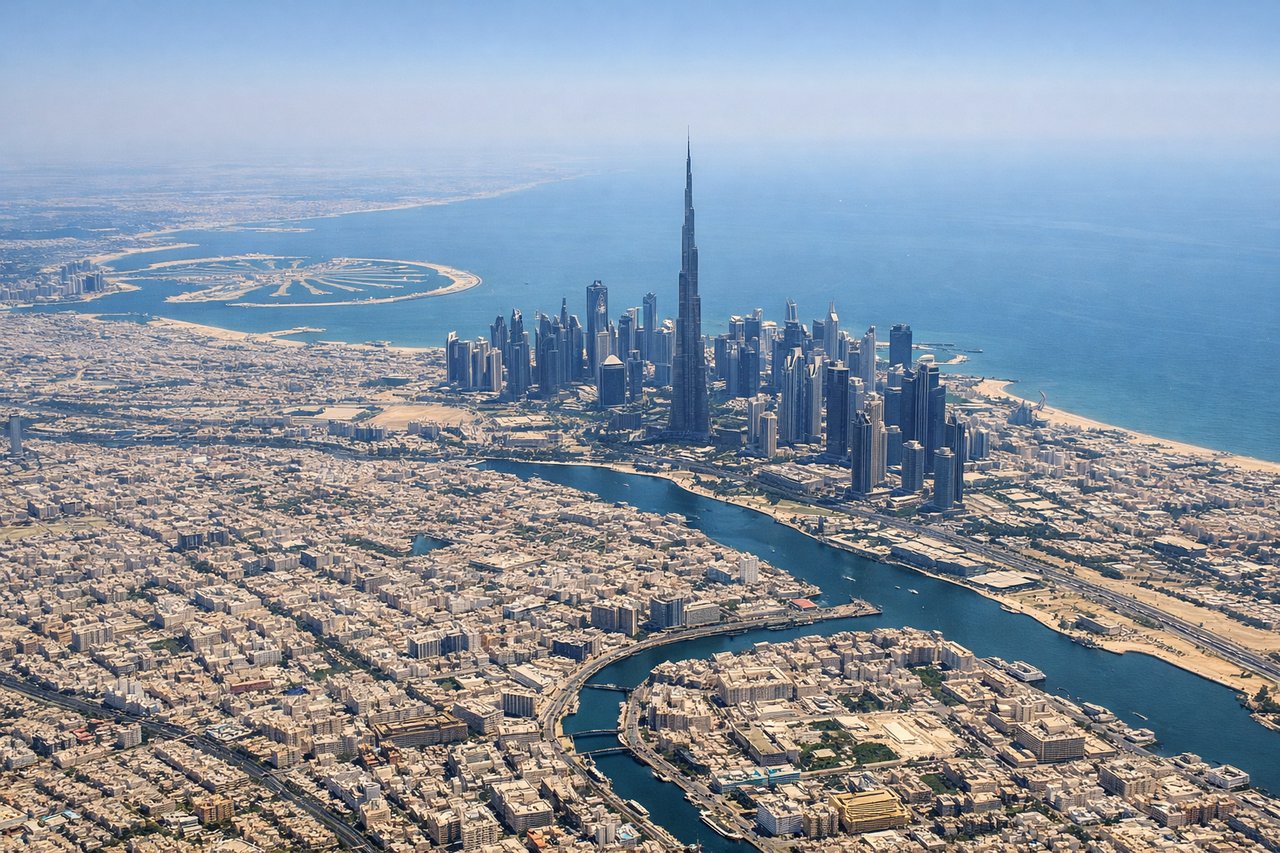
Takeoff from DXB
LEFTDXB's primary departure runways (30L/30R) head northwest, meaning a left-side seat faces southwest over the Dubai Creek, Deira district, and the older city grid. You get a clear look at the creek waterway and the dense urban fabric of central Dubai before the aircraft turns south.
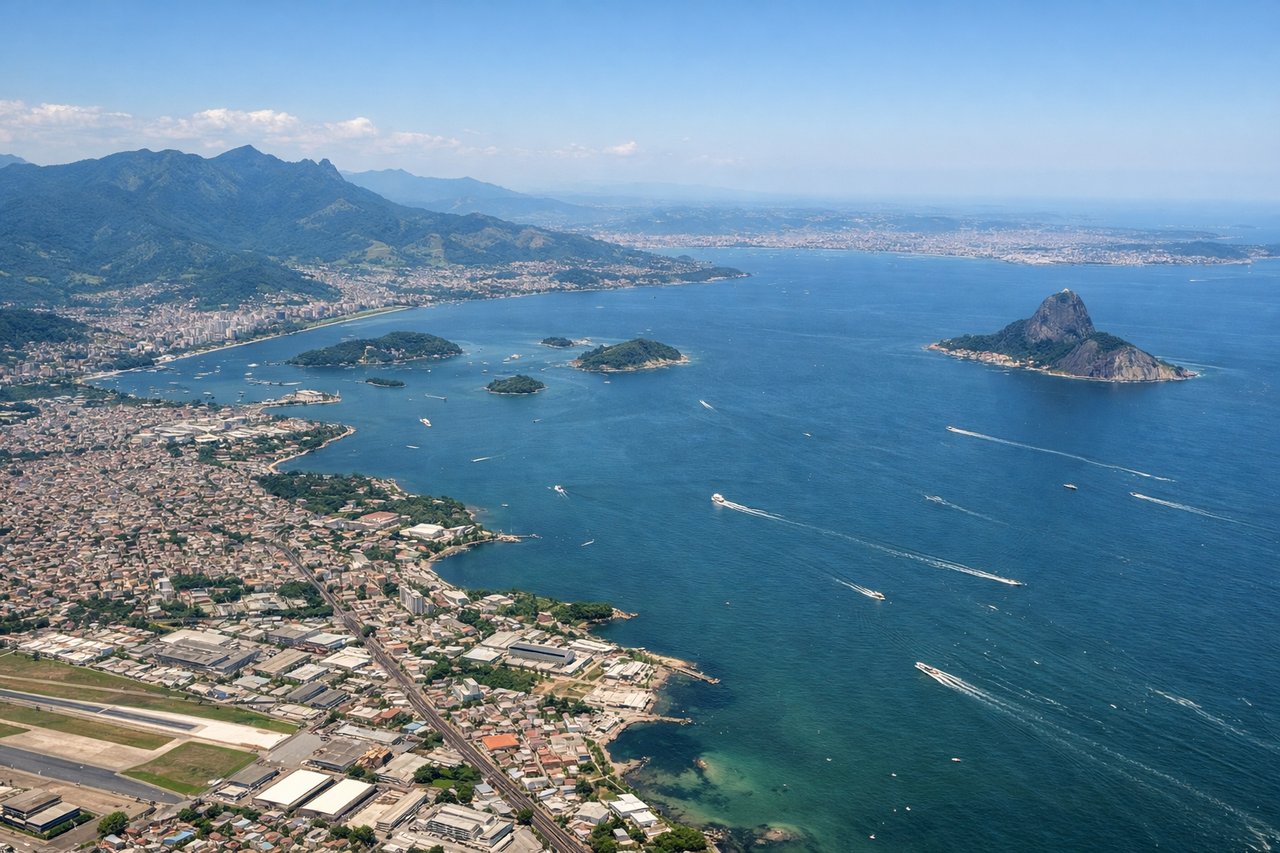
Landing at GIG
RIGHTGIG's primary landing approach on runway 10 comes in from the west over Guanabara Bay, meaning right-side seats face north toward the bay, Sugarloaf Mountain (Pão de Açúcar), and the Rio city skyline. This is one of the most dramatic urban approaches in the world, with the bay and mountains directly in view.
Landmarks on this routeAll landmarks →
Will your flight be in sunlight?
See exactly which side of the plane gets sun and shade at your departure time.
About This Route
Which side of the plane should I sit on flying from Dubai International (DXB) to Galeao Antonio Carlos Jobim (GIG)?
Sit on the Right side of the plane for the best views on flights from Dubai to Rio De Janeiro. The GIG arrival on the right side delivers one of aviation's truly iconic approaches — Guanabara Bay, Sugarloaf, and Rio's skyline all in one sweeping view. The Dubai departure on the left is interesting but the Rio arrival is the clear highlight of this route.
What can I see during takeoff from Dubai International in Dubai?
During takeoff from Dubai International (DXB), sit on the Left side for the best views. DXB's primary departure runways (30L/30R) head northwest, meaning a left-side seat faces southwest over the Dubai Creek, Deira district, and the older city grid. You get a clear look at the creek waterway and the dense urban fabric of central Dubai before the aircraft turns south. Notable sights include: Dubai Creek (Khor Dubai), Deira district street grid, Dubai International Airport terminal complex, the shallow turquoise waters of the Arabian Gulf shoreline.
What can I see when landing at Galeao Antonio Carlos Jobim in Rio De Janeiro?
When landing at Galeao Antonio Carlos Jobim (GIG), sit on the Right side for the best views. GIG's primary landing approach on runway 10 comes in from the west over Guanabara Bay, meaning right-side seats face north toward the bay, Sugarloaf Mountain (Pão de Açúcar), and the Rio city skyline. This is one of the most dramatic urban approaches in the world, with the bay and mountains directly in view. Notable sights include: Guanabara Bay (Baía de Guanabara), Pão de Açúcar (Sugarloaf Mountain), Niterói across the bay, the Ilha do Governador where GIG sits.
How long is the flight from Dubai to Rio De Janeiro?
The flight from Dubai International (DXB) to Galeao Antonio Carlos Jobim (GIG) takes Approximately 16 to 17 hours nonstop (roughly 11,000 km, operated typically via connecting hubs as a one-stop itinerary).
What does the Dubai to Rio De Janeiro flight path pass over?
The route crosses the Arabian Peninsula south of Riyadh, then tracks over the Horn of Africa and Ethiopia's highlands, crosses the equator over the Indian Ocean or East African coast near Kenya/Tanzania, traverses the full width of the South Atlantic Ocean — largely featureless open ocean — before making landfall on the Brazilian coast near Recife or Fortaleza in the northeast, then tracking south along the Brazilian coastline toward Rio.