While both legs offer distinct scenery, the right side provides the most dramatic visual experience during takeoff from Rio with Guanabara Bay and the Serra da Carioca. The landing into Dubai favors the left, but the Rio departure is more visually striking overall.
Flight Path
The flight path crosses the Atlantic Ocean heading southeast, passing over the Cape Verde islands region (visible around 6-7 hours into flight), then continues across open ocean toward the African coast. Around the 8-9 hour mark, the aircraft passes over West Africa—the Sahara Desert becomes visible with its distinctive tan and rust-colored dune patterns. The flight then crosses the Mediterranean region and heads southeast over Egypt, with the Nile River Delta visible as a bright green triangular feature against the desert. The Red Sea appears as a narrow blue-grey body of water between Africa and the Sinai Peninsula. Finally, the aircraft crosses the Arabian Peninsula, with the Rub' al Khali (Empty Quarter) desert visible as vast expanses of sand dunes in ochre and tan tones before descending toward the Persian Gulf and Dubai.
Great circle distance and headings ›
.jpg?width=600)
.jpg?width=600)


.jpg?width=600)
_and_the_Dubai_skyline_(25781049892).jpg?width=600)
Phase by phase

Takeoff from GIG
RIGHTRight-side seats offer views of Guanabara Bay and the northern Rio coastline as the aircraft climbs out over the Atlantic. The bay's distinctive shape and surrounding mountains create a dramatic departure scene.
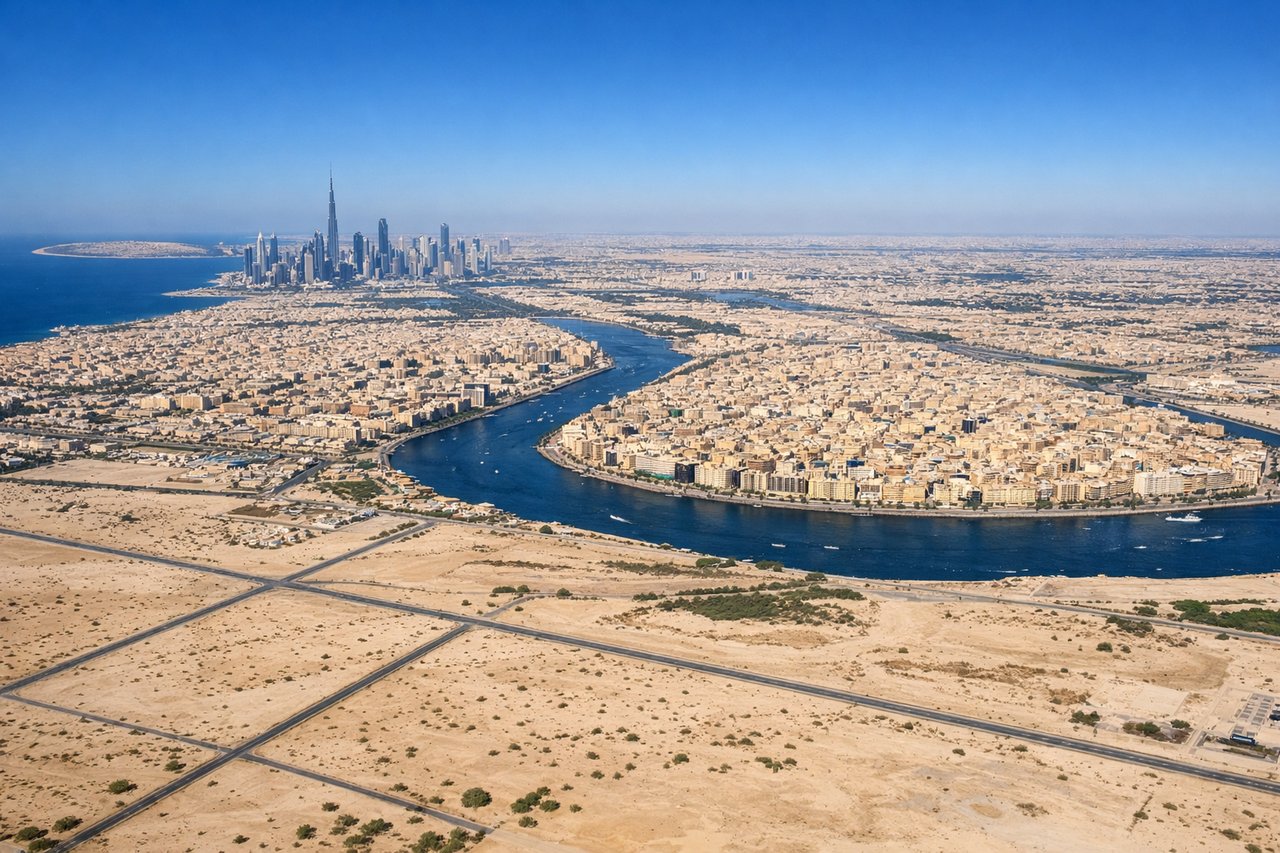
Landing at DXB
LEFTLeft-side seats provide excellent views during the approach into Dubai. You'll see the Palm Jumeirah and the Dubai coastline with its distinctive artificial islands and the Persian Gulf's turquoise waters as you descend toward the runway.
Landmarks on this routeAll landmarks →
Will your flight be in sunlight?
See exactly which side of the plane gets sun and shade at your departure time.
About This Route
Which side of the plane should I sit on flying from Galeao Antonio Carlos Jobim (GIG) to Dubai International (DXB)?
Sit on the Right side of the plane for the best views on flights from Rio De Janeiro to Dubai. While both legs offer distinct scenery, the right side provides the most dramatic visual experience during takeoff from Rio with Guanabara Bay and the Serra da Carioca. The landing into Dubai favors the left, but the Rio departure is more visually striking overall.
What can I see during takeoff from Galeao Antonio Carlos Jobim in Rio De Janeiro?
During takeoff from Galeao Antonio Carlos Jobim (GIG), sit on the Right side for the best views. Right-side seats offer views of Guanabara Bay and the northern Rio coastline as the aircraft climbs out over the Atlantic. The bay's distinctive shape and surrounding mountains create a dramatic departure scene. Notable sights include: Guanabara Bay, Serra da Carioca mountain range, Niterói across the bay, Atlantic Ocean.
What can I see when landing at Dubai International in Dubai?
When landing at Dubai International (DXB), sit on the Left side for the best views. Left-side seats provide excellent views during the approach into Dubai. You'll see the Palm Jumeirah and the Dubai coastline with its distinctive artificial islands and the Persian Gulf's turquoise waters as you descend toward the runway. Notable sights include: Palm Jumeirah, The World islands, Dubai Marina skyline, Persian Gulf.
How long is the flight from Rio De Janeiro to Dubai?
The flight from Galeao Antonio Carlos Jobim (GIG) to Dubai International (DXB) takes Approximately 13.5 to 14.5 hours.
What does the Rio De Janeiro to Dubai flight path pass over?
The flight path crosses the Atlantic Ocean heading southeast, passing over the Cape Verde islands region (visible around 6-7 hours into flight), then continues across open ocean toward the African coast. Around the 8-9 hour mark, the aircraft passes over West Africa—the Sahara Desert becomes visible with its distinctive tan and rust-colored dune patterns. The flight then crosses the Mediterranean region and heads southeast over Egypt, with the Nile River Delta visible as a bright green triangular feature against the desert. The Red Sea appears as a narrow blue-grey body of water between Africa and the Sinai Peninsula. Finally, the aircraft crosses the Arabian Peninsula, with the Rub' al Khali (Empty Quarter) desert visible as vast expanses of sand dunes in ochre and tan tones before descending toward the Persian Gulf and Dubai.