Dubai to Newcastle is 3,513 miles (5,654 km), a flight of about 7 hours 15 minutes.
While the takeoff offers desert and Gulf views, the landing approach over the North Sea, Northumberland coast, and Pennine foothills provides more dramatic and varied scenery. The right side captures the transition from sea to land and the approach to the Tyne estuary, which is visually more compelling than the desert departure.
Flight Path
The flight path crosses the Arabian Peninsula (Oman and Saudi Arabia), the Levant (Syria/Iraq region), Turkey's Anatolian plateau, the Black Sea (southern edge), Eastern Europe (Romania/Hungary), and Central Europe before crossing the North Sea to the UK. Notable visible features include the Zagros Mountains (Iraq/Iran border), the Taurus Mountains (southern Turkey), the Carpathian arc (Romania), and the Rhine valley approaching the North Sea.
Great circle distance and headings ›_and_the_Dubai_skyline_(25781049892).jpg?width=600)
.jpg?width=600)


Phase by phase
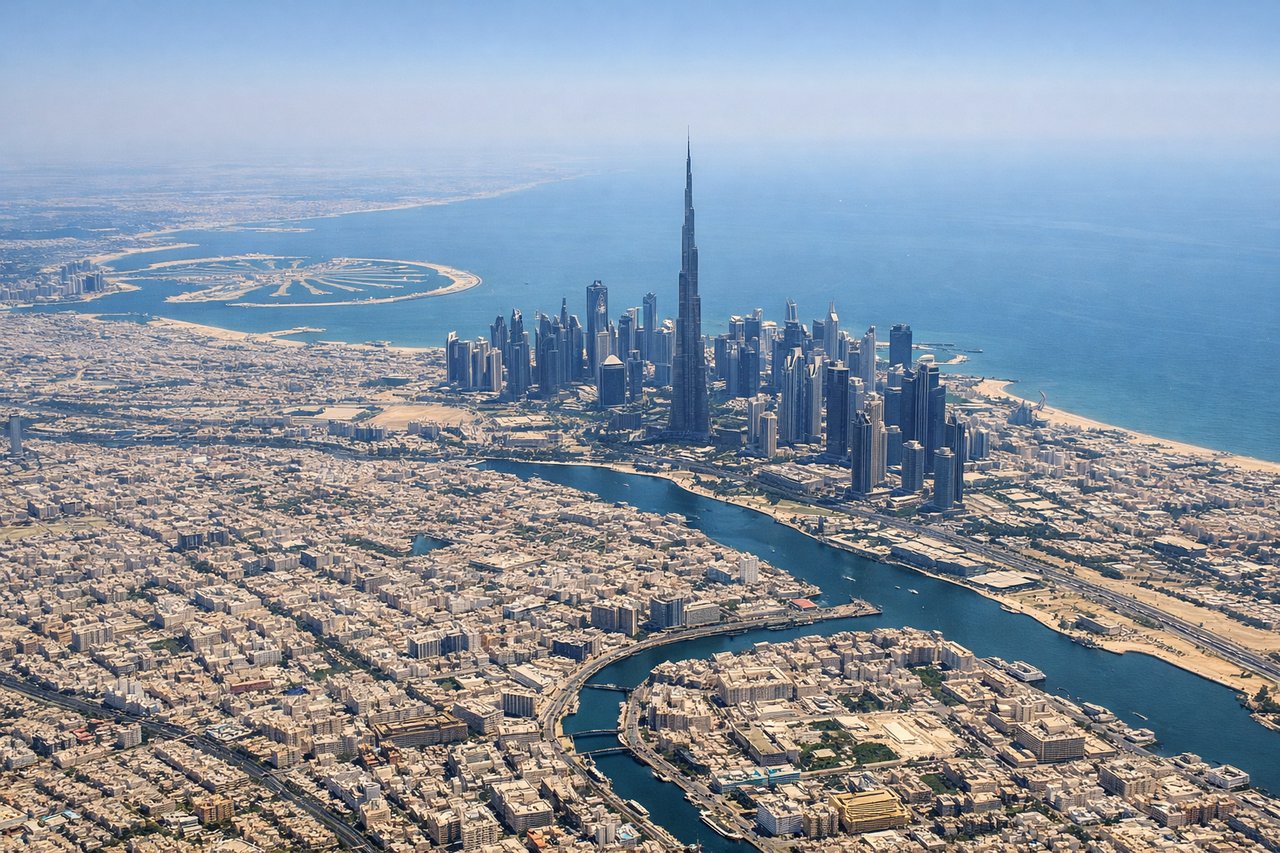
Takeoff from DXB
LEFTLeft side offers views of the Persian Gulf coastline and the Dubai urban sprawl extending northwestward. You'll see the contrast between the developed coastal areas and the desert inland, with the Gulf providing a clear water boundary.
Landing at NCL
RIGHTRight side provides views of the Scottish Borders, the Pennines, and the approach over the North Sea and Northumberland coast. As you descend toward Newcastle, the right side captures the rolling hills and the dramatic transition from sea to land.
Landmarks on this routeAll landmarks →
Will your flight be in sunlight?
Pick a date and time in the Sun Map to watch the sun move across your whole flight.
About This Route
Which side of the plane should I sit on flying from Dubai International (DXB) to Newcastle (NCL)?
Sit on the Right side of the plane for the best views on flights from Dubai to Newcastle. While the takeoff offers desert and Gulf views, the landing approach over the North Sea, Northumberland coast, and Pennine foothills provides more dramatic and varied scenery. The right side captures the transition from sea to land and the approach to the Tyne estuary, which is visually more compelling than the desert departure.
What can I see during takeoff from Dubai International in Dubai?
During takeoff from Dubai International (DXB), sit on the Left side for the best views. Left side offers views of the Persian Gulf coastline and the Dubai urban sprawl extending northwestward. You'll see the contrast between the developed coastal areas and the desert inland, with the Gulf providing a clear water boundary. Notable sights include: Persian Gulf, Dubai city grid and high-rise clusters, Jebel Ali Port, inland desert extending south.
What can I see when landing at Newcastle in Newcastle?
When landing at Newcastle (NCL), sit on the Right side for the best views. Right side provides views of the Scottish Borders, the Pennines, and the approach over the North Sea and Northumberland coast. As you descend toward Newcastle, the right side captures the rolling hills and the dramatic transition from sea to land. Notable sights include: North Sea, Northumberland coastline, Pennine Hills to the west, Newcastle city and Tyne River estuary.
How long is the flight from Dubai to Newcastle?
The flight from Dubai International (DXB) to Newcastle (NCL) takes about 7 hours 15 minutes. The shortest flight path between them is 3,513 miles (5,654 km); winds and air traffic control usually add a few percent.
What does the Dubai to Newcastle flight path pass over?
The flight path crosses the Arabian Peninsula (Oman and Saudi Arabia), the Levant (Syria/Iraq region), Turkey's Anatolian plateau, the Black Sea (southern edge), Eastern Europe (Romania/Hungary), and Central Europe before crossing the North Sea to the UK. Notable visible features include the Zagros Mountains (Iraq/Iran border), the Taurus Mountains (southern Turkey), the Carpathian arc (Romania), and the Rhine valley approaching the North Sea.